







A snow-covered small-town street at dusk, lined with illuminated two-story houses and a grain elevator on the horizon.

Heat Pump Repair in Beach, ND

Tell us about the job

Takes about a minute. No obligation.

RepairHeat PumpGolden Valley County, ND
Step 1 of 2

What ZIP code is the job in?

Most heat pump failures trace back to a handful of parts. The reversing valve is a common one. It's what switches the system between heating and cooling, and when it sticks, you'll get heat when you want cool or no change at all when you flip modes. The defrost control board is another. It tells the unit when to melt off the frost that builds up on the outdoor coil during cold weather, and if it fails, ice just keeps building until the system can't pull in air anymore. Capacitors wear out too, the same as they do in any air conditioner, and a weak one will make the compressor or fan struggle to start or run. Low refrigerant from a slow leak shows up as weak heating or cooling and ice on the lines. None of these fixes itself, and a unit left running low on charge or iced over puts extra strain on the compressor, which keeps the whole system moving.

9 months
September through May, your system heats
2 months
July through August, it cools
8°F
the average winter night it heats against
81°F
the average summer afternoon it cools against
Isometric cutaway illustration of a single-story house showing interior rooms, attic ductwork and an air handler, with an outdoor condenser unit connected by lines along the exterior wall.
Your system heats September through May and cools July through August.

NOAA nClimDiv, 1991–2020 normals

Heat here starts up in September, after a August with the system idle.

A reversing valve or defrost board that was already failing often shows it the first cold week the heat pump has to work.

Half the homes in Golden Valley County were built by 1957, old enough that the heat pump itself is probably not original to the house

Half the homes here were built by 1957
17 winter storms from 2015 to 2024
Winter nights average 8°F
Nothing unusual about Beach, just a part that failedNorth Dakota homes paid 11.51 cents per kilowatthour for electricity in 2024

A heat pump that needs a repair now and then is just doing what these systems do over the years. What matters more is the pattern. One broken capacitor or a stuck contactor is a straightforward fix and doesn't say much about the rest of the unit. But a compressor that's starting to fail is a different story, since that's the most expensive part in the system and often the most telling about its overall condition. If the outdoor unit is short on refrigerant and it's not the first time, that points to a leak that will keep costing money to chase rather than fix. Age matters too, not because a number says so, but because parts for an older unit can be harder to source, and a tech will usually tell you straight if that's the issue. The honest question to ask is whether this repair is a one-time thing or the start of a run of them.

Get it looked at early

Problems tend to show up in the first weeks of the season, when the load hits a part that was already weak.

Find a contractor
A man in a dark jacket, cap and tan work pants climbs wooden porch steps toward a red door, carrying a canvas tool bag beside a potted shrub in a red planter.
A gray outdoor HVAC unit mounted on a concrete pad beside a house with gray lap siding and a stone foundation.

What to check before you call

Before anyone comes out, check the thermostat batteries and make sure it's set to the mode you want, heat or cool. Go outside and look at the unit. If the outdoor coil is caked in ice or snow, that's worth a photo and worth mentioning on the phone. Check the breaker panel for anything tripped. Then find the air filter and hold it up to a light. If you can't see through it, swap it, because restricted airflow is one of the few things on this list that's actually on you to fix. Walk through the house and feel the vents. If every room is weak, that's different from one room acting up, and it helps to know which before anyone shows up. None of this requires opening the unit or touching refrigerant lines. That part's not a checklist item, it's a call.

A low charge gets lower

A refrigerant leak doesn't heal itself by running the system more. Every cycle pushes refrigerant past the leak point, and a compressor working on a low charge runs hotter than it should. Keep it running that way long enough and you're not fixing a leak anymore, you're replacing a compressor.
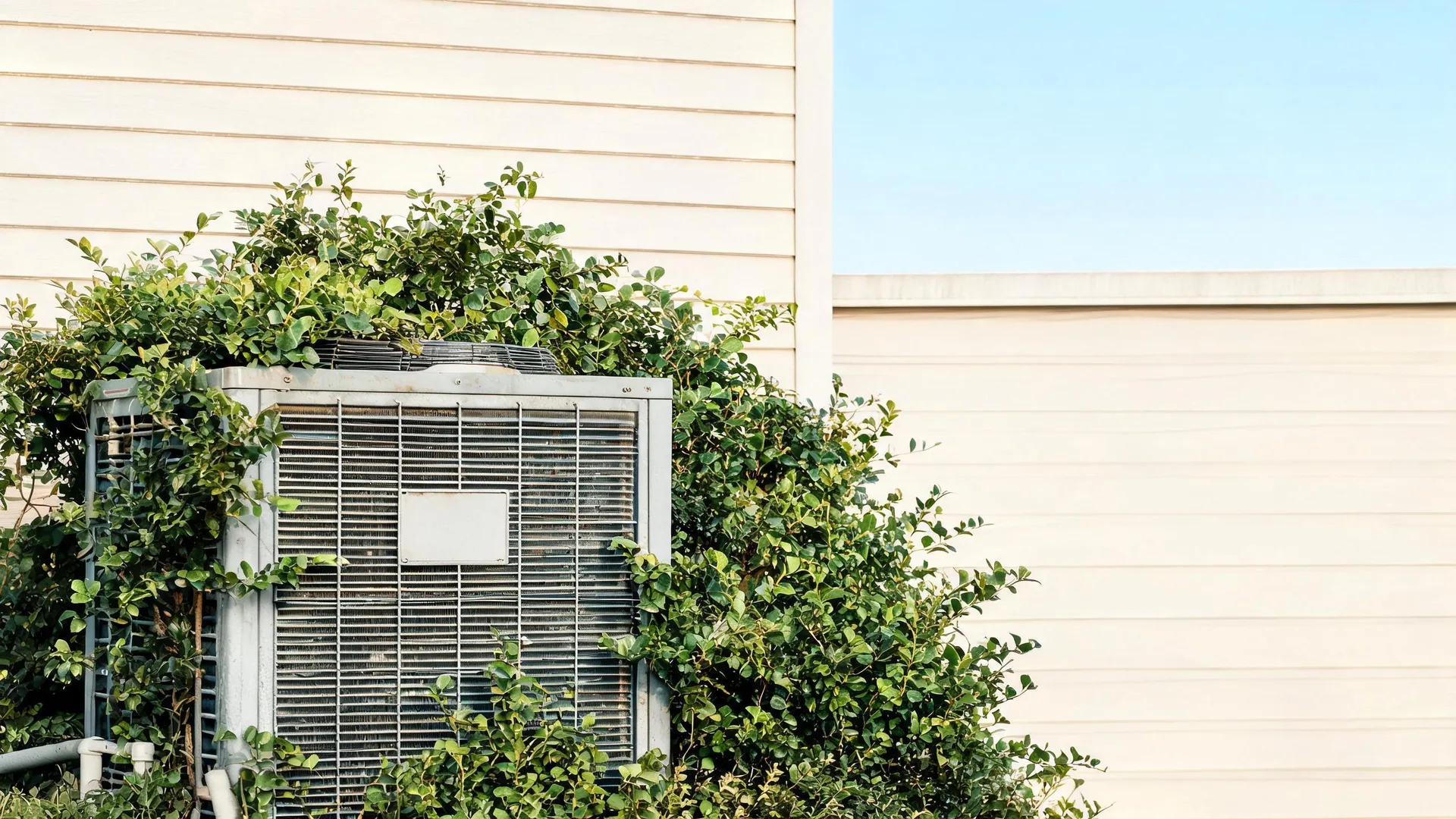
Ice doesn't stay put

A defrost board that's slow to kick in lets frost build past what the next cycle can melt off. The coil chokes down the airflow, the system pulls harder to make up for it, and the ice just keeps winning. What started as a bad sensor ends as a coil that won't clear at all.

You usually notice a heat pump problem before you can name it. The air coming out of the vents feels wrong, cooler than it should on heat mode, or the system runs without the house ever catching up. Short cycling is another sign, where the unit kicks on, shuts off almost right away, then starts again. That's hard on the compressor and not something to wait out. Listen for it too. A clanking or grinding sound usually means something has come loose or worn out where it shouldn't, and a hissing near the lines can mean refrigerant escaping. Ice on the outdoor unit outside of a normal defrost cycle is worth paying attention to as well. None of these signs tell you exactly which part failed, but they tell you it's time to get someone out before the system has to work harder to cover for whatever's wrong.

A diagnostic visit starts outside, with the tech watching the unit run through a cycle rather than taking it apart first. They'll check the pressures on the refrigerant lines, test the capacitor and contactor, and watch how the reversing valve responds when the system switches modes. Inside, they're checking the temperature of the air coming off the coil against what the thermostat is calling for, since that gap points to where the problem actually is. A lot of this is process of elimination. Airflow gets ruled out before refrigerant charge, and electrical connections get checked before anyone decides a part is bad. By the end, you should know which part failed and why, not just that something did.