






A snow-covered small-town street at dusk, with lit white clapboard houses, bare trees, and a grain elevator silhouetted against an orange and blue twilight sky.

Heat Pump Repair in Beulah, ND

Tell us about the job

Takes about a minute. No obligation.

RepairHeat PumpMercer County, ND
Step 1 of 2

What ZIP code is the job in?

A heat pump that's struggling still tries to do its job, and that's the problem. If the compressor is low on refrigerant, running it longer doesn't fix the shortage, it just makes the compressor work harder to move heat that isn't there. Ice on the outdoor coil behaves the same way. Once frost builds up, airflow drops, so the system pulls harder to keep up, and that extra strain is what turns a coil problem into a compressor problem. A failing capacitor is another one. It struggles to start the motor each cycle, and every hard start wears the motor a little more until it quits. The fix early on is usually small, a part swapped, a charge corrected. Left running, the same issue drags other parts down with it.

9 months
September through May, your system heats
2 months
July through August, it cools
6°F
the average winter night it heats against
80°F
the average summer afternoon it cools against
Isometric line illustration of a cutaway single-story house showing interior rooms with beds and furniture, ceiling ductwork connected to an indoor air handler, and an outdoor condenser unit linked by refrigerant lines.
Your system heats September through May and cools July through August.

NOAA nClimDiv, 1991–2020 normals

Half the homes in Mercer County were built in 1981 or later.

A heat pump installed with a newer house still has years of work left in it, and that's worth knowing before you decide whether to repair it.

Power here runs 12.43 cents a kilowatt-hour, and a struggling heat pump burns more of it every day you wait

Power here costs 12.43 cents per kilowatt-hour
Climate zone 6A
Cooling runs July through August

Heat here comes on in September and runs through May, nine months of the year, so a heat pump in Mercer County spends most of its life working, not resting. The first cold snap in September is when a weak part usually gives out. A capacitor that barely got the compressor started in August won't do better once the system is running every day. Same with a low refrigerant charge, it shows up as the heat pump running longer and still falling short right when you need it most. Waiting until January to deal with a problem that started in September just means more cycles on a part that's already failing.

Get it diagnosed properly

Your heat pump works hard here, and that's usually what's behind the problem. Have it diagnosed properly so the fix lasts.

Find a contractor
A man in a dark t-shirt and tan work pants carries a worn canvas tool bag up wooden porch steps toward a red-orange front door of a gray-sided house, with a red ceramic planter holding a shrub to the right.
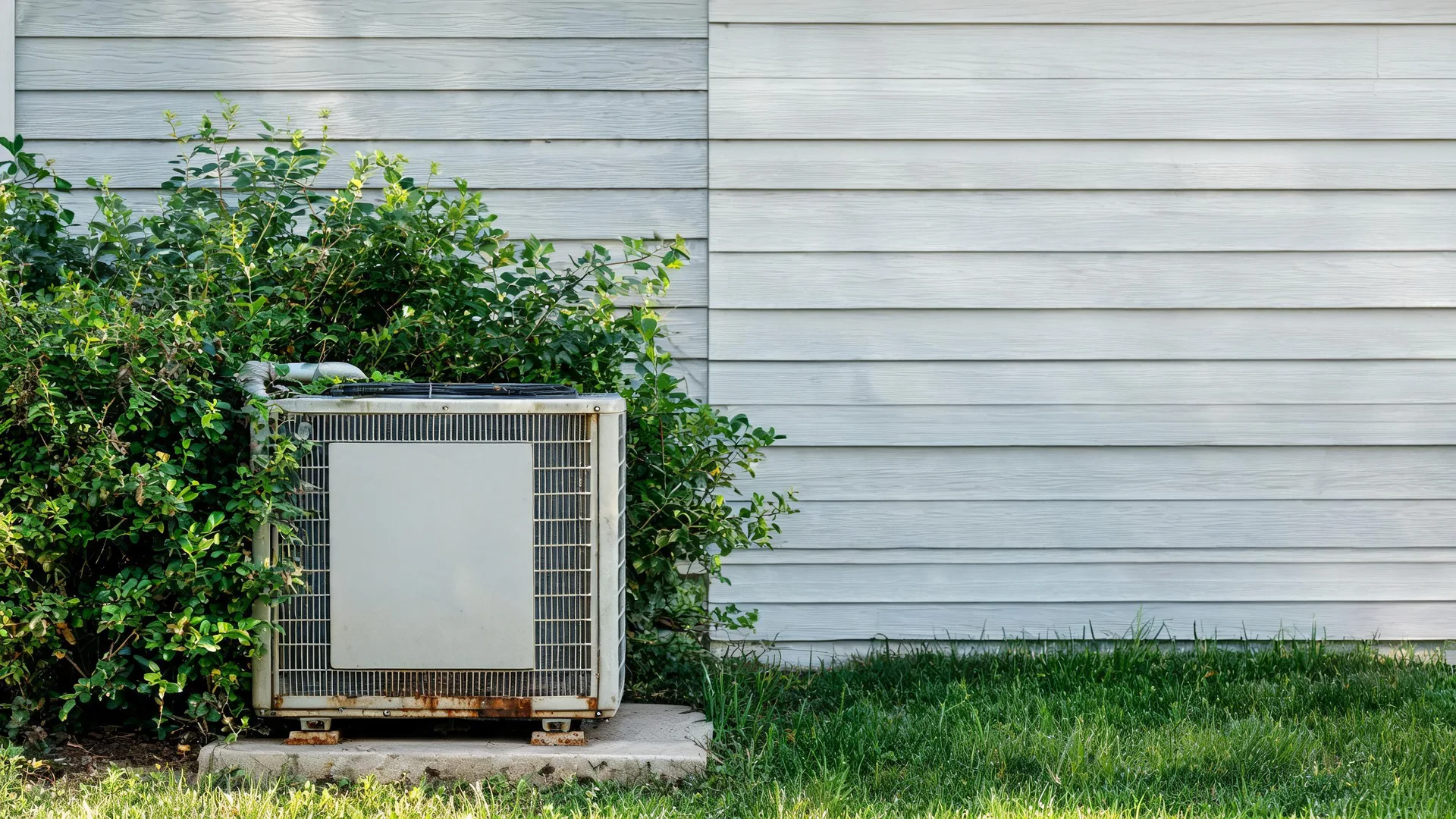
A gray heat pump outdoor unit mounted on a concrete pad next to the stone-accented exterior wall of a house.

How much life is left to protect

If your heat pump came with the house, repair is likely the right call here. A compressor or reversing valve failure on a system that age is the exception, not the rule. Most of what goes wrong this early is a single part, a capacitor, a contactor, a low charge, and fixing that part gets you back to a system with years still ahead of it. Mobile homes make up a smaller share of the county, about one in nine, and those units see more wear from wind and temperature swings than a system tucked against a house. Worth knowing which kind of install you've got before the contractor gives you the full picture.

It won't switch over cleanly

A heat pump in heating mode should feel steady, warm air moving the whole time it runs. If it pauses, blows cool air for a stretch, or seems to hunt before settling in, the reversing valve is the usual suspect. That valve directs refrigerant one way for heat and the other for cooling, and when it starts sticking, the system struggles to commit to one mode.
It runs long and still can't keep up

Longer cycles with less warmth to show for it points at a refrigerant problem, not a thermostat problem. A unit that's low on charge keeps trying anyway, pulling heat from air that isn't giving up much, and the compressor pays for that extra effort. Catching this early is a charge correction. Ignoring it is a compressor replacement.

A few things are worth a look before anyone comes out. Check the outdoor unit for ice or snow packed around the coil or the fan, and clear it away if you can do so safely. Look at the air filter inside, a clogged one starves the system of airflow and makes it work harder than it should. Walk around the outdoor unit and make sure nothing is blocking it, no leaves, no stacked firewood, no drifted snow against the cabinet. Check the thermostat batteries if it uses them, and make sure it's set to heat, not fan only. None of this fixes a bad capacitor or a stuck reversing valve, but it rules out the simple stuff first, and it gives the tech a clearer picture of what's actually wrong when they get there.

A heat pump running on a weak capacitor or a low charge pulls more power every day it keeps going like that. The longer it sits broken, the more it shows up on the bill before it ever shows up as a bigger repair. Getting a tech out now to swap the part or correct the charge stops that drain right away. Waiting doesn't save you anything, it just lets the cost run while the problem gets worse underneath it.