






A snow-covered suburban street at dusk with lit houses and bare trees under a twilight sky.

Heat Pump Repair in Bismarck, ND

Tell us about the job

Takes about a minute. No obligation.

RepairHeat PumpBurleigh County, ND
Step 1 of 2

What ZIP code is the job in?

A heat pump in Burleigh County has to pull heat out of air that's often well below freezing, for a long stretch of the year. That's a harder job than most heat pumps elsewhere are asked to do, and the defrost cycle, the reversing valve and the outdoor coil take the brunt of it. On top of that, this county logged 74 hail events and 27 winter storms between 2015 and 2024, and the outdoor unit sits outside through all of it. A dent in the cabinet or a coil fin packed with ice can turn into a bigger problem if it sits unchecked. When a heat pump here starts short cycling or blowing cooler air than it should, it's often a sign of wear that built up faster than it would somewhere milder. Getting the actual cause diagnosed, rather than guessing, is what makes a repair hold.

9 months
September through May, your system heats
2 months
July through August, it cools
5°F
the average winter night it heats against
80°F
the average summer afternoon it cools against
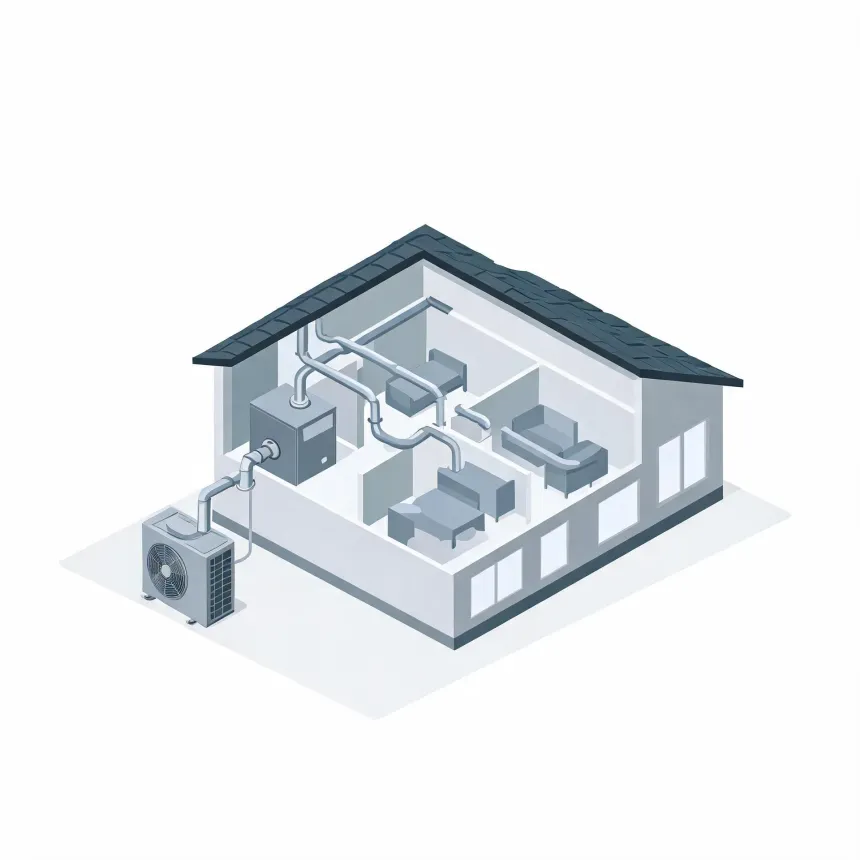
Isometric cutaway illustration of a single-story house showing an indoor air handler, branching ductwork through rooms with furniture, and an outdoor condenser unit connected by a line outside the wall.
Your system heats September through May and cools July through August.

NOAA nClimDiv, 1991–2020 normals

Half the houses in Burleigh County were built in 1988 or later.

A heat pump installed with a newer house has usually got plenty of working life left in it, which makes repair the right call.

Nine months of heat a year gives a weak part nine months of chances to fail

Cooling runs July through August
Heat runs September through May
96 damaging wind events from 2015 to 2024
Electricity here is cheap. A heat pump that's struggling still burns more of it.Burleigh County pays 11.91 cents per kilowatt-hour, below most of the country, but a heat pump working too hard still runs up the bill.

If your heat pump came with the house and the house is from the last couple decades, that history matters when you're deciding what to do about a breakdown now. A unit that young hasn't had time to rack up the wear that leads to a real replacement case. Most failures at that age come down to one part: a capacitor, a control board, a low charge from a slow leak. Those get fixed on their own, without touching the rest of the system. Worth asking the contractor straight out how a repair like this fits with a system that age, before you assume the worst.

Find out what's actually wrong before it gets worse

Whatever's causing the short cycling or weak output didn't come from nowhere. A heat pump running this hard, through winters this long, wears in ways a contractor needs to see in person to pin down. Get the actual cause diagnosed and the repair holds.

Find a contractor
A man in a dark jacket, cap and tan work pants climbs wooden porch steps toward a red door, carrying a canvas tool bag beside a potted shrub in a red planter.
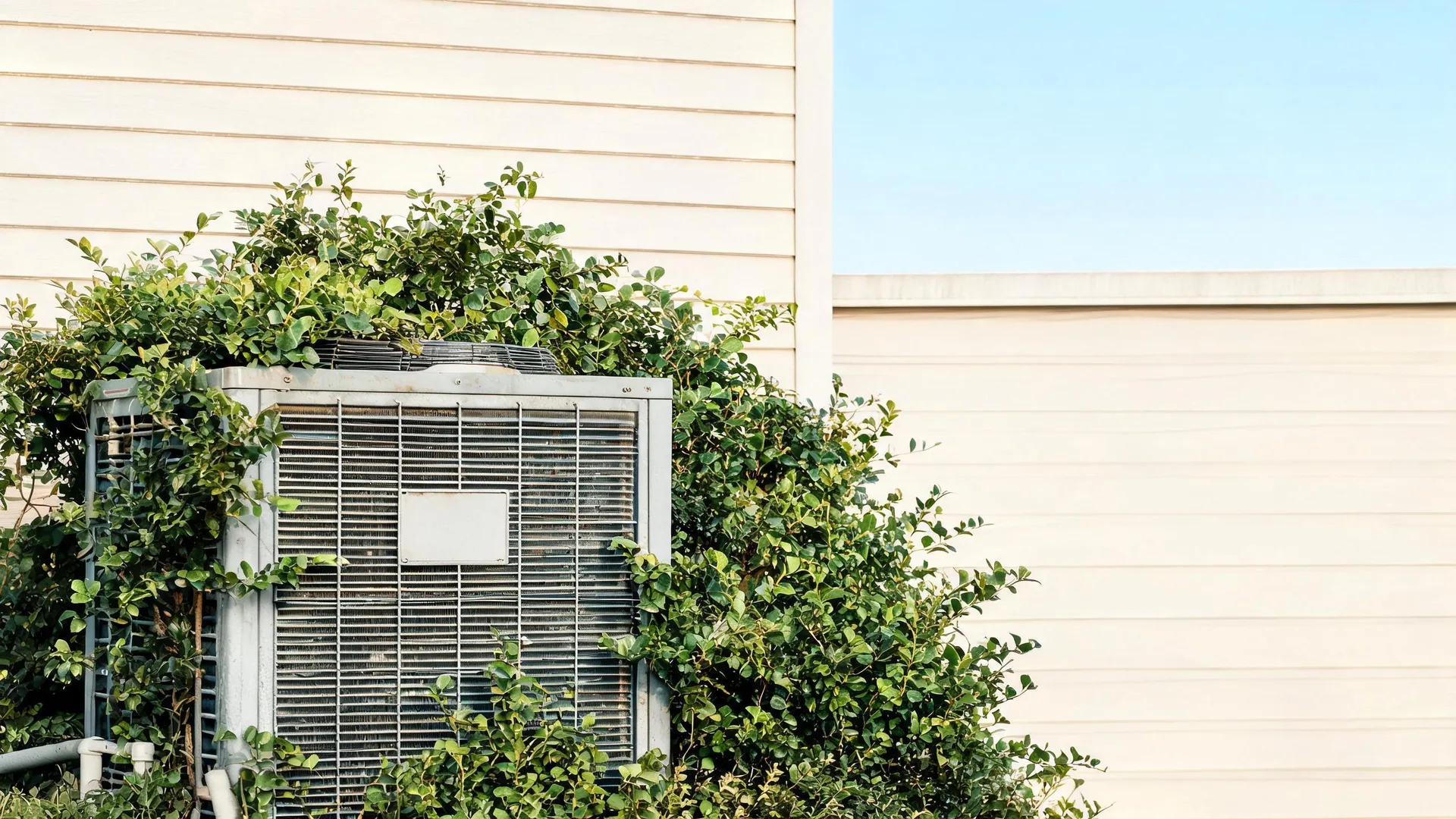
A gray outdoor HVAC unit mounted on a concrete pad beside a house with gray lap siding and a stone foundation.

A heat pump rarely fails without warning you first

A heat pump that needs attention usually tells you before it quits outright. It might run long cycles that never seem to satisfy the thermostat, or short cycle, kicking on and off every few minutes without settling in. The air coming out of the vents might feel barely warm, or barely cool, like the system is working but not really getting there. Some units start making noise they didn't used to make: a rattle from the outdoor fan, a hiss near the reversing valve, a clunk when the system switches between heating and cooling. Ice building up on the outdoor coil and staying there, instead of clearing in the defrost cycle, is another sign something in that cycle isn't working right. None of these mean the same thing every time. A weak capacitor can cause hard starts and long run times. A failing reversing valve can leave you with heat when you called for cooling, or the reverse. A low refrigerant charge, usually from a slow leak, shows up as reduced output and a coil that frosts over when it shouldn't. The part that's struggling is rarely the part making the noise, which is why guessing at a fix from the symptom alone usually wastes time.

Most failures trace back to a handful of parts

The capacitor that kicks the compressor and fans on wears out before anything else usually does. The reversing valve, which switches the system between heat and cooling, can stick or leak internally. The defrost control board can misread the outdoor coil and skip a cycle it should have run, or run one it didn't need. A refrigerant leak, often small and slow, shows up as the system running longer and longer to do the same job. Each of these fails on its own. One going bad doesn't mean the rest are close behind.
What's failing changes what a fix looks like

A bad capacitor or control board is a straightforward swap, and the rest of the system is unaffected by it. A refrigerant leak means finding where it's coming from before adding charge back, or the same leak just empties it out again. A reversing valve that's stuck costs more to replace and is worth confirming before anything else gets ruled out. Knowing which part is actually behind the symptom is what keeps a repair from turning into guesswork.

A heat pump that's losing efficiency doesn't idle, it runs longer to make up the difference. That's more hours on the meter every single day the problem sits there. Power being cheap here doesn't offset a system working harder than it should to hit the same temperature on the thermostat. The fix is usually one worn part, not a full system overhaul, so the real cost of waiting is the bill creeping up, not the whole unit failing. Getting it looked at now stops that climb before another month of running on hard mode shows up on the statement.

A diagnostic visit starts with the thermostat and the symptom you called about, then moves outside to the unit itself. A contractor checks refrigerant pressures on both the high and low side, because that tells them whether the charge is right or whether there's a leak dragging it down. They'll test the capacitor under load, not just look at it, since a capacitor can read fine sitting still and still fail to kick the compressor on. The reversing valve gets checked by running the system in both modes and feeling whether it actually switches clean. Electrical connections get checked too, since a loose or corroded wire can mimic a bad part and send someone chasing the wrong fix. None of this takes guesswork once the gauges and meters are on it. The point is to find the one part actually causing the symptom, so the repair fixes that and nothing else gets touched that didn't need it.