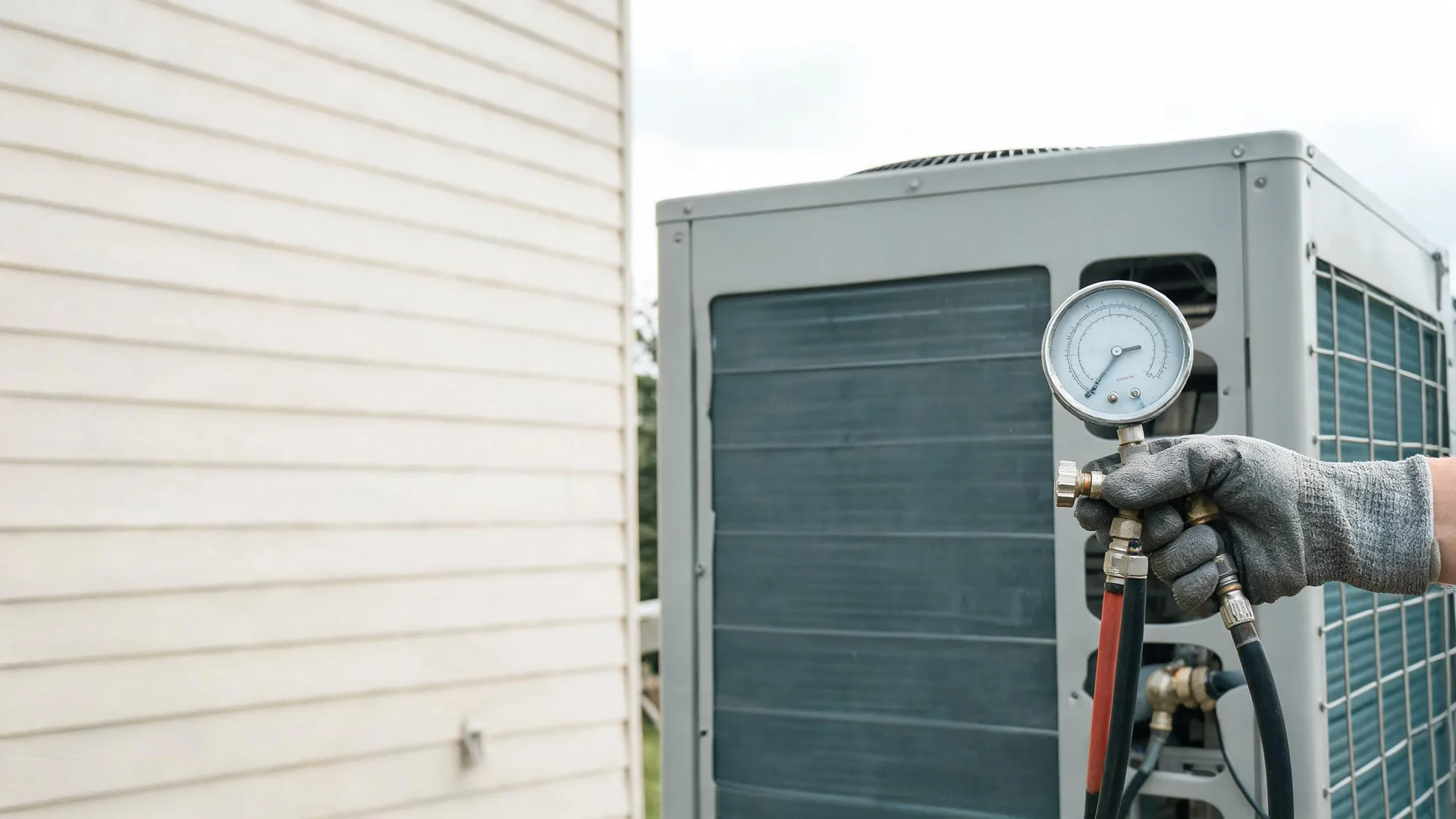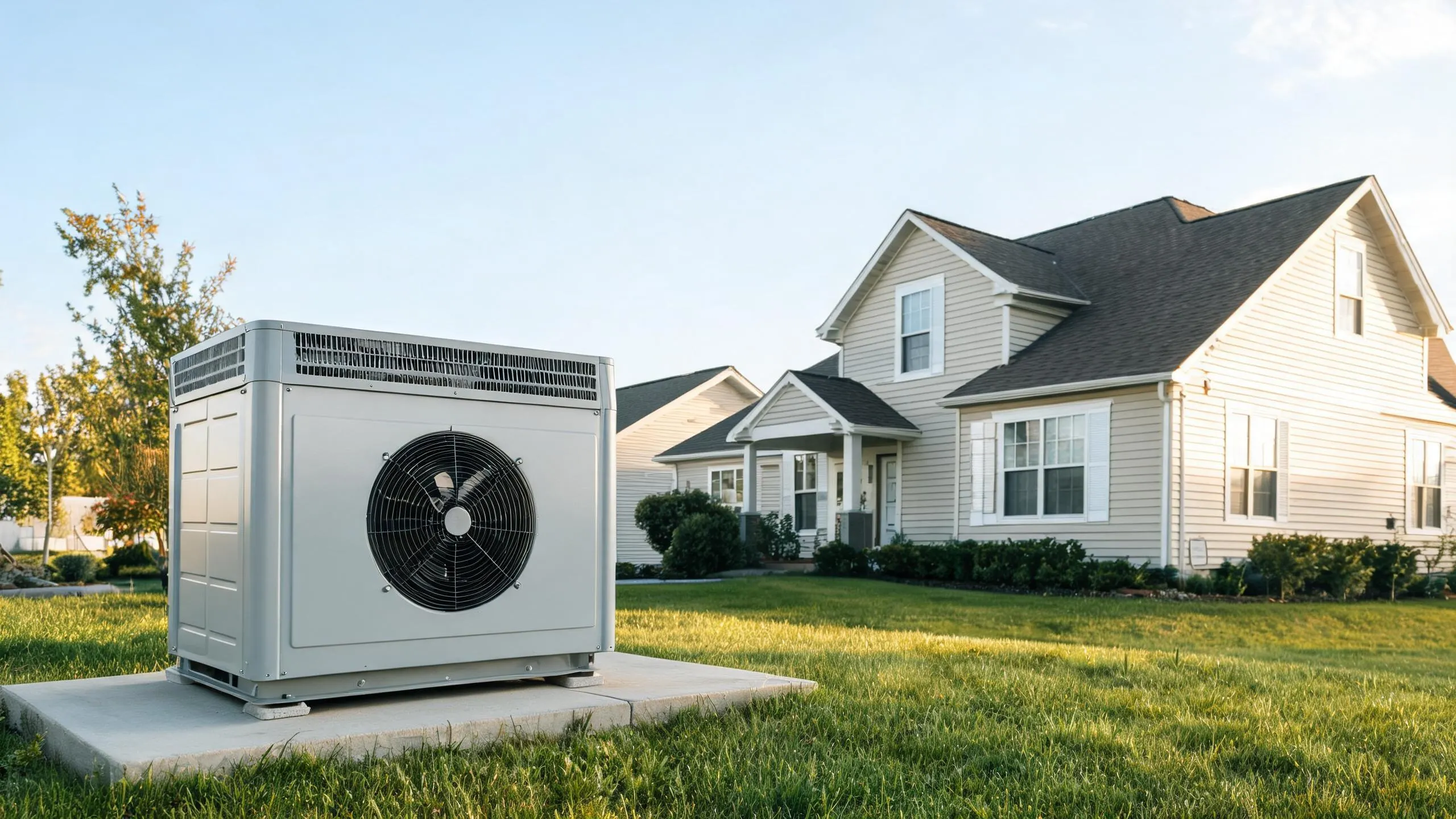
An outdoor heat pump unit mounted on a concrete pad in the front yard of a gray suburban house.

Heat Pump Repair in Carrington, ND

Tell us about the job

Takes about a minute. No obligation.

RepairHeat PumpFoster County, ND
Step 1 of 2

What ZIP code is the job in?

A heat pump here runs both ends of the year

A heat pump in Foster County heats all winter and cools all summer, with no furnace splitting the load. Foster County saw 34 winter storms between 2015 and 2024, counting heavy snow, ice and blizzards. Each one means hours of the system working to keep the house warm.

What that means for a repair call

A system that runs this much wears its parts on a shorter clock. Whatever a tech finds wrong with your heat pump is more likely tied to that workload than to a one-off defect. Getting it diagnosed right matters more than guessing at a quick fix.

9 months
September through May, your system heats
2 months
July through August, it cools
3°F
the average winter night it heats against
79°F
the average summer afternoon it cools against
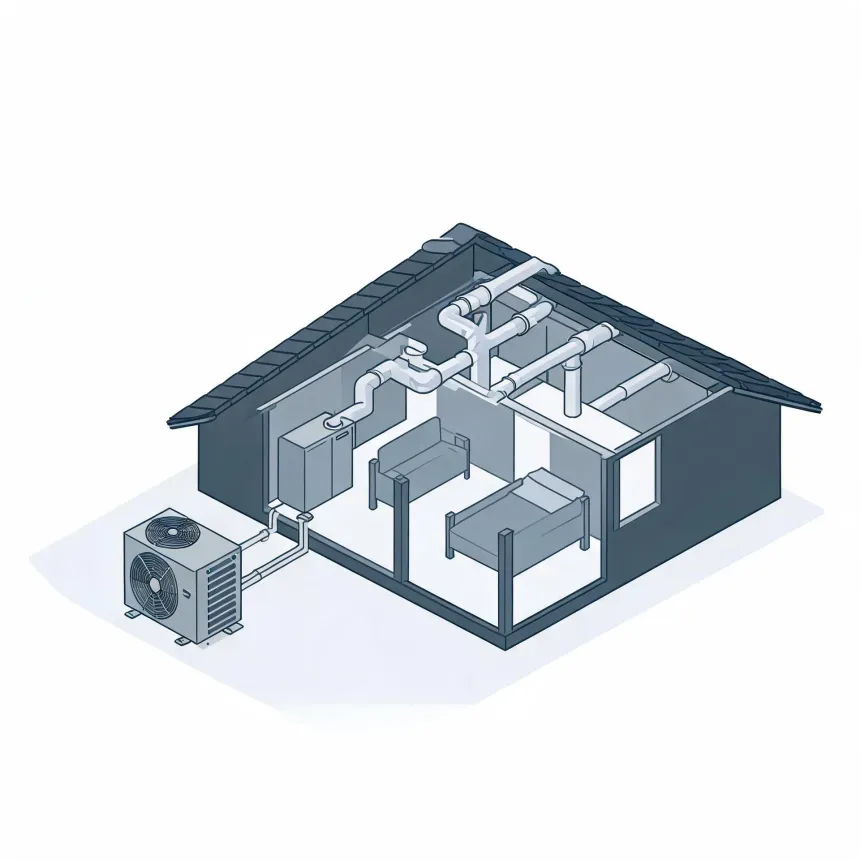
Isometric cutaway illustration of a house showing interior ductwork, an indoor air handler, and beds, with an outdoor condenser unit connected by lines outside the wall.
Your system heats September through May and cools July through August.

NOAA nClimDiv, 1991–2020 normals

Half the homes in Foster County were built in 1973 or earlier.

A heat pump in a house that old has likely been running the full workload for years before the one you have now.

Cheap power still adds up when a heat pump is running wrong

Power here costs 10.98 cents per kilowatt-hour
Climate zone 6A
Cooling runs July through August

Heat here starts up in September and runs straight through May. August is the last easy month to catch a weak part before the system leans on it. A heat pump that's been limping along in the shoulder months often fails outright once the overnight lows start dropping toward single digits and below, which happens here by December. The part that was already struggling, a contactor, a weak capacitor, a low charge, doesn't get a break to recover. It gets the hardest months of the year instead. If your heat pump is acting up now, before the real cold sets in, that's the window to get it looked at rather than waiting to see if it holds.

Find out what's actually wearing out before it quits on you

A heat pump that's working hard doesn't usually fail for no reason. Get a tech in to find the actual part behind it, so the repair holds through the next storm instead of just the next week.

Find a contractor
A residential heat pump outdoor unit mounted on a concrete pad next to a house with gray vinyl siding.

How old is the system you're about to pay to fix

If your heat pump came with a house built in 1973 or earlier, it's already been doing this workload for decades. That's a long run for a compressor or a reversing valve. Ask whoever comes out how much life is actually left in the unit before you put money into the repair. Sometimes the fix makes sense. Sometimes that money is better spent on a replacement.

What a struggling heat pump sounds and feels like

A heat pump that needs attention usually tells you before it quits outright. It runs long stretches without shutting off. Rooms end up warmer or colder than the thermostat setting. Air coming out of the vents feels wrong for the mode it's in, cool air during a heat cycle or warm air when it should be cooling. Outside, the unit might ice over when it shouldn't, or you'll hear a hum without the fan turning, or a clicking that repeats instead of settling into a steady run.

What to do when you notice it

None of these signs mean wait and see. A unit that short cycles or won't satisfy the thermostat is already working past what its parts can hold up under, and that strain lands on the compressor eventually, which is the expensive part to replace. Shut it down if you see ice building on the outdoor coil or hear grinding or screeching, and get a tech out rather than running it through another cycle. Catching a bad capacitor or a stuck reversing valve early is a smaller job than catching it after it takes the compressor with it.

Most heat pump failures trace back to a handful of parts, and they tend to go in a predictable order. The capacitor is usually first. It gives the compressor and fan motors the jolt they need to start, and it weakens slowly, so the symptoms show up as hesitation before they show up as failure. The contactor is next. It's a set of electrical contacts that pit and burn a little every time the system cycles on, until one day they stick or stop making contact at all. The reversing valve is what switches the system between heating and cooling, and when it sticks, the unit keeps running but stops doing what the thermostat is asking for. Refrigerant charge matters too. A heat pump doesn't use up refrigerant, so a low charge almost always means a slow leak somewhere in the line set or coil, and it won't fix itself. Behind all of it is the compressor, which is what everything else is protecting. Compressors rarely fail on their own. They fail because something upstream, a bad capacitor, a low charge, a stuck valve, made them work against resistance they weren't built for.

A heat pump that's cycling wrong or running long is burning power every time it does it, even with rates as low as they are here. A bad capacitor or a stuck reversing valve makes the system run longer than it should to hit the same thermostat setting, and that extra runtime doesn't stop on its own. It keeps costing you on every cycle, straight through winter and summer both. Getting the actual part fixed now stops that waste instead of paying for it on top of the repair later.