A snow-covered small-town street at dusk, with lit white clapboard houses, bare trees, and a grain elevator silhouetted against an orange and blue twilight sky.

Heat Pump Repair in Center, ND

Tell us about the job

Takes about a minute. No obligation.

RepairHeat PumpOliver County, ND
Step 1 of 2

What ZIP code is the job in?

A heat pump here runs year round

Oliver County sits in zone 6A, a cold climate with a long heating season. A heat pump in Center is working through that whole stretch, not just taking the edge off a few cold snaps. That kind of steady demand wears on the compressor and the coils faster than milder places do.

The outdoor unit takes a beating

Oliver County saw 32 hail events and 26 winter storms between 2015 and 2024. Hail dents fins and bends the cabinet. Snow and ice build up around the outdoor unit and strain the fan and coil. A system here has been through more of that than most, so a breakdown is rarely random. Getting it diagnosed right the first time matters more because of it.

9 months
September through May, your system heats
2 months
July through August, it cools
6°F
the average winter night it heats against
80°F
the average summer afternoon it cools against
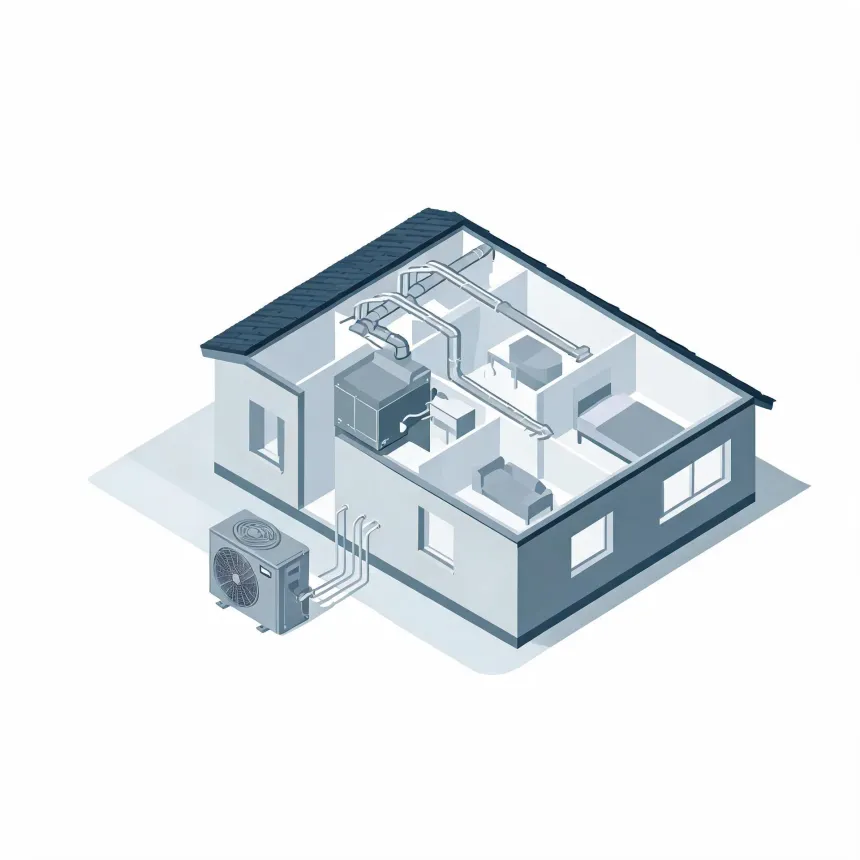
Isometric cutaway illustration of a single-story house showing interior rooms with ductwork, an indoor air handler unit, and an outdoor condenser unit connected by lines along the exterior wall.
Your system heats September through May and cools July through August.

NOAA nClimDiv, 1991–2020 normals

Electricity here runs about 12.72 cents a kilowatt-hour, cheaper than most of the country.

A heat pump that's struggling still runs up a bill every month it goes unfixed, even at that rate.

Nine months of heat a year means September is when a weak part fails

Cooling runs July through August
Heat runs September through May
Climate zone 6A

A heat pump that's losing efficiency doesn't wait for a slow month to show it. It keeps running, and every extra hour it labors to hit temperature lands on next month's bill. A refrigerant leak or a failing compressor makes the system run longer for less heat, so the meter keeps spinning even at Center's low rate. Waiting doesn't lower that cost. A technician can find the part that's dragging the system down and get it running the way it should before another bill comes due.

Diagnose it right and the fix holds

A system that's been through this much hail and snow doesn't fail for no reason. Something specific is worn or damaged, and a technician who checks it against what it's been through can find it faster.

Find a contractor
A person in a dark shirt, tan work pants and boots climbs porch steps toward a red door, carrying a worn canvas tool bag beside a potted shrub.
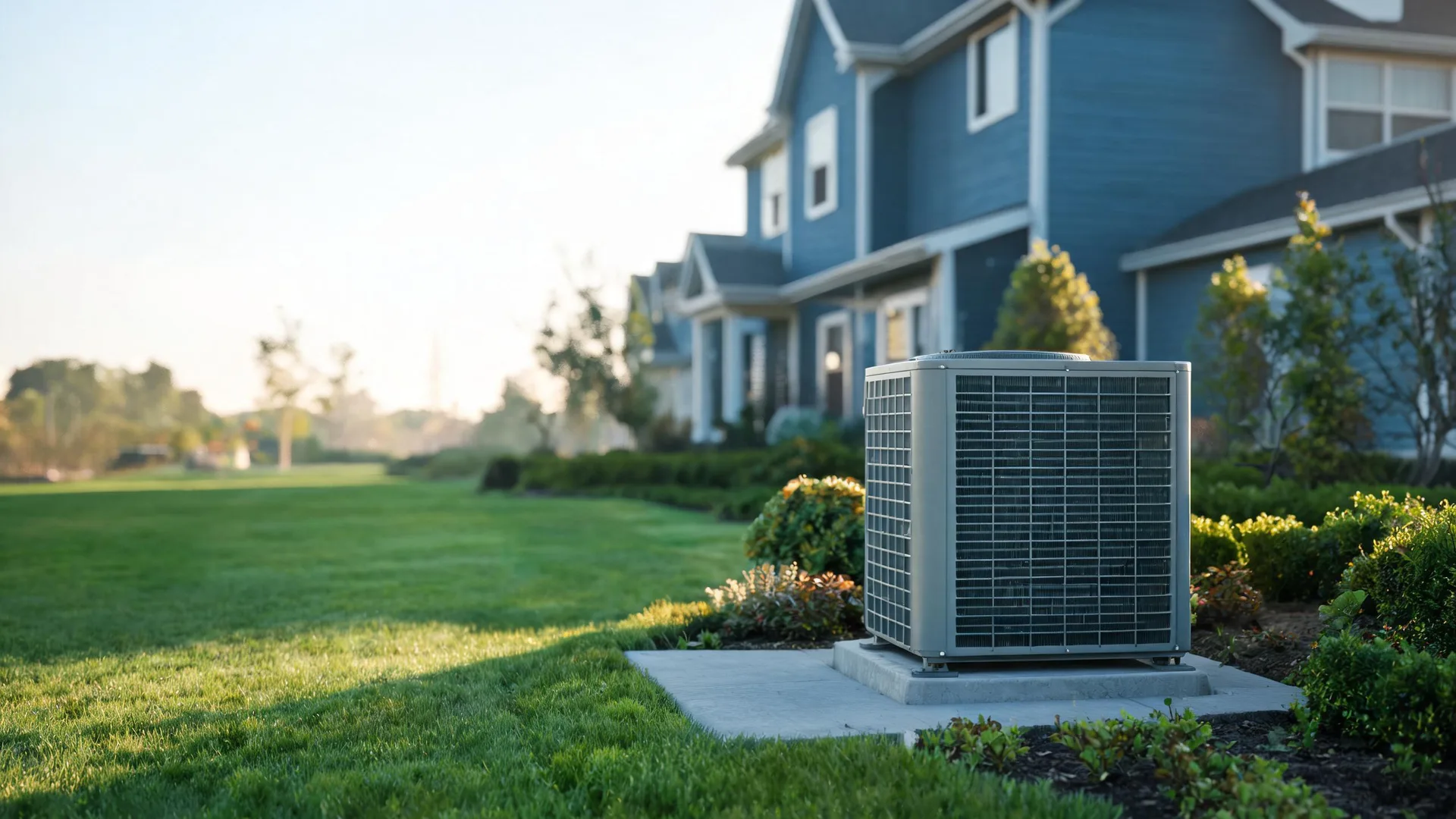
A residential heat pump outdoor unit mounted on a concrete pad next to a house with gray vinyl siding.

What you can check yourself first

Before anyone comes out, check a few things that take a minute. Look at the thermostat first. Make sure it's set to heat and the set point is actually above room temperature, since a bumped setting or a dead thermostat battery can look exactly like a broken system. Check the air filter. A filter clogged with dust and pet hair chokes off airflow, and a heat pump starved for air will ice up or struggle to keep temperature. Walk outside and look at the outdoor unit. If it's buried in snow or surrounded by ice, that blocks the coil from doing its job, and clearing the snow away from the sides and top can be enough on its own. Check the circuit breaker, since a tripped breaker will shut the whole system down and a simple reset sometimes brings it right back. Listen for what the indoor and outdoor units are doing. A system that runs constantly without warming the house, or one that's short cycling, turning on and off every few minutes, is telling you something is wrong internally, not something a filter change will fix. If the outdoor coil has a heavy layer of ice that doesn't clear during the defrost cycle, or if you smell anything burning, turn the system off at the thermostat or breaker and leave the rest to a technician.

The reversing valve is usually the first to go

A heat pump has one part a straight air conditioner doesn't: the reversing valve that switches it between heating and cooling. Every switch means another cycle of the valve sliding back and forth, and over years the seals inside wear until it starts sticking. A stuck valve can leave the system blowing cold air when it should be heating, or stuck in one mode no matter what the thermostat asks for.

The defrost cycle wears parts a straight AC never touches

To keep the outdoor coil clear of frost, the system has to reverse itself, melt the ice, then switch back to heating. That means a defrost control board and sensor doing extra work all winter, on top of the compressor and fan motor. When the sensor misreads or the board fails, the unit either skips defrost and ices over, or defrosts too often and can't hold heat.

A heat pump in need of repair rarely announces itself with a dead system. It shows up in small ways first. The air coming out of the vents feels lukewarm instead of hot, so the house never quite catches up to the thermostat. The outdoor unit runs long stretches without shutting off, or it cycles on and off every few minutes instead of settling into a steady run. Ice builds up on the outdoor coil and stays there past a normal defrost. Sometimes it's a sound: a hard clunk when the system switches modes, a rattle from the fan, a hiss that wasn't there before. Any one of these on its own might be minor. Together, or repeated day after day, they mean something inside the system is wearing out, not just working hard.

The question isn't always whether the unit still runs. It's whether it runs the way it used to, and whether the cost of keeping it going is starting to outweigh the cost of starting over. A compressor is the heart of the system, and once it's failing, most other repairs are just delaying the same outcome. If the compressor itself is the problem, that's usually the point where repair stops making sense. Age matters too, not as a number but as a pattern: a system that's needed a few unrelated repairs in close succession is usually telling you its parts are wearing out together, not that it had bad luck a few times in a row. A single broken part on an otherwise sound system is worth fixing. A system where one fix just seems to uncover the next one is a different situation entirely.