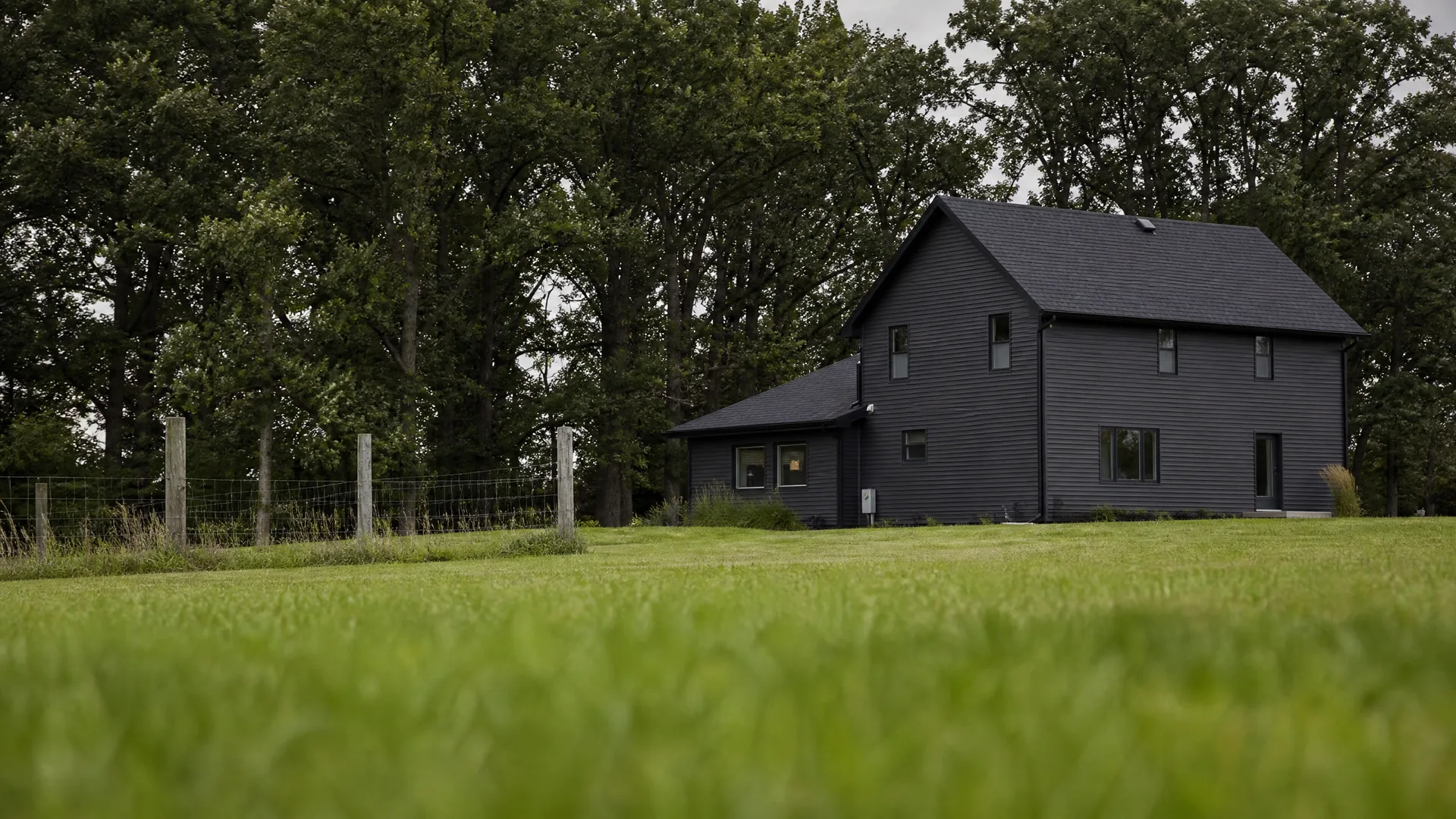





A black two-story house with a gabled roof and wood siding stands at the edge of a mown lawn, backed by tall deciduous trees, with a wire fence on posts at left.

Heat Pump Repair in Cooperstown, ND

Tell us about the job

Takes about a minute. No obligation.

RepairHeat PumpGriggs County, ND
Step 1 of 2

What ZIP code is the job in?

Half the homes in Griggs County were built in 1958 or earlier. If yours is one of them, there's a fair chance the heat pump isn't original to the house, but whatever is out there has likely already had one or two replacements behind it. An older heat pump works harder to hit the same temperature, and that strain tends to show up as the kind of trouble that brings on a repair call. Before paying for a major fix, it's worth finding out how many years the unit has left in it. A repair on a system near the end of its life can end up being money spent twice.

9 months
September through May, your system heats
2 months
July through August, it cools
2°F
the average winter night it heats against
78°F
the average summer afternoon it cools against
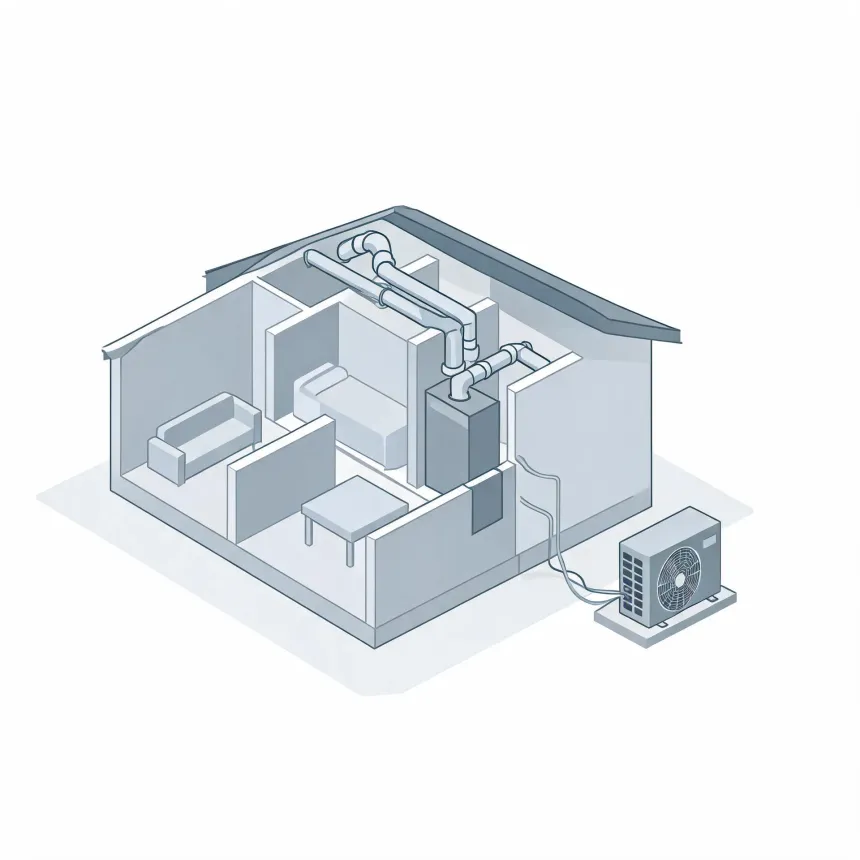
Isometric line illustration of a cutaway house showing interior rooms with furniture, ceiling ductwork connected to an indoor air handler, and a line running outside to an outdoor condenser unit.
Your system heats September through May and cools July through August.

NOAA nClimDiv, 1991–2020 normals

A heat pump that runs long stretches without hitting the set temperature is losing its grip on the refrigerant cycle.

That strain shows up as iced coils, a struggling outdoor fan, or a compressor that short cycles, and it calls for a look before the next cold snap.

A heat pump that's struggling still runs up a bill at 11.24 cents a kilowatt-hour

Power here costs 11.24 cents per kilowatt-hour
Climate zone 6A
Cooling runs July through August

Heat here starts in September, so a unit with a weak part usually shows it in those first cold weeks. The same goes in reverse come July. Whatever was marginal in May, a sagging capacitor, a low charge, a relay that was slow to click, gets asked to carry real load for the first time in months and that's when it quits. Nine months of heating a year means the September failure is the one that costs you the most if it waits. Getting a unit checked in August, before the switch to heat, catches the weak part on a mild day instead of a night when the low is near zero.

Find out if this is a repair or a replacement before you pay for either

A repair call is the right time to ask a contractor how old the unit is and what shape it's in, not just what's wrong today. If it's already been replaced once or twice before, a quote on the repair is a good time to get a quote on replacement too, side by side.

Find a contractor
A man in a dark jacket, tan pants and a cap, seen from behind, carries a worn canvas tool bag up wooden porch steps toward a red front door.
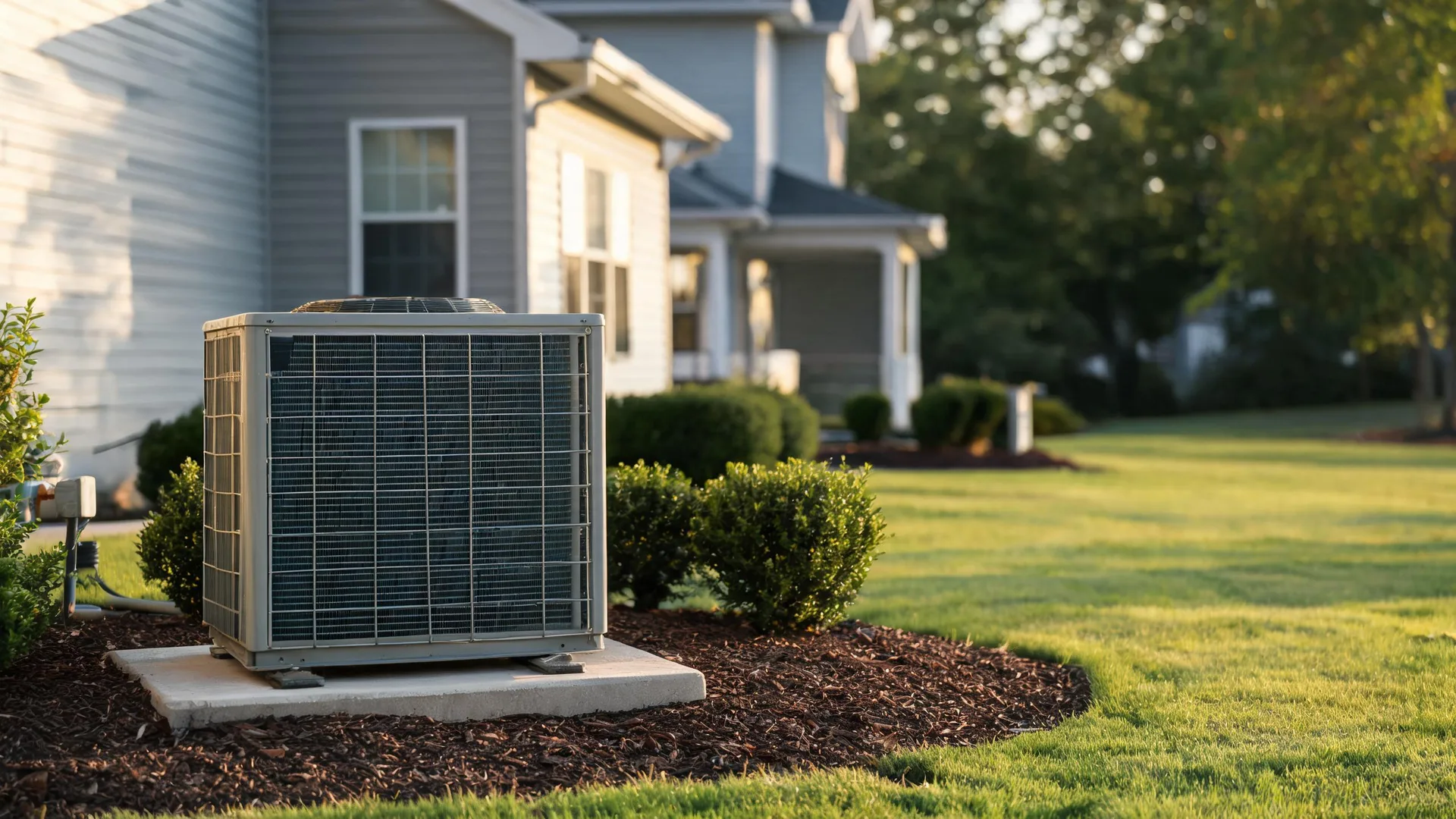
A gray heat pump condenser unit mounted on a concrete pad against the gray lap-siding exterior wall of a house.

Running Two Jobs, Never One

Griggs County sits in climate zone 6A, which means a long heating season by the federal rating, not just a long winter by feel. A heat pump here doesn't get to settle into one mode and stay there. It's pulling heat out of cold outdoor air for months, then reversing to push heat back outside for the warmer stretch. Every switch between those two jobs puts a load on the reversing valve and the compressor that a furnace never sees, because a furnace only ever does one job. Add the hail and the winter storms this section already covered, and the outdoor unit is working against the weather at the same time it's working against the thermostat. That combination is what shortens the life of individual parts, not any single bad month.

Most failures start with the reversing valve or the defrost cycle

A heat pump has to switch direction to heat instead of cool, and that job falls to the reversing valve. When it sticks, the system can get stuck blowing cold air during a heat call or stuck in defrost when it should be running normally. The defrost board and its sensor are the other common point of failure, since a bad sensor leaves the outdoor coil icing over without the system ever kicking into defrost to clear it.
The outdoor unit takes the wear a furnace never sees

The compressor and outdoor fan motor run through both heating and cooling, so they log far more hours than equipment that only runs one way. A failing run capacitor is one of the most common reasons a compressor or fan won't start, and it's a cheap part to check against the cost of a compressor it can take down with it. Worth asking about before assuming the worst.

A heat pump with a failing part doesn't fail all at once. It struggles, and running it in that state usually makes the failure worse. An iced coil that never gets a proper defrost keeps robbing heat from the airflow, so the system runs longer to make up for it, and that extra runtime is what pushes a weak compressor past the point of coming back. A refrigerant leak behaves the same way. Low charge makes the compressor work harder to move heat, and a compressor that runs hot on a low charge wears out faster than one that simply has the right amount of refrigerant in it. A failing capacitor is similar: it lets the compressor or fan motor start hard and run rough instead of cutting power cleanly, and that strain is what burns out a motor that a quick part swap could have saved. None of this means every noise or short cycle is an emergency. It means the part that's struggling now is rarely the only part that pays for it later.

A heat pump that's limping along doesn't stop pulling power, it just stops giving you much heat for the power it pulls. The piece runs on, drawing current the whole time it struggles to hit the set temperature. That's the part worth acting on now, not just the thermostat missing its mark. A repair call this week prices out the fix while it's still one part. Waiting usually means the same call later, for more parts, after a harder stretch of runtime on a system already working against the weather outside.