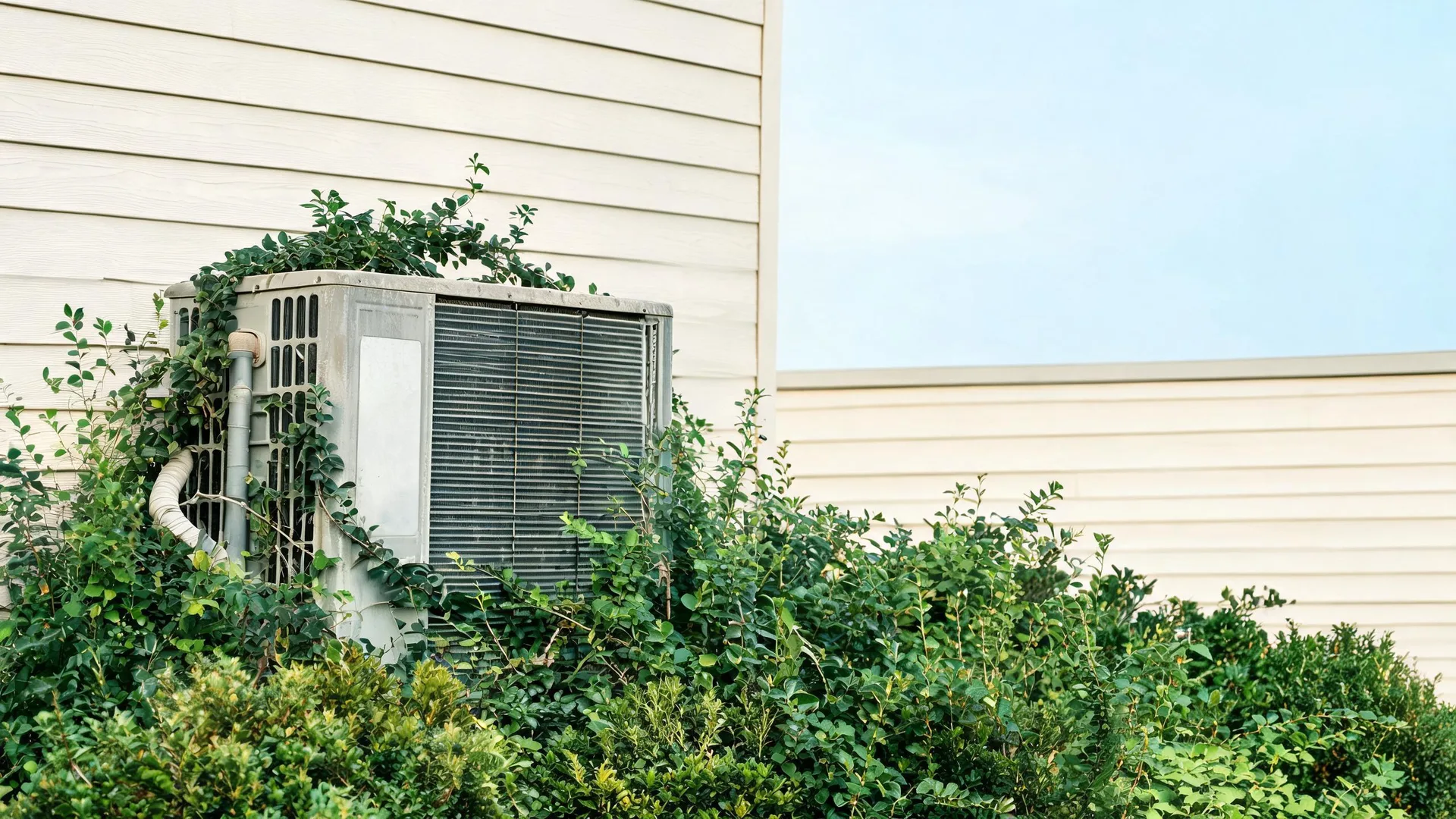
An outdoor heat pump unit mounted on a concrete pad in front of a two-story suburban house with a landscaped lawn.

Heat Pump Repair in Elgin, ND

Tell us about the job

Takes about a minute. No obligation.

RepairHeat PumpGrant County, ND
Step 1 of 2

What ZIP code is the job in?

Half these homes were built in 1962 or earlier

Grant County splits right down the middle on age, half the houses from 1962 or earlier, half newer. A heat pump that came with one of the older homes has likely outlived a normal service life already. Even a newer house may be running on a system nobody has replaced yet.


What that means for a repair call

If your heat pump is old enough to have come with the house, a big repair bill deserves a second question before you pay it. Ask how many years the unit has left in it. That answer matters as much as the price of the repair.

9 months
September through May, your system heats
2 months
July through August, it cools
7°F
the average winter night it heats against
81°F
the average summer afternoon it cools against
Isometric line illustration of a cutaway single-story house showing interior rooms with furniture and ceiling ductwork, connected to an outdoor condenser unit on the ground outside the left wall.
Your system heats September through May and cools July through August.

NOAA nClimDiv, 1991–2020 normals

Grant County has logged 73 hail events and 57 damaging wind events between 2015 and 2024.

The outdoor unit sits through every one of those, out in the open, year after year.

Cheap power still adds up when a heat pump runs badly

Power here costs 12.95 cents per kilowatt-hour
Climate zone 6A
Cooling runs July through August
Nine Months of Heat a YearAugust is the last easy month to get a heat pump looked at before it has to carry the house through winter.

A heat pump that's struggling still draws power the whole time it runs, whether it's actually heating your house or not. A weak unit might run twice as long to get the same result, and here that cost shows up fast with how often the system has to work. Waiting on a repair doesn't save you anything if the unit limps along for another month burning power without heating or cooling the way it should. If yours is icing up, short cycling, or not keeping up with the house, get it looked at before another bill shows the real price of ignoring it.

If your heat pump is as old as the house, get a straight answer before you pay for another repair

A repair on a unit that old is a bet on borrowed time. Before you put money into this one, find out how many years it has left. That number should decide whether you fix it again or replace it now.

Find a contractor
A gray heat pump outdoor unit mounted on a concrete pad next to the stone-accented exterior wall of a house.

What to check before you pick up the phone

A heat pump gives you warning signs before it fails outright, and most of them you can check yourself. Go outside and look at the outdoor unit. If the coil is caked in ice during a stretch of weather that isn't especially cold, that's worth noting. A normal defrost cycle melts that off on its own. One that doesn't clear is telling you something. Listen to it too. A hum with no fan movement, or a compressor that clicks and won't start, means the call is coming either way. Inside, check the air coming out of the vents. Air that feels barely warm, or barely cool in summer, when the system has been running a while, points to a problem moving heat rather than making it. Check the filter while you're at it. A filter packed with dust chokes airflow across the indoor coil, and that alone can cause icing or weak output that has nothing to do with the compressor or the refrigerant. Swap it if it's dirty, then watch whether the symptom clears. Look at the thermostat and make sure it's calling for heat or cooling the way you expect, and check that circuit breakers for both the indoor and outdoor units are on. None of this fixes a failing compressor or a refrigerant leak, but it rules out the simple stuff before anyone comes out, and it tells the tech something useful the moment they walk in.

Short cycling wears out the parts that start it

A heat pump that shuts off and restarts every few minutes is hardest on the compressor and the start components, since the biggest strain happens at startup. Each short cycle also means the system never runs long enough to actually even out the temperature in the house. Left alone, this pattern tends to end in a compressor that won't start at all.

The reversing valve decides which season you lose

A heat pump has one valve that switches it between heating and cooling, and if that valve sticks, the system keeps doing whichever one it was last doing. A unit stuck in cooling mode will blow cold air when the thermostat is calling for heat, and the other way around in summer. That's a part that needs a tech, not a thermostat setting to fight with.

A heat pump that's struggling doesn't fail cleanly. It fails a little more every day it keeps running. A compressor low on refrigerant works harder to move the same amount of heat, and that extra strain is what burns it out early. Ice on the coil blocks airflow, so the system pulls even harder to compensate, which makes more ice. A failing capacitor makes the compressor struggle on every startup until one of those startups doesn't work at all. None of these get better on their own. They get worse at whatever pace the unit keeps running, right up until the part that was struggling quits.

A repair call on a heat pump isn't just about what broke this time. A compressor and a reversing valve are the two expensive parts in the system, and once either one is on its way out, smaller repairs start showing up more often on the way to that bigger one. A tech can patch a capacitor or a contactor cheaply and keep a unit going for a while. They can't do much about a compressor that's been quietly overworking itself for years. If a repair keeps coming back to the same part, or a new problem shows up every few months, that pattern is worth more than any single diagnosis. A machine near the end of its life doesn't usually announce it. It just asks for money more often, in smaller amounts, until one of those amounts isn't small anymore.