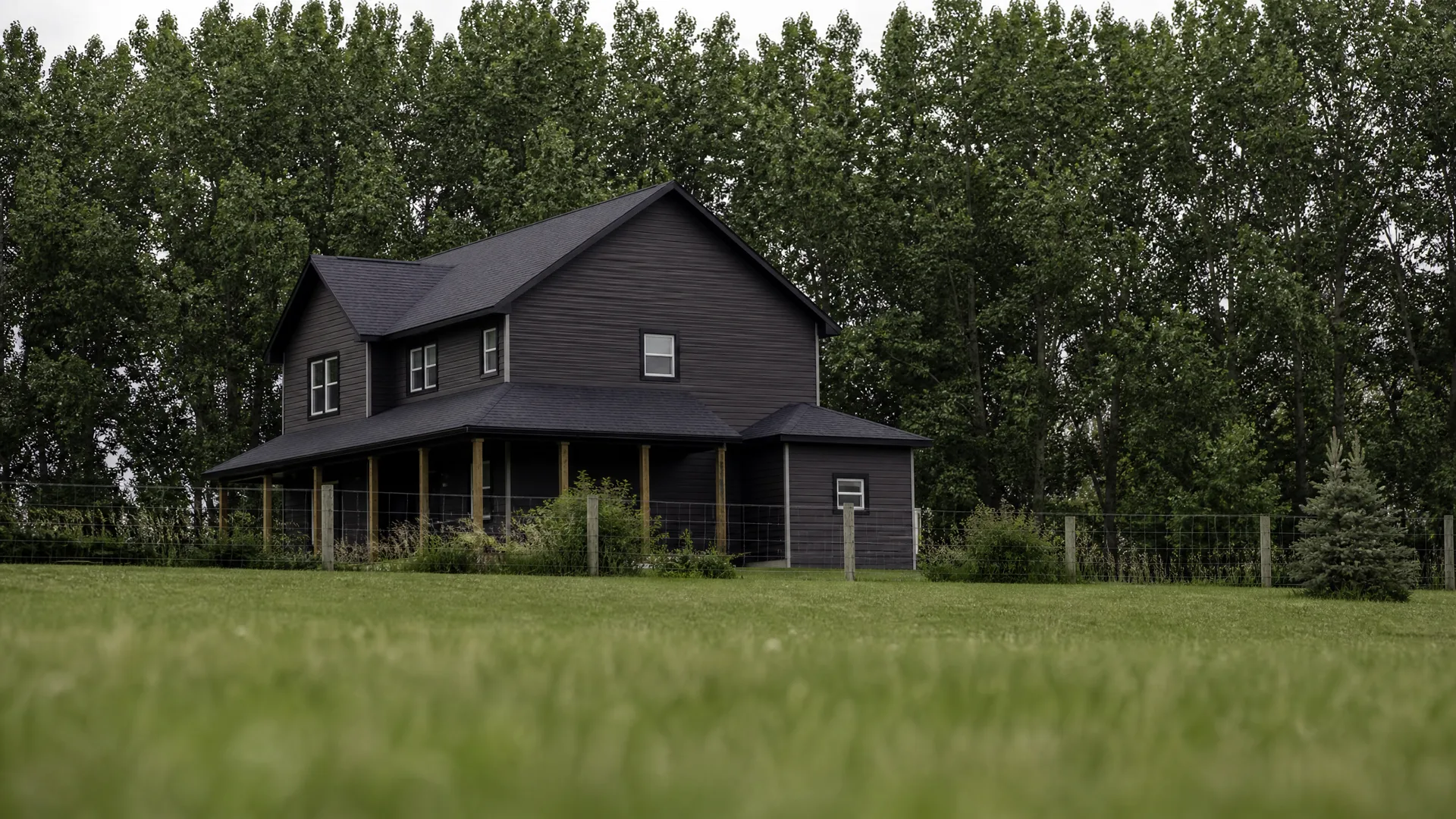
A dark-painted two-story wood-sided farmhouse with a wraparound porch and gabled roof stands behind a wire fence, backed by tall deciduous trees and fronted by a wide mown lawn.

Heat Pump Repair in Fort Yates, ND

Tell us about the job

Takes about a minute. No obligation.

RepairHeat PumpSioux County, ND
Step 1 of 2

What ZIP code is the job in?

A heat pump that runs all winter

Sioux County sits in climate zone 6A, a cold zone with a long heating season. A heat pump here keeps cycling through months most of the country doesn't ask one to work at all, pulling heat out of air that's often well below freezing.

So the part that fails usually failed from use

When a heat pump runs this many hours a year, parts reach their limit sooner than the same unit would somewhere milder. A problem showing up now isn't necessarily a sign of bad luck or a bad install. It's often just the wear you'd expect from the job this machine has been doing.

9 months
September through May, your system heats
3 months
June through August, it cools
7°F
the average winter night it heats against
82°F
the average summer afternoon it cools against
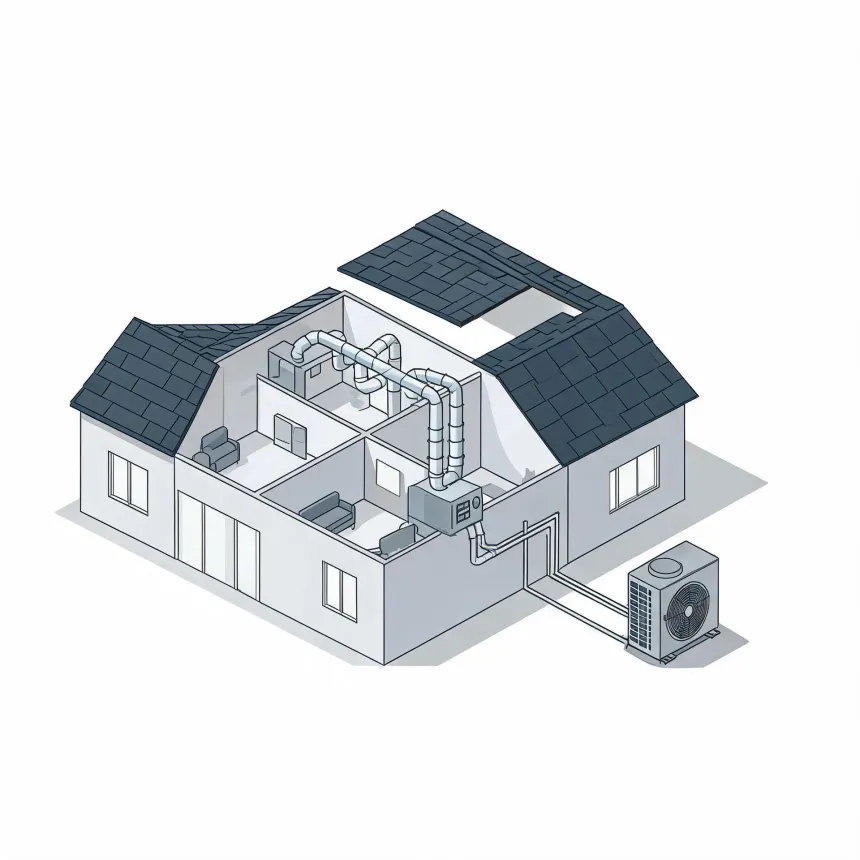
Isometric line illustration of a cutaway single-story house showing interior rooms, ceiling ductwork connected to an indoor air handler, and refrigerant lines running to an outdoor condenser unit on a pad.
Your system heats September through May and cools June through August.

NOAA nClimDiv, 1991–2020 normals

Electricity in Sioux County runs 14.18 cents per kilowatt-hour.

A heat pump that's struggling pulls more of it every day it goes unfixed.

Nine months of heat put the strain on before summer ever gets here

Cooling runs June through August
Heat runs September through May
37 hail events from 2015 to 2024

Half the homes in Sioux County were built in 1984 or later. If yours is one of them, the heat pump itself probably isn't the real problem here. A newer house means the system hasn't had decades of this climate working against it yet. A breakdown on a setup like that is usually one part failing, not the unit reaching the end of its life. That's worth knowing before anyone brings up replacing it instead of just fixing what's wrong.

Have it diagnosed, not guessed at

A heat pump working this many hours a year doesn't fail at random. The part that's acting up failed because of what the job here asked of it, and that's worth finding out before anything gets replaced. A proper diagnosis points at the actual part, so what gets fixed is what's actually wrong.

Find a contractor
A gray air-source heat pump mounted on a concrete pad next to a house with gray vinyl siding, surrounded by gravel and flanked by green shrubs and white hydrangea flowers.

Fix the part, not the system

If a repair is on the table, that's usually the right move on a newer system. Get the part fixed and let the rest of the unit keep working. There's no reason to replace a heat pump over one failed component just because it's had a hard winter or two.

The defrost cycle takes the hardest hits

A heat pump in heating mode builds frost on the outdoor coil and has to reverse itself to melt it off. That cycle depends on a defrost control board and a sensor reading coil temperature. Run it through enough frost and thaw and those parts are what gives out first, along with the reversing valve that switches the system back and forth.

A failing part rarely means a dead unit

Most heat pump breakdowns trace back to one component: a contactor pitted from cycling on and off, a capacitor that's lost its charge, a low-voltage fuse blown by a short. None of that means the compressor is bad. The compressor is the expensive part to replace and usually the last thing to fail, so a technician checks the smaller parts first.

A heat pump that needs repair usually tells on itself before it quits outright. It might run constantly without bringing the house up to temperature, or blow air that feels barely warm at the registers. Short cycling is another one: the system kicks on, runs a couple minutes, shuts off, then starts again soon after. That's hard on the compressor and usually points to a refrigerant or electrical issue. Ice building up on the outdoor unit and staying there, instead of clearing during the defrost cycle, means that cycle isn't working right. A clicking contactor, a hum with no fan movement, or the outdoor unit not starting at all are all signs to get it looked at rather than wait and see.

A heat pump that's not working right still runs, it just runs worse, pulling power the whole time it's struggling to keep up. Electricity here isn't cheap, and a struggling system draws on it every hour it's left unfixed. Waiting doesn't save the repair cost. It just adds the running cost on top of it while the part keeps failing. Getting it looked at now stops that, instead of paying for the bad part twice, once in the bill and once in the fix.