






An outdoor HVAC condensing unit on a concrete pad next to a beige single-story house with a dark shingle roof.

Heat Pump Repair in Grafton, ND

Tell us about the job

Takes about a minute. No obligation.

RepairHeat PumpWalsh County, ND
Step 1 of 2

What ZIP code is the job in?

A heat pump in Walsh County deals with more than cold. Winter storms hit this county 102 times between 2015 and 2024, and the unit outside still has to pull heat from that air every time it runs. Damaging wind came through 71 times in the same stretch. Wind drives snow and ice into the outdoor coil and the cabinet around it, and anything blocking that coil makes the whole system work harder to do the same job. Hail struck 49 times too, and even a dent in the housing or fins can throw off airflow over the coil. None of that means the unit is failing. It means the parts inside have been asked to do more, more often, than a heat pump in a calmer climate. When something starts acting up out here, that wear is usually part of the story, and a proper diagnosis should account for it.

9 months
September through May, your system heats
2 months
July through August, it cools
1°F
the average winter night it heats against
78°F
the average summer afternoon it cools against
Isometric grey-toned illustration of a cutaway house showing interior rooms, ceiling ductwork and an air handler, connected by lines to an outdoor condenser unit beside the building.
Your system heats September through May and cools July through August.

NOAA nClimDiv, 1991–2020 normals

Half the homes in Walsh County were built in 1971 or earlier.

A heat pump that came with a house that old is likely closer to the end of its life than the start.

Cheap power here still adds up when a heat pump is struggling

Power here costs 12.21 cents per kilowatt-hour
Climate zone 7
Cooling runs July through August

Heat runs here from September through May, so the system is almost never fully off. August is when it switches over for the stretch ahead, and that first cold snap in September is when a part that was already marginal tends to quit. A heat pump that struggled at the end of last winter doesn't fix itself over the summer. It sits, and whatever was wearing on it is still worn when the weather turns again. Getting a problem looked at before September, rather than after the first hard freeze, means it gets fixed on a mild day instead of a night near zero.

Get the real cause found, not just the symptom treated

Whatever is acting up on your heat pump right now has likely been building for a while, given what this county throws at the outdoor unit. A proper diagnosis finds the actual part worn down, not just the symptom, so the fix holds through the next storm instead of failing again in a month.

Find a contractor
A man in a dark jacket, cap and tan work pants climbs porch steps toward a red front door, carrying a canvas tool bag in his right hand, with a potted shrub at left.
A dark gray heat pump unit mounted on a concrete pad next to a house with gray siding and a stone veneer wall.

How old is the system behind this repair

If your heat pump came with the house, and the house was built in 1971 or earlier, that age is worth asking about directly. A part failing now on a system that old isn't a one-off event. Ask whoever comes out to look at it straight: how much life is left in this unit, and does a repair make sense given that. Sometimes it does. One worn part on an otherwise sound system is still worth fixing. But that answer should come from someone looking at your actual unit, not from the age of the house alone.

What actually wears out first

The outdoor fan motor runs anytime the system is heating or cooling, so its bearings put in more hours than almost anything else in the house. The reversing valve is next. It's what switches the unit between heating and cooling, and a valve that sticks will leave you with heat when you want cooling or the other way around. The defrost control board tells the unit when to melt ice off the outdoor coil, and when it fails, frost builds up until the coil can't pull in air at all. Capacitors dry out with age and stop giving the compressor and fan motors the jolt they need to start.
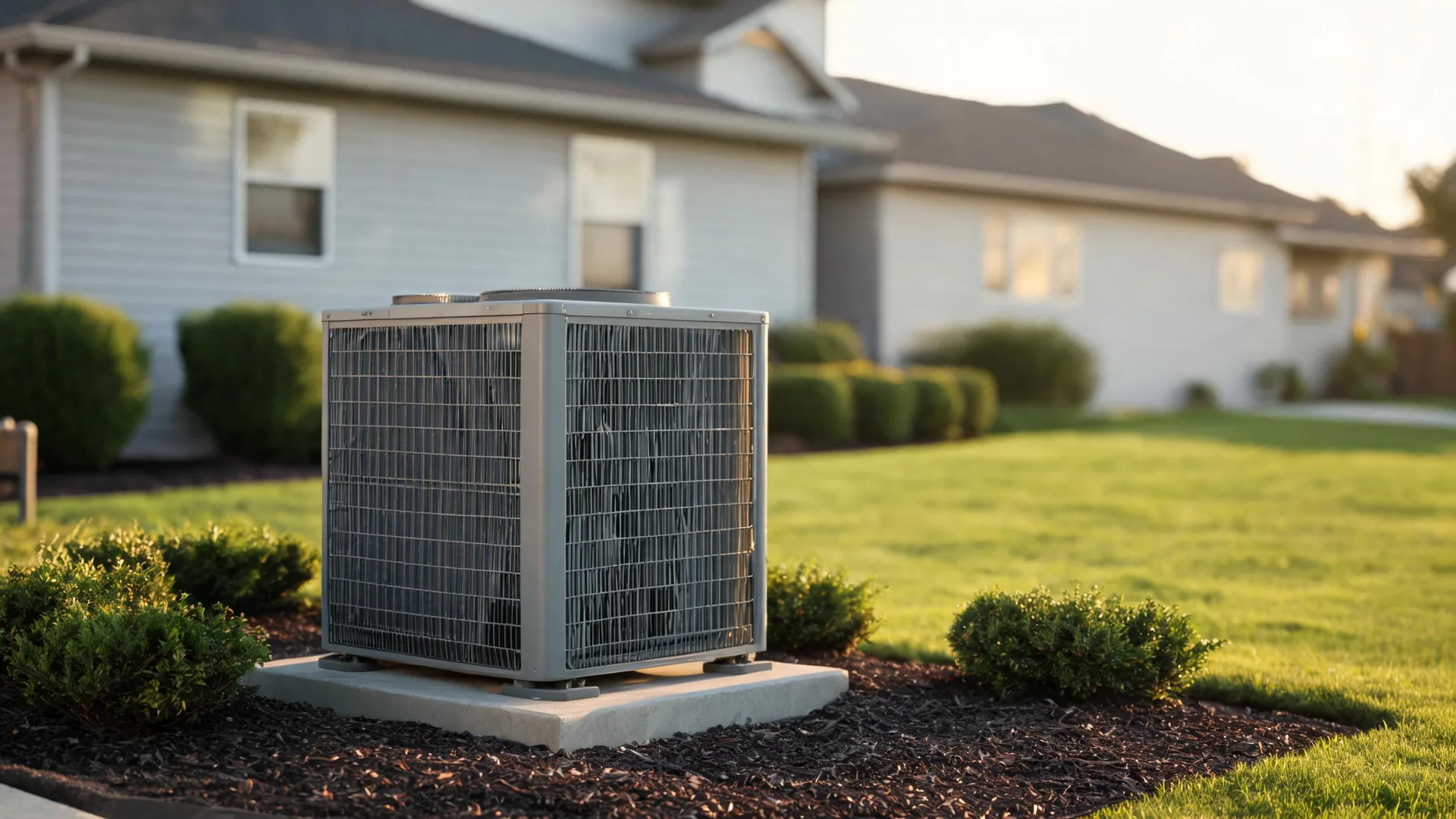
Why a repair call usually starts outside

Most heat pump trouble traces back to the outdoor unit, not the air handler inside. A coil caked with dirt, bent fins, or a fan that's slowed down all choke off airflow, and the system has to run longer to move the same heat. Low refrigerant charge shows up the same way: weak heat, a unit that runs constantly, ice forming where it shouldn't. A tech checking a stuck reversing valve or a failed defrost board usually starts at the outdoor cabinet before touching anything inside, because that's where the heat exchange actually happens.

A heat pump that's struggling doesn't fail cleanly. It fails a little more every hour it keeps running. A weak capacitor still starts the compressor most of the time, until the strain of repeated hard starts breaks something downstream that was fine before. A low refrigerant charge lets the system run constantly trying to reach the temperature you set, and that extra runtime is what turns a slow leak into a frozen coil. Ice on the outdoor coil blocks airflow, so the unit works harder to pull in the same heat, and that extra load is exactly what finishes off a motor or bearing that was already going. The part that's failing is rarely the part that breaks the system. It's usually something else, worn down by having to compensate.

A heat pump that's running long hours to make up for a worn part is pulling power the whole time it does that. Power here is cheap, but a system stuck in a long cycle, or short-cycling over and over, still runs up more than it should every month it goes unfixed. That cost doesn't wait for the unit to fail outright. It starts the day the problem does. Getting it looked at now stops the bleeding instead of waiting to see if it gets worse.