





A row of similar light-colored two-story houses behind a mown lawn, with a chain-link fence running along the foreground and overhanging tree branches at the top of the frame.

Heat Pump Repair in Gwinner, ND

Tell us about the job

Takes about a minute. No obligation.

RepairHeat PumpSargent County, ND
Step 1 of 2

What ZIP code is the job in?

A heat pump in Sargent County is rated zone 6A, which means a long stretch of cold months with no real break for the system. Winter storms have hit the county 57 times between 2015 and 2024, and every one of those means the outdoor unit is pulling heat from freezing air while snow and ice pile up around it. Hail has struck 21 times in that same stretch, and the outdoor coil and fan sit outside with nothing shielding them from it. A machine that runs through weather like that wears down faster than one that gets an easy season. When something starts acting up, it's worth finding out which part gave out and why, not just patching over it.

9 months
September through May, your system heats
3 months
June through August, it cools
5°F
the average winter night it heats against
80°F
the average summer afternoon it cools against
Isometric grayscale illustration of a cutaway house showing interior rooms, ducted air handler and duct runs, connected by pipes to an outdoor condenser unit beside the building.
Your system heats September through May and cools June through August.

NOAA nClimDiv, 1991–2020 normals

Electricity here runs 12.27 cents a kilowatt-hour, cheaper than most of the country.

A heat pump that's struggling still pulls power the whole time it runs, so a bad part costs you every month it's ignored.

Nine months of heat, three of cooling, and no real gap between them

Cooling runs June through August
Heat runs September through May
21 hail events from 2015 to 2024

A heat pump that's not working right doesn't shut itself off. It keeps drawing power and keeps falling short, whether that's short cycling, running constantly, or blowing air that's not as warm as it should be. Cheap electricity doesn't help you if the unit is running longer than it needs to just to get the same heat into the house. Waiting on a repair doesn't pause the bill, it just lets a bad capacitor or a failing compressor run up the cost of staying warm. The sooner a tech finds the actual part that's failing, the sooner the bill goes back to what it should be.

Get the real cause found, not just the symptom

Find out what's actually failing before it takes more of the system with it. A tech who knows what this climate does to a heat pump can trace the problem to the right part instead of guessing at it.

Find a contractor
A man in a gray long-sleeve shirt, olive pants, cap and boots walks up porch steps toward a red front door, carrying a canvas tool bag beside a potted plant in a terracotta pot.
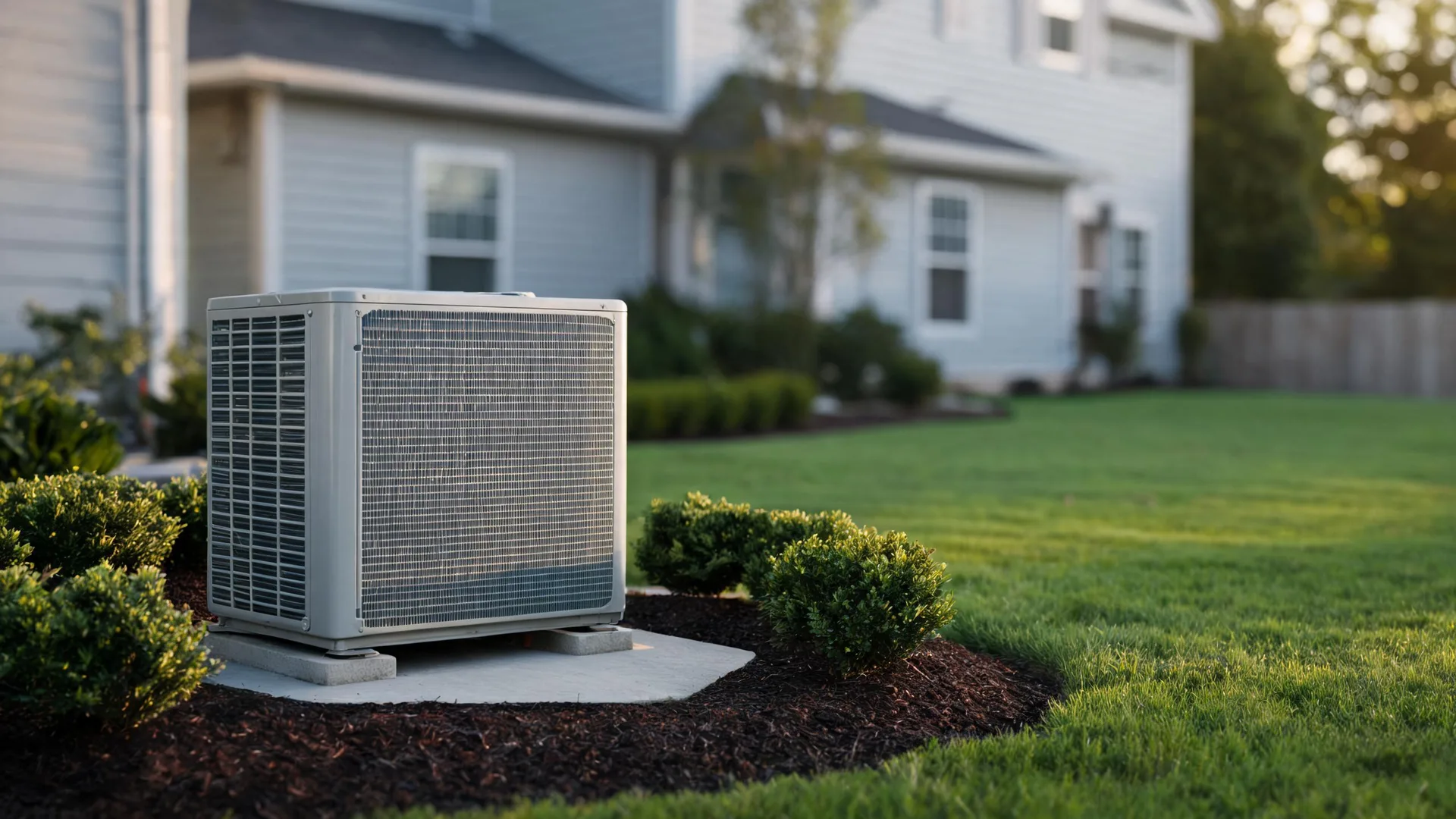
A gray air-source heat pump mounted on a concrete pad next to a house with gray vinyl siding, surrounded by gravel and flanked by green shrubs and white hydrangea flowers.

What to check before you call

Before anyone comes out, there are a few things worth checking yourself. Look at the outdoor unit first. If it's buried in snow or caked in ice, that alone can cause the system to struggle or shut down, and clearing it off sometimes solves the problem on its own. Check the air filter next. A clogged filter restricts airflow across the indoor coil, and that can cause anything from weak heat to a unit that won't stop running. Walk around to the vents and registers and make sure none of them are blocked by furniture or closed off. While you're inside, check the thermostat. Make sure it's set to heat, the temperature is actually set above room temperature, and the batteries aren't dead if it uses them. Look at the breaker panel too. A tripped breaker will shut the whole system down, and it's a quick thing to rule out before assuming the worst. If you smell something burning or hear grinding, clicking or buzzing that wasn't there before, turn the system off and don't run it again until someone's looked at it. Running a unit with a failing part can turn a small repair into a bigger one fast.

A struggling compressor doesn't rest, it strains

When a compressor is low on charge or losing efficiency, it doesn't just work a little harder and move on. It runs longer to hit the same temperature, builds up heat it shouldn't, and wears against whatever is already failing inside it. A compressor that gives out completely is one of the most expensive parts of the whole system to replace.
A small electrical fault spreads to bigger parts

A failing capacitor makes the compressor or fan motor struggle to start, and every hard start puts stress on the motor windings themselves. Keep running the system on a bad capacitor and you're not saving the motor, you're grinding it down. What starts as one cheap part can end with a motor that needs replacing too.

Most people notice a heat pump problem through comfort, not sound. The air coming out of the vents feels cool instead of warm, even though the system is running. That usually means it's stuck in defrost longer than it should be, or the reversing valve isn't switching all the way over. Short cycling is another sign, where the unit kicks on, runs a few minutes, and shuts off before it's done anything useful. Ice building up on the outdoor coil and staying there, instead of melting off during a normal defrost cycle, points to a problem with the defrost control or the sensor that tells it when to switch. Any of these are worth a call before the unit starts working harder to cover for the part that's already failing.

A diagnostic visit starts outside, at the unit itself, before anything gets taken apart. A tech checks refrigerant pressure, looks at the reversing valve, and watches how the system responds when it's told to switch between heating and defrost. Electrical readings come next: the capacitor gets tested under load, not just looked at, since a capacitor can look fine and still be failing. The contactor gets checked for pitting, and wiring connections get checked for anything loose or corroded, since a loose connection can mimic a failing part. Airflow gets measured too, because weak airflow across the indoor coil can look like a refrigerant problem when the real issue is a dirty coil or a failing blower motor. The goal is to find the one part actually causing the symptom, not to replace everything that could theoretically be involved.