






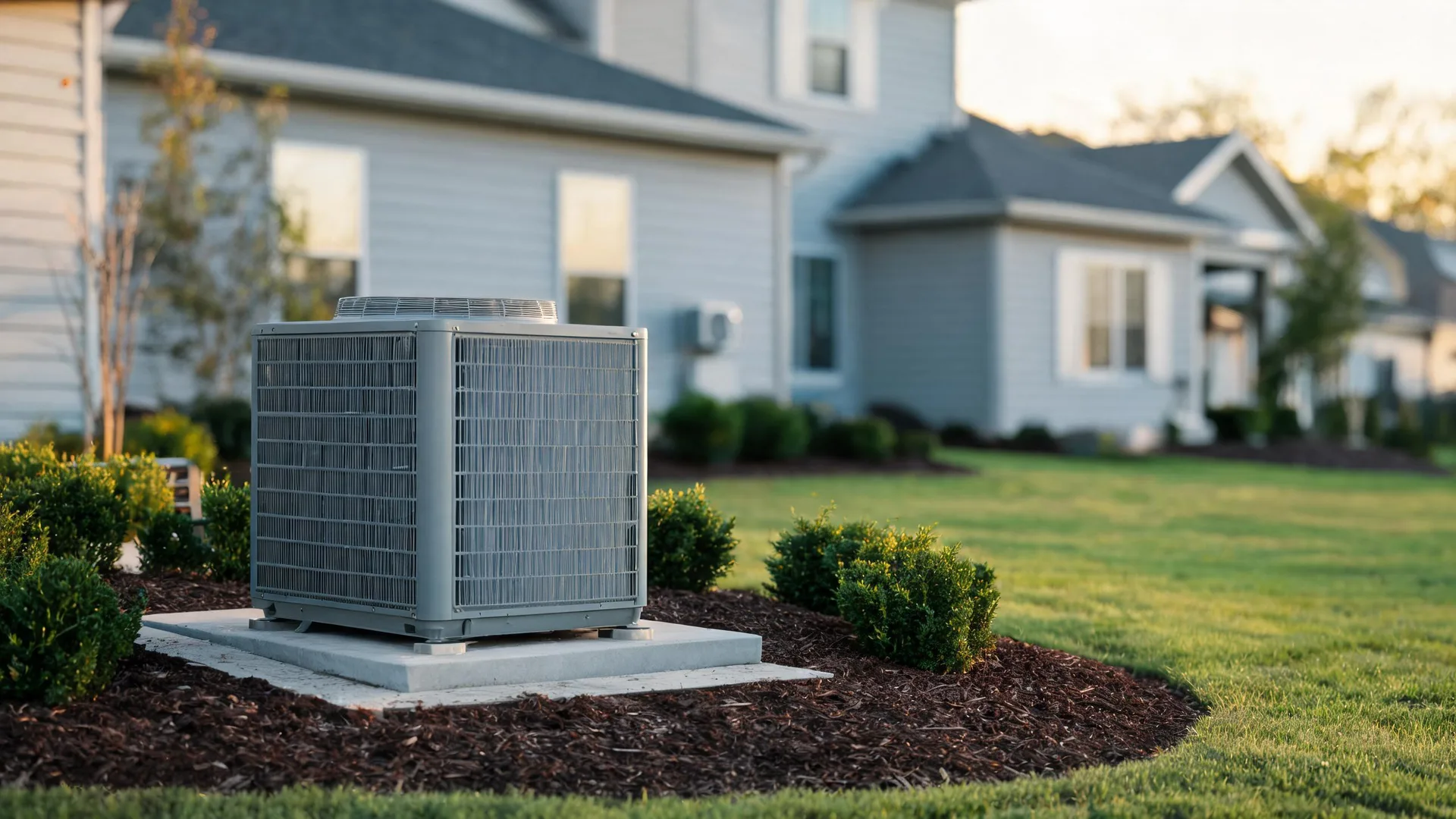
A grey residential air-conditioning condenser unit mounted on a concrete pad beside a house, photographed at sunset.

Heat Pump Repair in Jamestown, ND

Tell us about the job

Takes about a minute. No obligation.

RepairHeat PumpStutsman County, ND
Step 1 of 2

What ZIP code is the job in?

A heat pump in Stutsman County earns its keep both directions, pulling heat out of cold air all winter and working the reverse all summer. Zone 6A means a long heating season, and that's a lot of hours on the compressor and the reversing valve. Weather here doesn't help it along. Stutsman County saw 82 damaging wind events and 37 winter storms between 2015 and 2024, and an outdoor unit sitting through that takes a beating on its coil and cabinet. Hail hit the county 59 times in that same stretch, and a dented coil or bent fins cut down how well the unit can move heat at all. A system working under those conditions wears sooner than the manual assumes, so a problem that looks small is worth having a contractor look at closely rather than guess at.

9 months
September through May, your system heats
2 months
July through August, it cools
4°F
the average winter night it heats against
79°F
the average summer afternoon it cools against
Isometric cutaway illustration of a small house showing interior ductwork and an air handler connected by lines to an outdoor condenser unit on a pad beside the building.
Your system heats September through May and cools July through August.

NOAA nClimDiv, 1991–2020 normals

Electricity here runs 12.41 cents a kilowatt-hour, cheaper than most of the country.

A heat pump that's short cycling or running constantly still burns through that cheap power fast, and a bad month adds up.

Half the homes here were built before your heat pump technology even existed

Half the homes here were built by 1973
Climate zone 6A
Power here costs 12.41 cents per kilowatt-hour
September Is When the Weak Part FailsHeat here switches on in September after nine months of standby, and that first cold push is when a tired part gives out.

A heat pump that's struggling doesn't sit quietly using less power. It runs longer to hit the same temperature, or it short cycles and starts over and over, and either way the compressor is working through more cheap kilowatts than it should. That cost shows up on next month's bill before it shows up as a repair on your schedule. Waiting doesn't save you anything here, since the unit keeps drawing power the whole time it's struggling. A contractor can usually tell within one visit whether it's a refrigerant charge, a failing capacitor, or something in the reversing valve, and from there you know what you're dealing with instead of guessing while the bill climbs.

Get the Wear Diagnosed, Not Guessed At

A heat pump that's wearing out faster than it should still needs a straight answer about what's actually wrong with it. A contractor can check the coil and cabinet for storm damage, check the charge, and look at the reversing valve before deciding what to replace. That's a better place to start than guessing based on how old the unit is or what it sounds like.

Find a contractor
A white mini-split heat pump outdoor unit mounted on a concrete pad beside a gray-sided house, surrounded by gravel and green shrubs.

If It's Original to the House, Ask About Its Life Left

If your heat pump came with the house, that history already told you it's not new technology. Before paying for a big repair, ask the contractor straight out how many years it likely has left in it. A compressor or reversing valve repair is worth doing on a unit with life ahead of it. On one that's near the end, that same repair just buys a few months before the next part fails. Get that answer first, then decide what to spend.

Most Failures Start With the Reversing Valve or the Capacitor

The reversing valve is what lets a heat pump switch between heating and cooling, and it fails by sticking, either stuck in one mode or refusing to switch at all. A run capacitor wears down over years of starting and stopping the compressor and the fan motor, and when it goes weak, the compressor struggles to start or the outdoor fan barely turns. Low refrigerant charge is the other common one, almost always from a slow leak at a fitting or coil joint rather than the system just running low on its own.
A Failing Part Rarely Gives Out Clean

A weak capacitor still lets the unit limp along for a while, running longer than it should or short cycling before it finally fails outright. A reversing valve that's starting to stick might work fine for weeks, then suddenly leave the system blowing cold air when it should be heating. That's why a system acting strange is worth a look even if it's still technically running. Catching the part before it fails completely usually means a simpler repair than waiting for it to quit.

A heat pump usually tells you something is wrong before it quits outright. The outdoor unit might run long after it should have cycled off, or it might start and stop over and over without settling in. Ice building up on the outdoor coil in weather that shouldn't cause it is another sign, same with air coming out of the vents that's barely warm or barely cool. A hissing or bubbling sound near the lines usually points to refrigerant escaping somewhere it shouldn't. If the system blows the wrong temperature air for the setting it's on, or switches between heating and cooling on its own, that's the valve telling on itself. None of these mean the unit is done. They mean a part is already failing and the rest of the system is compensating for it.

Age by itself doesn't tell you whether to repair or replace. What matters is which part failed and what else is close behind it. A capacitor or a run of low refrigerant from one leak is a straightforward fix on a system that's otherwise sound, worth doing no matter how old the unit is. A failing compressor is a different conversation, since labor on that job starts to rival a new system and the rest of the unit is usually worn to match it. The real question is whether the part that broke was a wear item on its own, or the first of several things about to go. A contractor who's opened the cabinet and checked the coil, the valve and the charge can tell you which one you're looking at. Guessing from the unit's age alone leaves you either replacing something fine or dumping money into something that's not worth saving.