






A grey air-source heat pump outdoor unit mounted on a concrete pad next to a modern white-rendered residential house.

Heat Pump Repair in Langdon, ND

Tell us about the job

Takes about a minute. No obligation.

RepairHeat PumpCavalier County, ND
Step 1 of 2

What ZIP code is the job in?

A heat pump that needs a repair now and then is just doing its job. One that keeps needing the same repair, or a new one every few months, is telling you something else. The compressor is the part to watch. It's the most expensive thing in the system, and when it starts to go, the signs show up as weak heating or cooling before it fails outright. A reversing valve stuck in one position, or a defrost board that won't cycle right, can often be replaced on its own. A failing compressor usually can't, not at a cost that makes sense next to a new unit. If a tech is coming out for the same complaint again and again, that pattern matters more than any single repair.

9 months
September through May, your system heats
1 months
July through July, it cools
0°F
the average winter night it heats against
76°F
the average summer afternoon it cools against
Isometric cutaway illustration of a house showing interior ductwork, an indoor air handler unit, and an outdoor condenser unit beside the building.
Your system heats September through May and cools July through July.

NOAA nClimDiv, 1991–2020 normals

Electricity here runs about 12.76 cents per kilowatt-hour, cheaper than most of the country.

A heat pump that's struggling still pulls power the whole time it runs, so a bad repair costs you every month it waits.

Nine months of heat, one month of cooling, and this machine gets no break between them

Cooling runs July through July
Heat runs September through May
38 hail events from 2015 to 2024

Half the homes in Cavalier County were built in 1968 or earlier. If yours is one of them, the heat pump itself is almost certainly not that old, but the ductwork and electrical it's tied into might be original. A compressor straining against a duct run it was never sized for wears faster than one working the way it was designed to. When a repair bill comes in on an older setup, it's worth asking the tech whether the problem is the unit or what it's hooked up to. That answer changes whether a repair is the right move or just a delay.

Get it diagnosed properly

Your heat pump works hard here, and that's usually what's behind the problem. Have it diagnosed properly so the fix lasts.

Find a contractor
A man in a dark jacket, cap and tan work pants climbs porch steps toward a red front door, carrying a canvas tool bag in his right hand, with a potted shrub at left.
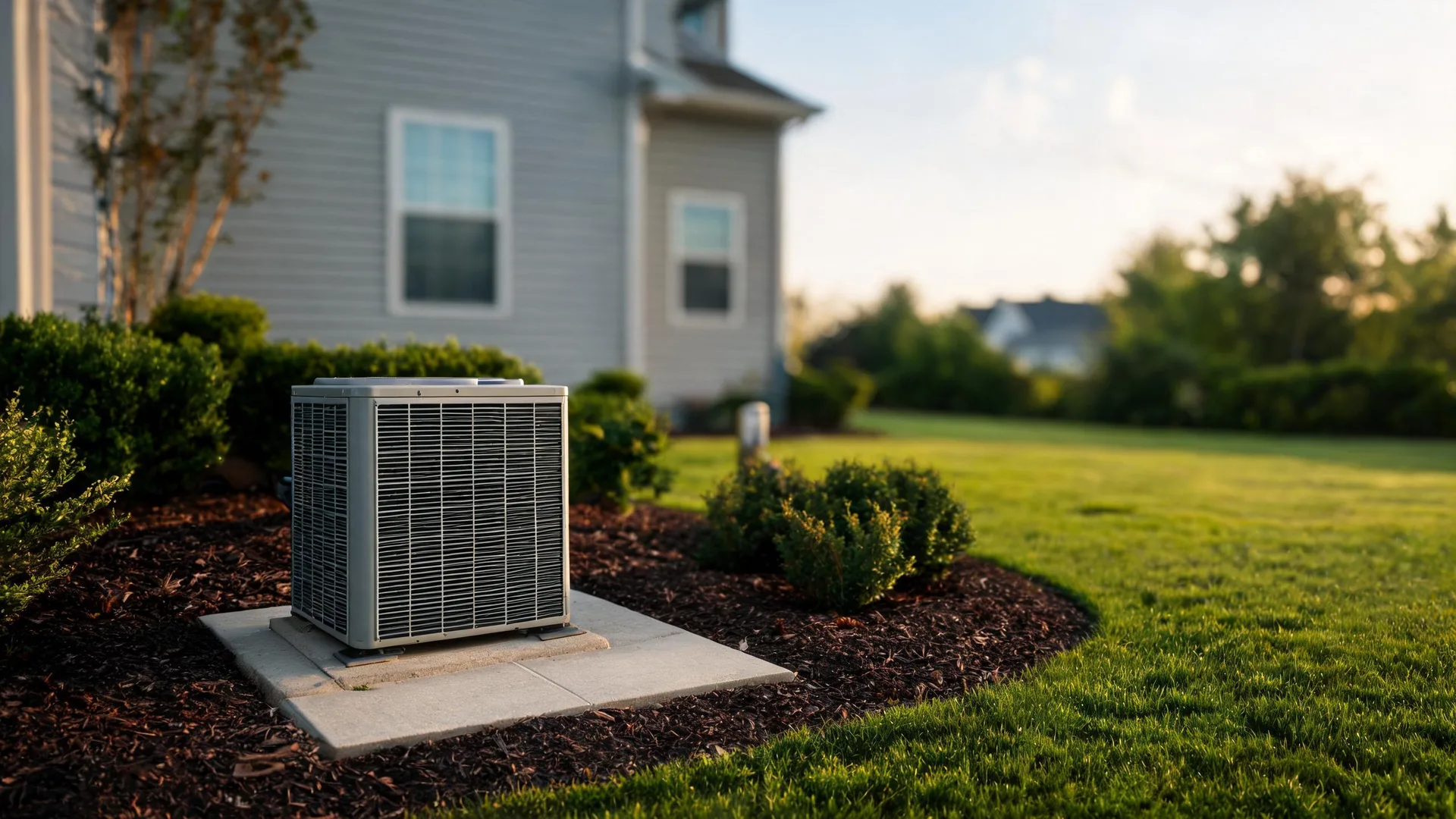
A residential heat pump outdoor unit mounted on a concrete pad next to a house with gray vinyl siding.

Ask what the repair is actually fixing

Ask the tech one question before any repair goes forward: is this the unit, or what it's tied into. If the ductwork is original to the house, that answer decides whether a repair is worth doing or just buys a few months. A heat pump matched to the ductwork it was actually designed for wears at a normal pace. One fighting an old duct run every time it cycles will keep coming back for the same complaint, no matter how new the unit is.

What shows up first

A heat pump in trouble rarely just stops. It runs longer than it used to without getting the house to temperature. Air comes out of the vents barely warm or barely cool. It short cycles, kicking on and off in quick bursts instead of settling into a steady run. Outside, the unit might ice over in weather that never used to trouble it, or run constantly without shutting off at all. Any of these on their own is worth a call. A couple together usually means something specific has failed, not just an off day.
What it means for the job ahead

Tell the tech exactly what you noticed and when, not just that something seems off. Weak airflow points somewhere different than a unit that won't switch between heating and cooling. Ice on the coil that won't clear on its own points somewhere else again. The more specific the complaint, the faster the tech gets to the actual part, instead of working through the whole system to find it. If the same symptom already came back once, say that too. It changes what they check first.

A refrigerant leak is the clearest example of a problem that gets worse with runtime. The compressor needs a certain amount of refrigerant moving through it to stay cool while it runs. Keep running it low and it builds heat it can't shed, and that heat breaks down the oil that lubricates its internals. A leak caught early is a repair. A leak run for weeks is sometimes a compressor replacement. Electrical faults work the same way. A connection that's loose or starting to corrode will arc a little under load, and that arcing damages the contact further every time the system cycles. Ice on the outdoor coil is another one. A little ice looks minor, but it blocks airflow across the coil, so the system works harder to move the same heat, and that extra strain shows up in parts that were never the original problem.

A struggling heat pump doesn't use less power, it uses more. The compressor runs longer trying to reach the setpoint, or it short cycles and draws a hard startup current over and over, cycling on and off instead of settling in. Either way the meter keeps spinning for a machine that isn't doing its job. Power is cheap here, but cheap still adds up when it's wasted every day a repair gets put off. Fixing it now stops the bleeding. Waiting just stacks a worse electric bill on top of the repair you'll still need.