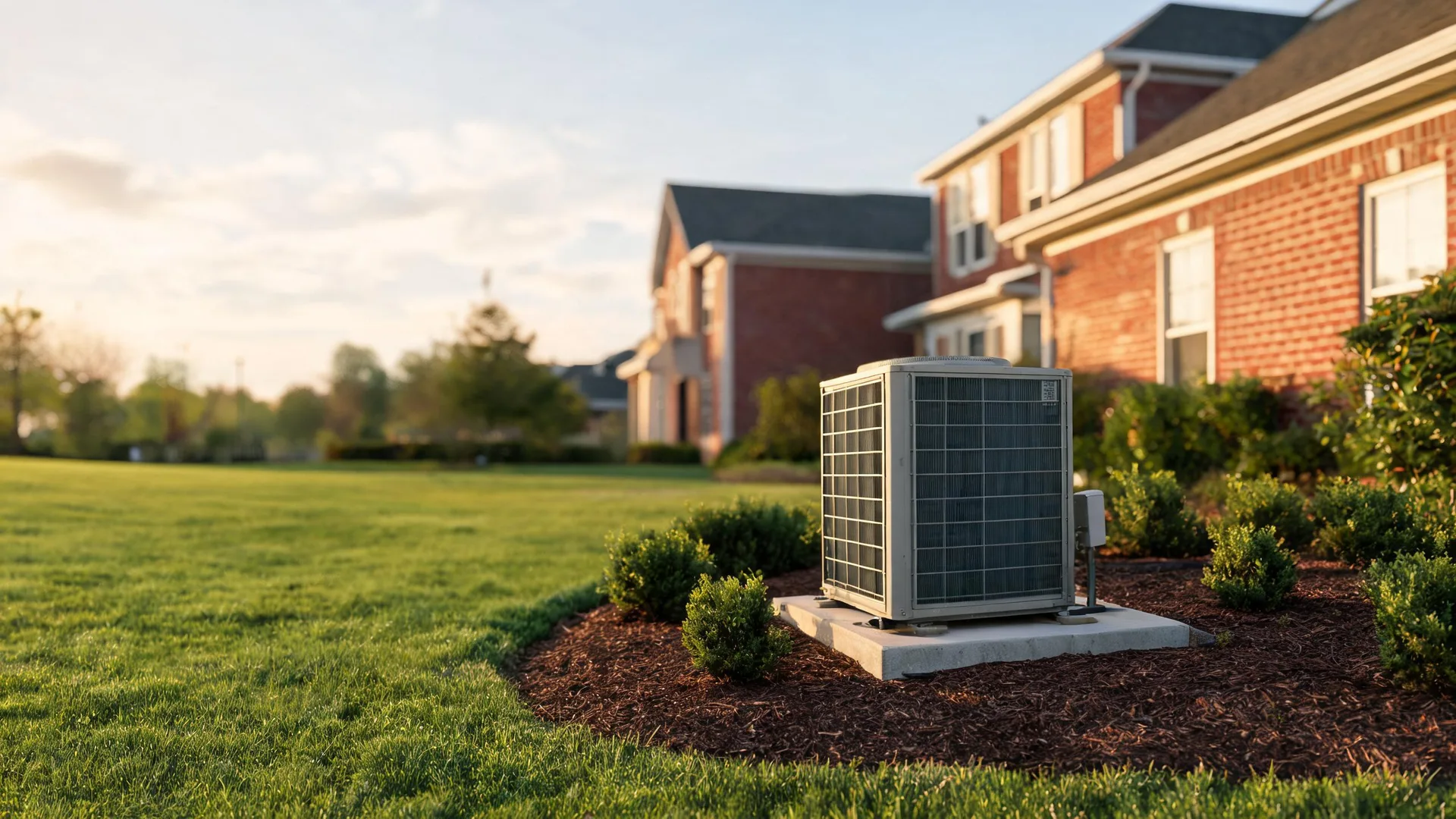
A grey outdoor HVAC unit mounted on a concrete pad beside the beige-sided exterior wall of a suburban house.

Heat Pump Repair in Leeds, ND

Tell us about the job

Takes about a minute. No obligation.

RepairHeat PumpBenson County, ND
Step 1 of 2

What ZIP code is the job in?

The weather here doesn't let up

Benson County had 87 damaging wind events and 60 hail events between 2015 and 2024, and winter storms hit 39 times in that same stretch. A heat pump outside sits through all of it, then still has to pull heat from freezing air once the snow clears. That kind of exposure wears on the outdoor unit faster than calendar age would suggest.

What that means for your repair

A system that runs under this much strain is more likely to have a real cause behind whatever it's doing, not something minor. Whatever part is acting up deserves a proper look at what carries the heaviest load, so the fix holds instead of coming back.

9 months
September through May, your system heats
2 months
July through August, it cools
1°F
the average winter night it heats against
78°F
the average summer afternoon it cools against
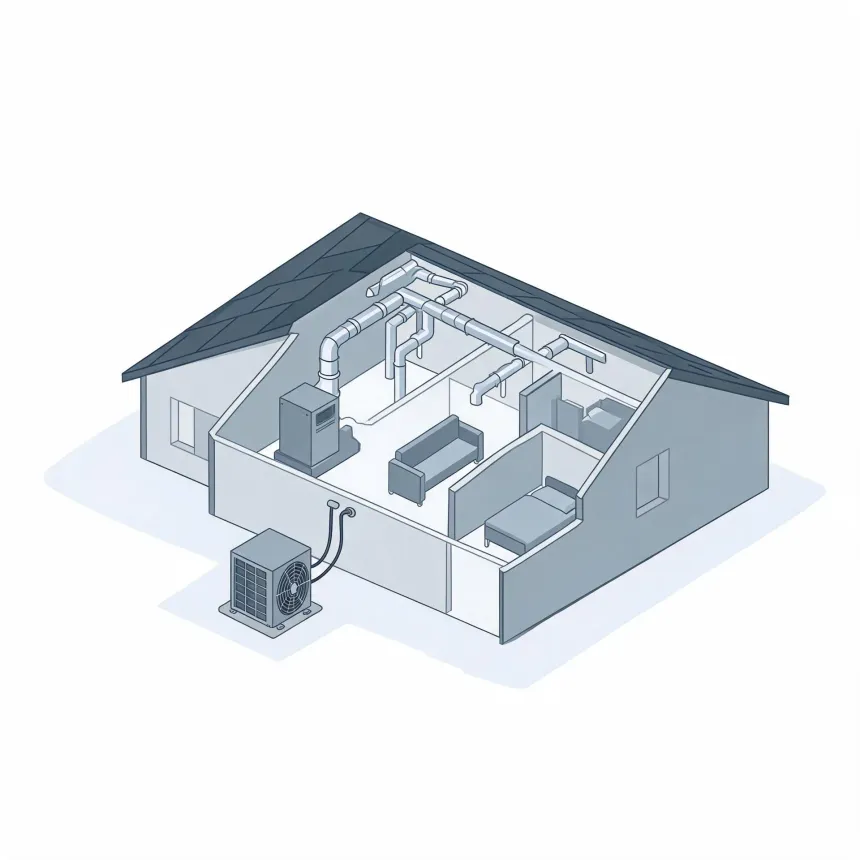
Isometric cutaway illustration of a single-story house showing interior rooms with furniture, an attic duct network connected to a furnace or air handler, and an outdoor condenser unit linked by lines outside the wall.
Your system heats September through May and cools July through August.

NOAA nClimDiv, 1991–2020 normals

Heat here switches on in September and stays on through May.

A heat pump that was already struggling in spring usually fails again in the first cold snap, not months into winter.

Power here is cheap, but a heat pump running wrong will still cost you more every month it goes unfixed

Power here costs 10.52 cents per kilowatt-hour
87 damaging wind events from 2015 to 2024
60 hail events from 2015 to 2024

Half the homes in Benson County were built in 1972 or earlier. If yours is one of them, your heat pump may not be the original one, but whatever unit is out there now has likely been through more than one replacement already. Older homes also tend to pair with ductwork and electrical setups that were sized for whatever heated the place before heat pumps were common, and that can mean the system works against its surroundings as well as its own age. A repair on a unit that's already near the end of what it's got makes sense to question before you pay for it. Worth asking whoever comes out how much life is actually left in it.

Get the real cause found, not just the symptom

A heat pump that sits through this much wind, hail and winter storm already works harder than most. When it starts acting up, that strain is usually part of why. Have the outdoor unit checked for what's actually carrying the load, so whatever gets fixed stays fixed.

Find a contractor
A man in a dark long-sleeved shirt and dirt-stained tan jeans walks away from the camera up porch steps toward a red front door, carrying a worn canvas and leather tool bag.
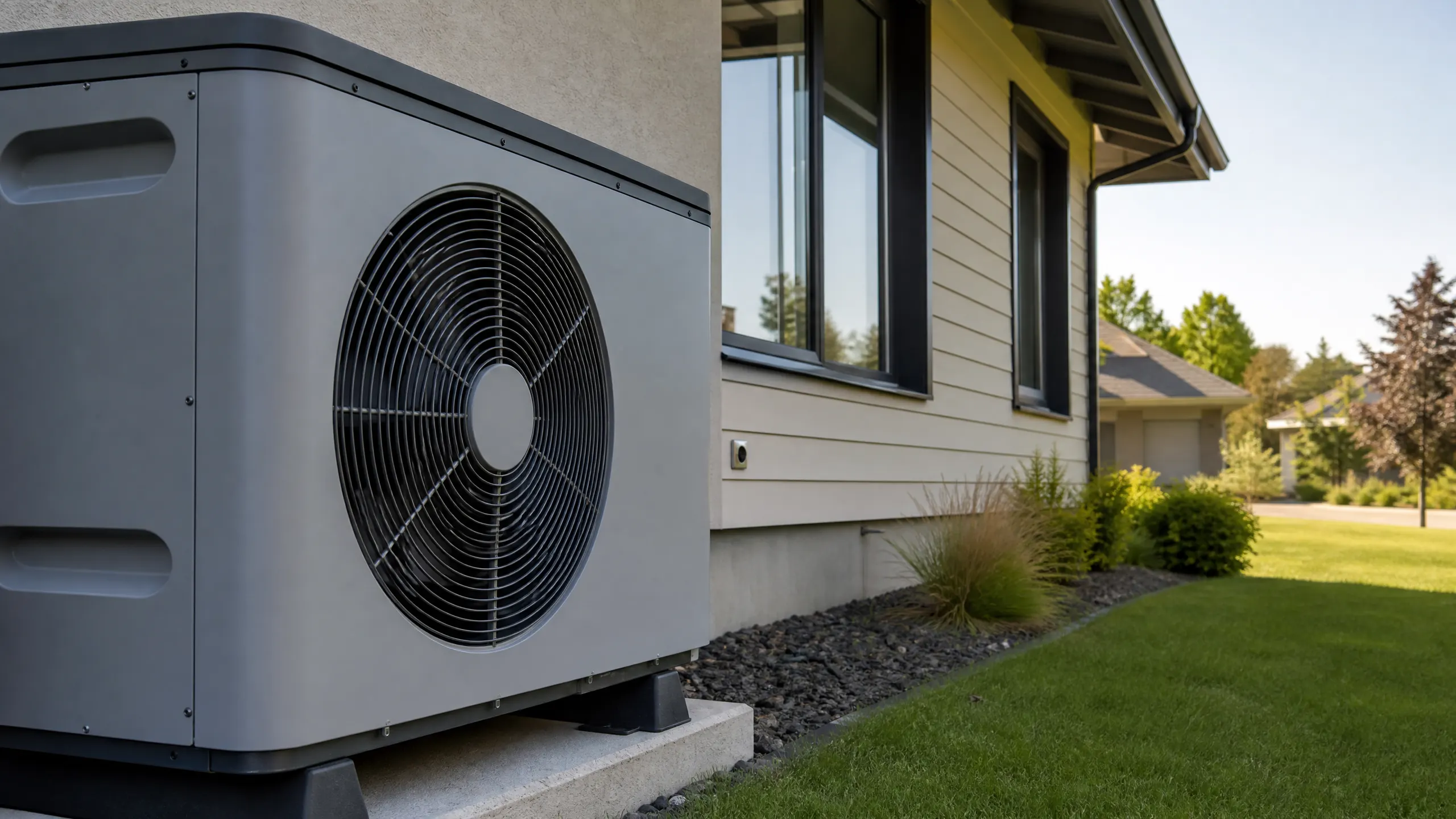
A gray outdoor HVAC unit mounted on a concrete pad beside a house with gray lap siding and a stone foundation.

Ask what you're actually repairing

A heat pump doesn't announce how many years it has left. It just keeps running until it can't, and the running doesn't stop for a strained part or a stretch of hard weather. Before paying for this repair, ask whoever comes out to look at the whole unit, not just whatever's failing right now, and give a straight answer on what's left in it.

What a failing heat pump sounds and feels like

A heat pump that needs attention usually tells you before it quits outright. Air coming from the vents that's cooler than it should be in heating mode, or warmer than it should be in cooling mode, often points to a refrigerant leak or a failing reversing valve. Short cycling, where the unit kicks on and off every few minutes instead of running a full cycle, points to a bad sensor or a unit that's lost its charge. Ice building up on the outdoor coil and not clearing during the defrost cycle means that part of the system isn't working right. A grinding or squealing sound from the outdoor unit usually means a motor bearing or fan blade is going bad, and it tends to get worse, not better, if left alone.

What's worth a call and what can wait

Some signs mean shut it off and get someone out now. A burning smell, a breaker that keeps tripping, or ice covering the whole outdoor unit all point to something that can cause real damage if it keeps running. Other signs, like weaker airflow or a slight rise in how long the system runs to hit the same temperature, mean the unit is struggling but probably isn't about to fail today. Either way, a heat pump that's working harder than it used to is usually telling you a part is wearing out, and the part that's straining now is often not the one that fails first.

Most heat pump failures start with something that moves. The reversing valve shifts the system between heating and cooling, and when it sticks, the unit either won't switch modes or gets stuck running one. The compressor fails when it's asked to run with low refrigerant charge or electrical problems, and once a compressor goes, it's usually the costliest part in the whole system. Capacitors wear out from the strain of starting the motors over and over, and when one goes weak, the fan or compressor struggles to start at all. Defrost board failures are common too, and when the board stops telling the system to defrost, ice builds up on the outdoor coil and chokes off airflow. A refrigerant leak rarely announces itself. It just shows up as weaker heating or cooling that gets worse over weeks, not days.

Power rates here are low, but a heat pump that's short cycling or running constantly doesn't care what the rate is. It's drawing power the whole time it runs, and a unit working against a stuck valve or a weak capacitor runs more than it should just to keep up. That shows up on next month's bill whether the rate is high or not. Waiting doesn't save you anything if the unit is already straining. Getting the actual part fixed stops the extra draw at the source, which is the only way to bring the cost back down.