





A snow-covered suburban street at dusk with lit houses and bare trees under a twilight sky.

Heat Pump Repair in Lisbon, ND

Tell us about the job

Takes about a minute. No obligation.

RepairHeat PumpRansom County, ND
Step 1 of 2

What ZIP code is the job in?

A heat pump in Ransom County earns its keep. It has to pull heat out of cold air for months at a stretch, then switch around and deal with summer humidity on top of it. Ransom County sees winter storms often, 54 of them between 2015 and 2024, and a unit running through heavy snow and ice is working under a strain that machines in milder places never see. Hail is part of the picture too, with 28 events over that same stretch, and an outdoor unit sitting through that kind of weather takes a beating on the coil and cabinet. When a system like that starts acting up, the cause is rarely random. A tech who knows what this climate does to a heat pump can look at the wear in the right order and find the actual problem, not just patch the symptom.

9 months
September through May, your system heats
3 months
June through August, it cools
5°F
the average winter night it heats against
80°F
the average summer afternoon it cools against
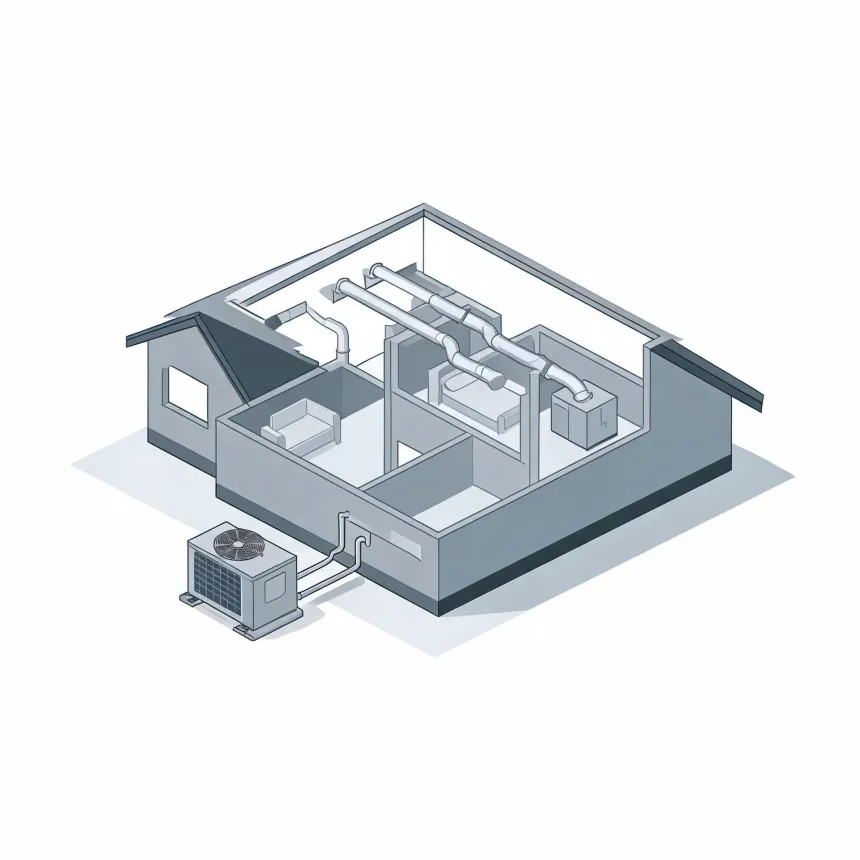
Isometric grayscale illustration of a cutaway house showing interior rooms, ceiling ductwork and an air handler, connected by lines to an outdoor condenser unit on a pad outside.
Your system heats September through May and cools June through August.

NOAA nClimDiv, 1991–2020 normals

Half the homes in Ransom County were built in 1969 or earlier.

A heat pump that has been through decades of this county's storms and hail is closer to the end of its life than the middle.

Cheap power still adds up when a heat pump is struggling

Power here costs 12.58 cents per kilowatt-hour
Climate zone 6A
Cooling runs June through August
Nine months of work a yearHeat here runs September through May, so August is when a weak part gets found the hard way.

A heat pump that's lost its charge or is stuck running the backup strips doesn't stop pulling power, it just stops giving you much heat for the power it pulls. In a county where most homes heat with electricity through a hard winter, that difference shows up fast. The fix usually isn't expensive on its own, but waiting costs you every day the unit runs wrong. If yours is struggling, get it looked at before another cold month goes by on a system working overtime for less heat.

Know what you're repairing before you pay for it

Before paying for a major repair, it's worth finding out how much life the unit has left. A tech can tell you whether the compressor and coil are holding up or whether you'd be sinking money into a machine on its way out.

Find a contractor
A gray air-source heat pump mounted on a concrete pad next to a house with gray vinyl siding, surrounded by gravel and flanked by green shrubs and white hydrangea flowers.

Every storm leaves a mark somewhere in this unit

The clip beside this runs a full day and night, but the stretch that matters more is the one already behind this unit. Years of storms and hail have already put their mark on it, and that kind of wear does not show up all at once. It shows up later as a part that gives out sooner than it should, in a system that never got a break between winter and summer. If this one is acting up now, that history is probably part of why. A tech who checks the wear in order, rather than guessing at it, can tell you if this is a quick fix or the start of something bigger.

A failing compressor won't fix itself by running

A compressor low on refrigerant keeps cycling on a starved system, and every cycle that way heats up the windings more than it should. Run it long enough in that state and you go from a repair to a full compressor swap, which on a heat pump is most of the cost of the unit.
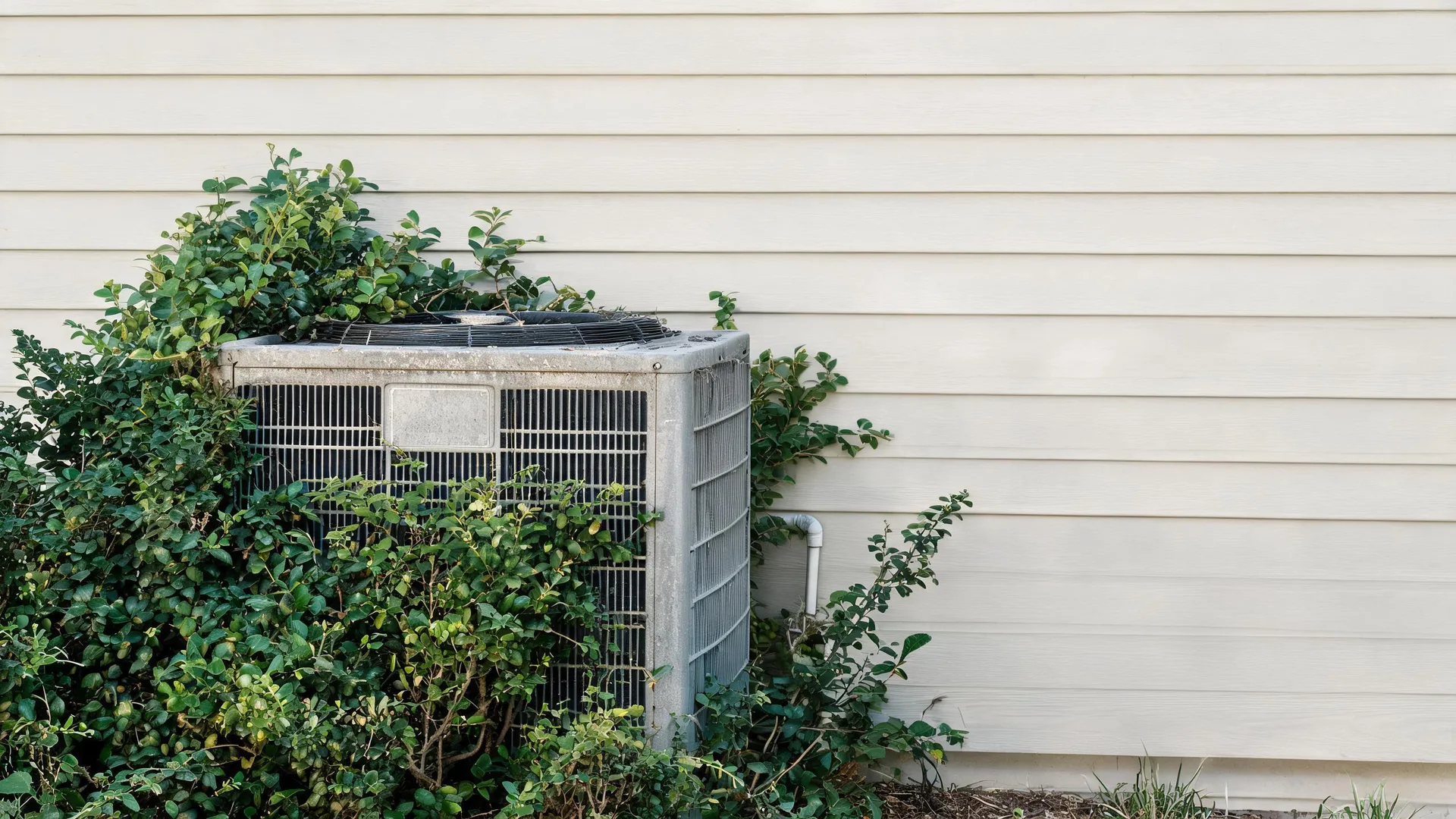
Frost on the outdoor coil means it's losing the fight

A heat pump defrosts itself on a timer, pulling heat back from the indoor side to melt ice off the outdoor coil. If something's keeping it from defrosting right, ice builds faster than it clears, and the system keeps trying anyway. Airflow drops, the coil gets colder, and the ice gets worse until the unit can't pull heat from outside air at all.

A few things are worth checking before a service call. Look at the outdoor unit first. If snow or ice has piled up against the cabinet or covered the top, clear it away so air can move through the coil. Check that nothing is blocking the airflow around it, no leaves, no stacked firewood, nothing within a couple feet on any side. Inside, pull the air filter and hold it up to a light. If you can't see through it, it needs to be changed, and a clogged filter alone can make a heat pump act like it's failing. Look at the thermostat too. Check that it's set to heat, not fan only, and that the batteries aren't the reason it's gone blank. If the outdoor unit is caked in ice and the indoor side is blowing cold air steadily, that's not something to clear by hand, and it's time to call someone.

A diagnostic visit starts outside at the unit itself, checking the coil, the fan, and the line set before anything gets opened up. The tech will run the system in the mode it's failing in, heat or defrost, and watch how it actually behaves instead of going by what you describe alone. Pressures and temperatures get checked at the refrigerant lines, since that tells a different story than just looking at the outside of the cabinet. Electrical components get tested too, the contactor, the capacitor, the board, because a part can look fine and still be failing under load. Once the tech finds where the system is losing performance, they can tell you if it's a single part or a sign the compressor itself is wearing out. That's the point where you find out if you're looking at a repair or a harder decision about the whole unit.