A snow-covered suburban street at dusk with lit houses and bare trees under a twilight sky.

Heat Pump Repair in McClusky, ND

Tell us about the job

Takes about a minute. No obligation.

RepairHeat PumpSheridan County, ND
Step 1 of 2

What ZIP code is the job in?

A refrigerant leak gets worse the longer it runs

A heat pump low on refrigerant makes the compressor work harder to move heat, and that extra strain builds up. Run it long enough in that state and the compressor can overheat or the coil can ice over, turning a leak into a compressor replacement.


A strange noise now means a bigger bill later

A grinding or squealing sound usually points to a motor bearing wearing out. Keep the system running and that motor can seize, which can take the blower or the fan blade with it. Shutting it off and calling for service when the noise starts is cheaper than waiting for it to quit.

9 months
September through May, your system heats
2 months
July through August, it cools
4°F
the average winter night it heats against
79°F
the average summer afternoon it cools against
Isometric cutaway illustration of a single-story house showing interior rooms, ceiling ductwork connected to an air handler, and an outdoor condenser unit linked by a line set.
Your system heats September through May and cools July through August.

NOAA nClimDiv, 1991–2020 normals

A heat pump in Sheridan County runs through blizzards, ice and hail, not just cold snaps.

That kind of load wears down parts faster, so the problem you're seeing may be the system telling you it's tired, not just a one-off glitch.

Nine months of heat, two of cooling, and this is when a weak part gives out

Cooling runs July through August
Heat runs September through May
23 hail events from 2015 to 2024

Electricity here runs 12.40 cents a kilowatt-hour, cheaper than most of the country. That's the one break you get. A heat pump that's low on charge or struggling to defrost still has to run longer to keep up, and every extra hour shows up on the meter even at that rate. Most homes in Sheridan County heat with propane and lean on the heat pump for the shoulder months and summer cooling, so a unit running inefficiently is working against you in both seasons it's asked to handle. Cheap power softens the hit. It doesn't erase it.

Get it diagnosed before the strain finds the next weak part

Whatever's acting up on your heat pump right now has been running through the same blizzards, ice and hail as the rest of the system. A proper diagnosis finds the part that's actually failing, not just the symptom you can hear or feel, so the repair holds instead of turning into a bigger job next season.

Find a contractor
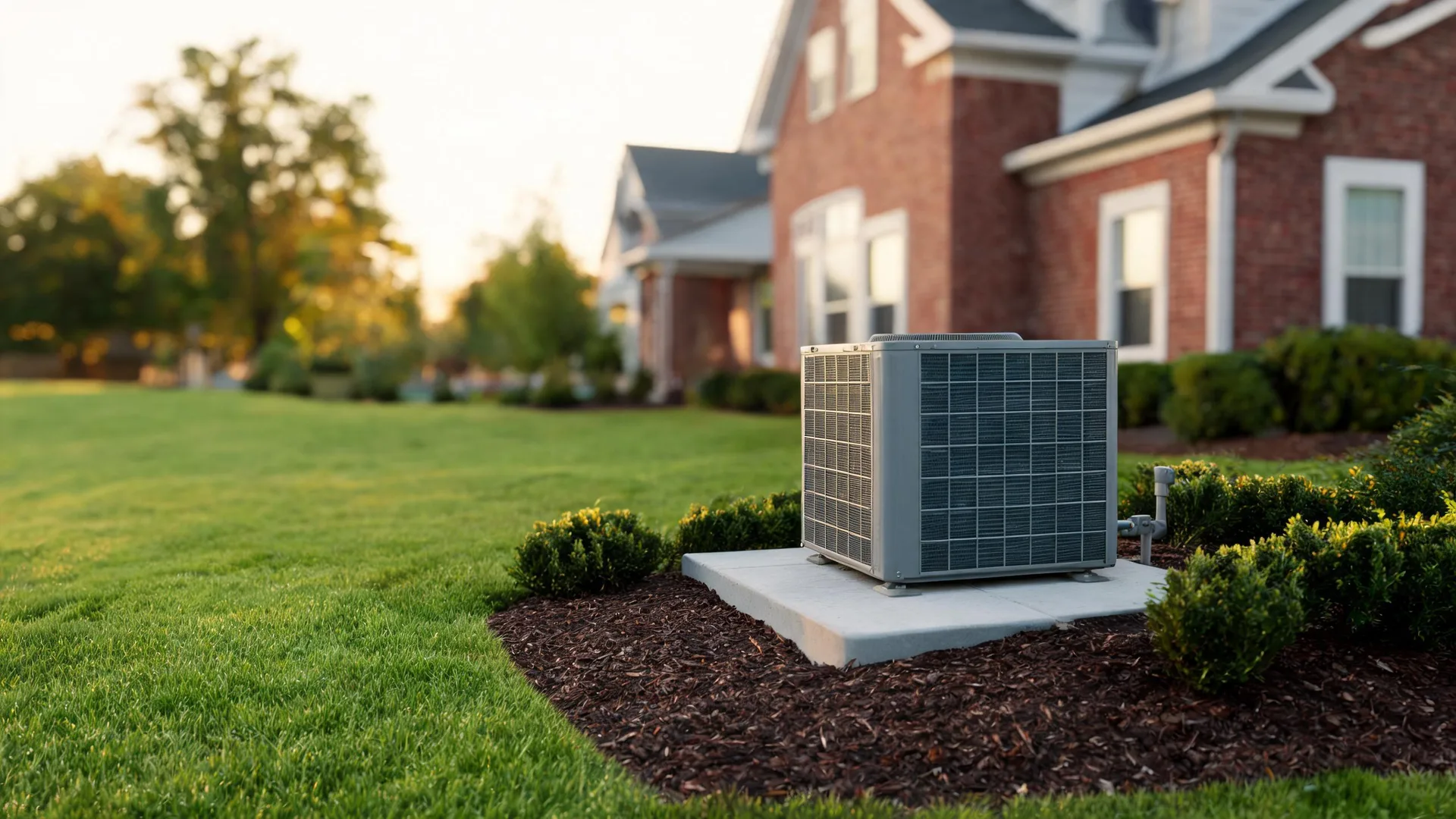
A gray heat pump outdoor unit mounted on a concrete pad next to a residential house with lap siding and stone accents.

An old house doesn't need an old heat pump failing twice

Half the homes in Sheridan County were built in 1967 or earlier. If your heat pump came with a house that old, it's not the original unit, but the ductwork and electrical behind it might be. A repair on an older setup is worth doing once. If the same unit keeps failing, that's the house telling you the next fix should be a new system built for what's already there.

It won't hold a set temperature

A heat pump that runs and runs but never quite reaches what the thermostat asks for is usually losing the battle between heat loss and heat output. Sometimes that's the reversing valve not fully switching, so the system is partly heating and partly cooling at once. Sometimes it's a stuck damper or a failing sensor telling the board the wrong thing. Either way, the fix is to find what's lying to the system, not to bump the thermostat higher.

The outdoor unit won't defrost itself

In cold weather some frost on the outdoor coil is normal, and the unit should clear it on its own every so often by briefly reversing into cooling mode. If you're seeing a thick layer of ice that never melts off, the defrost board, the outdoor temperature sensor, or the reversing valve itself can be the reason. A coil that stays iced over can't pull heat from the air, so the system runs constantly and still falls short.

Most heat pump failures start with something small wearing down over time rather than breaking all at once. The capacitor that kicks the compressor and fan motors on loses its charge slowly, so a unit that struggles to start on a cold morning is usually close to a hard stop. Contactors pit and burn from constant cycling, until one day they don't close at all. Refrigerant doesn't get used up, so a system that's low has a leak somewhere in the line set or the coil, and that leak only gets worse left alone. The reversing valve, which is what lets the same unit heat and cool, can stick from years of switching back and forth, leaving the system stuck in one mode no matter what the thermostat asks for. None of these announce themselves clearly. They show up as a system that runs longer than it used to, or a noise that wasn't there before, long before they show up as a system that won't run at all.

A heat pump that's low on charge or stuck in the wrong mode doesn't shut itself off. It keeps running, because the house still needs heat or the thermostat still says so, and every extra hour it struggles shows up on the meter. Waiting a week to call doesn't save the repair cost. It just adds a week of the unit working against itself before the fix even happens. Calling now stops the meter from paying for the problem.