





A grey heat pump outdoor unit mounted on a concrete pad against the exterior wall of a house with grey siding and stone veneer.

Heat Pump Repair in Medora, ND

Tell us about the job

Takes about a minute. No obligation.

RepairHeat PumpBillings County, ND
Step 1 of 2

What ZIP code is the job in?

Winter nights here average 8°F, which is steady cold, not extreme cold. A heat pump running in that range leans on its defrost cycle and its backup heat more than usual, so those are the first places to check if yours is struggling. Billings County has logged 18 winter storms in recent years, and a hard freeze can trip a breaker or ice up the outdoor coil without anything being wrong with the unit itself. Hail is common here too, and an old dent in a coil fin can quietly cut airflow long after the storm that caused it. None of this means anything unusual is going on with your system. It means the outdoor unit, the defrost board and the backup heat are the places to start looking.

9 months
September through May, your system heats
2 months
July through August, it cools
8°F
the average winter night it heats against
81°F
the average summer afternoon it cools against
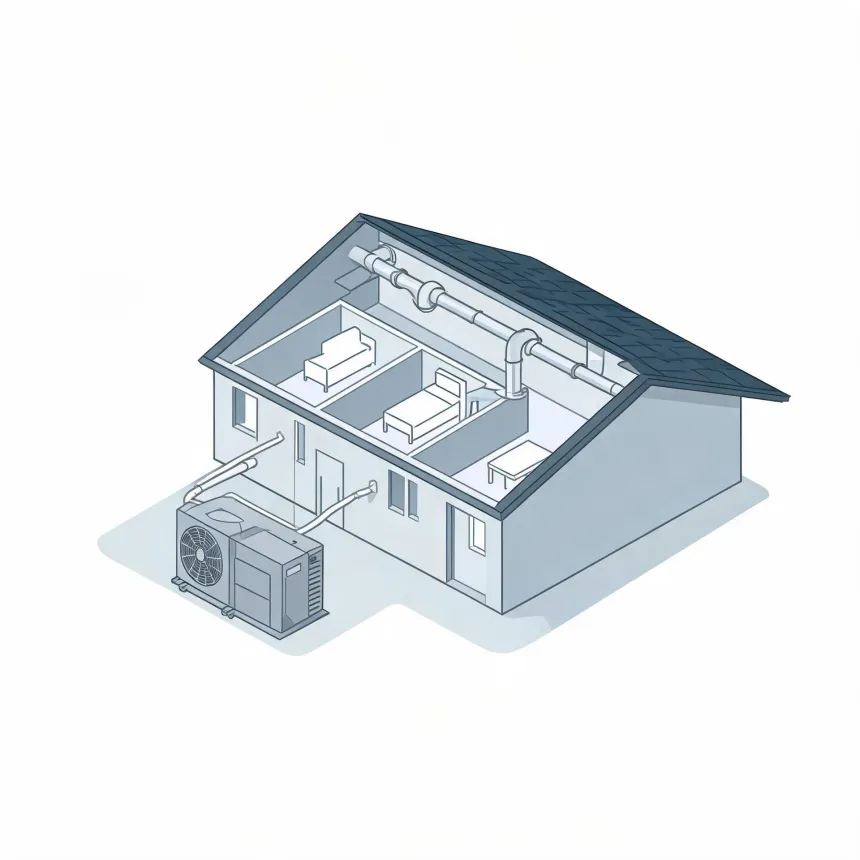
Isometric line illustration of a cutaway single-story house showing interior rooms with furniture and attic ductwork connected to an outdoor condenser unit beside the building.
Your system heats September through May and cools July through August.

NOAA nClimDiv, 1991–2020 normals

Heat here starts in September, right after this system sits idle all summer.

The first cold week is when a weak part finally gets tested, so that's when repair calls come in.

Half the homes here were built by 1983, so a lot of these heat pumps still have years left in them

Half the homes here were built by 1983
41 hail events from 2015 to 2024
18 winter storms from 2015 to 2024
Medora runs on 11.51 cents a kilowatt-hourThat's the North Dakota average for 2024, and it's why backup heat costing more than the heat pump itself is worth checking.

If your heat pump came with the house, call a repair out before you think about replacing it. A unit installed within the last decade or two has plenty of working life left in it, and a bad capacitor or a stuck reversing valve doesn't change that. Half the homes in Billings County were built in 1983 or later, so this applies to a lot of systems here, not just a few. Check when the house was built and, if you can, when the system was last replaced. If it's newer than the house, that's even more reason to fix what's wrong rather than start over.

Get the usual fix

Nothing about this area is especially hard on it. It's most likely the usual problem with the usual fix.

Find a contractor
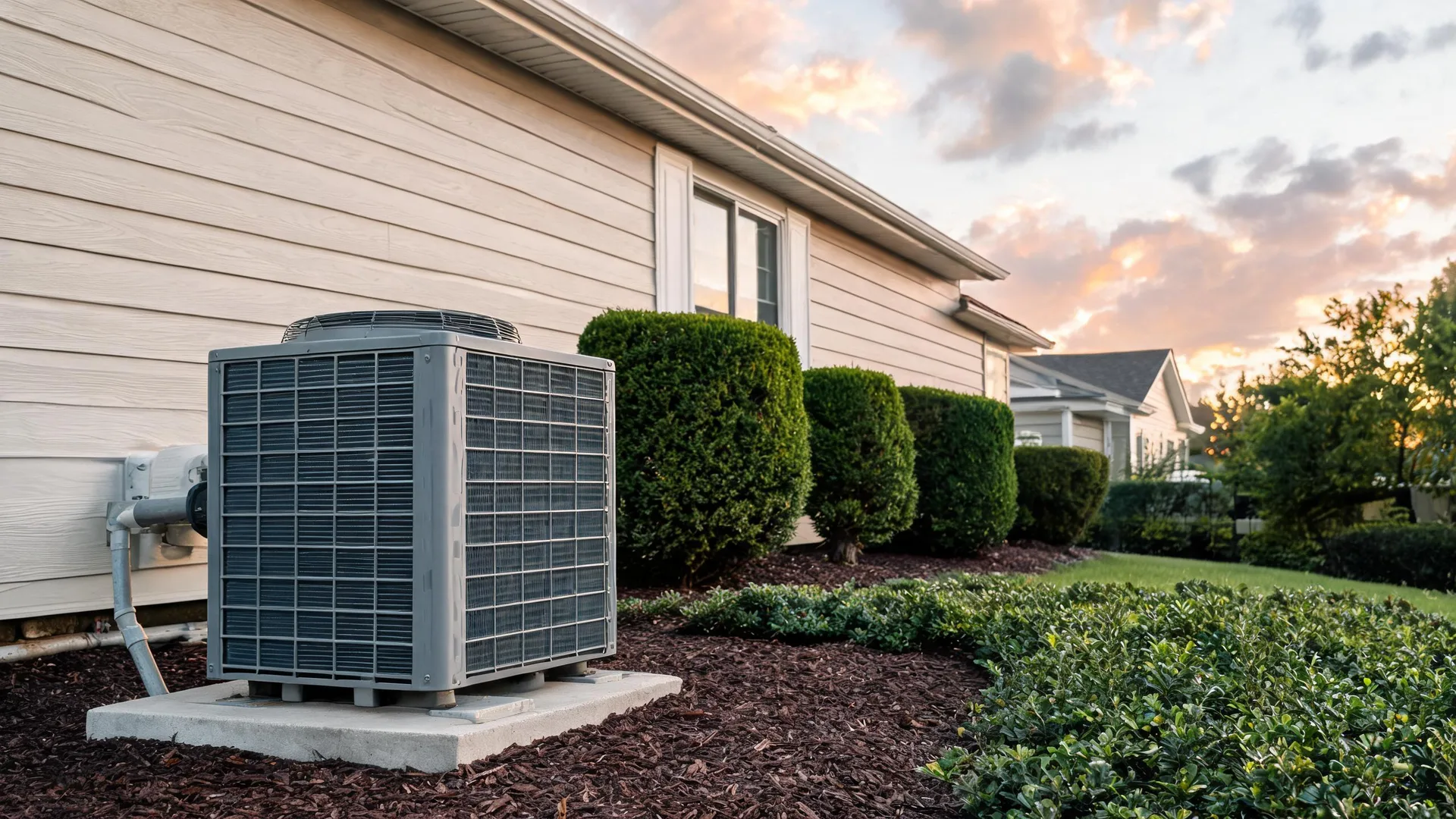
A dark gray heat pump unit mounted on a concrete pad next to a house with gray siding and a stone veneer wall.

What you can rule out yourself

Before calling anyone, look at the outdoor unit. If it's caked in ice or snow, that alone can stop a heat pump from heating. Clear away anything blocking the coil or the fan on top. Check the thermostat is actually set to heat and not fan only, and that the temperature you want is above room temperature. Go inside and check your breaker panel, since a tripped breaker on either the indoor or outdoor unit will shut the whole system down. If you have a emergency heat setting, try switching to it. If the house warms up on emergency heat but not on regular heat, that points to the heat pump itself rather than the ductwork or thermostat. Listen for the outdoor unit trying to start and failing, a clicking or humming without the fan turning, since that's worth telling the technician about before they arrive. Check your air filter too. A filter clogged with dust chokes airflow and can make a working system act like a broken one.

What the technician checks first

A technician connects gauges to check refrigerant pressure, reads the temperature split between the air going into the system and the air coming out, and tests the reversing valve to see if it switches cleanly between heating and cooling. They'll also check the capacitor and contactor in the outdoor unit, since a weak capacitor can let the compressor or fan struggle to start without killing the system outright.
Why the diagnosis takes longer than the fix

Finding the failed part is most of the visit. Once a technician knows whether it's a stuck reversing valve, a low refrigerant charge, or a failed defrost sensor, replacing that part is usually straightforward. The time goes into testing each piece in order so the real cause doesn't get mistaken for something else nearby.

A heat pump that's struggling still tries to do its job, and that's the problem. A weak capacitor makes the compressor strain to start over and over, and each hard start wears the motor windings a little more until it quits for good. A low refrigerant charge lets the compressor run hotter than it should, and heat is what kills a compressor over time. Ice on the outdoor coil blocks airflow, so the system pulls harder to move the same amount of heat, and that strain lands on the same compressor and fan motor. None of these fix themselves by running longer. Shutting the system off and having someone look at it stops the damage from spreading to parts that were fine to begin with.

Repair versus replacement comes down to what actually failed. A capacitor, a contactor, a defrost sensor, a reversing valve. These are individual parts, and swapping one out doesn't put much wear on the rest of the system. A compressor is different. It can't be replaced on its own for what it's worth, so when a technician finds the compressor itself is failing, that's the point where repair and replacement are worth weighing against each other. Age matters less than people think. A heat pump that's been maintained, and never run low on refrigerant or iced over, can have plenty of life left even after a major repair. One that's had the same strain ignored for years is a different story, because every hard start and every overheated cycle before now has already used up some of that life.