





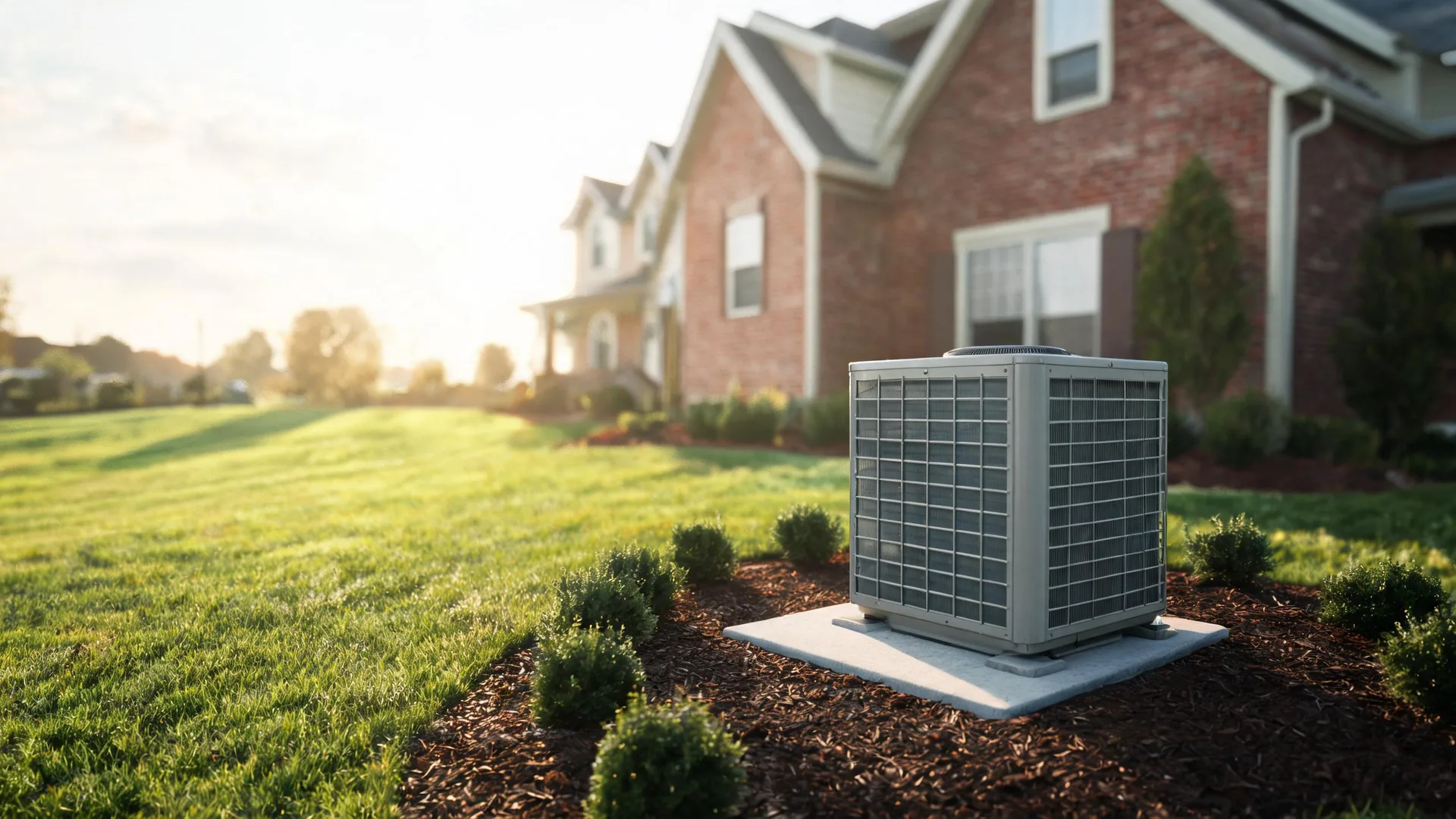
A gray outdoor HVAC condenser unit mounted on a concrete pad in the front yard of a two-story suburban house.

Heat Pump Repair in Mohall, ND

Tell us about the job

Takes about a minute. No obligation.

RepairHeat PumpRenville County, ND
Step 1 of 2

What ZIP code is the job in?

A diagnostic starts with questions. Is the system blowing cold air when it should be warm, cycling on and off, running nonstop without heating the house, or making noise it didn't used to make. The tech checks refrigerant charge, since a heat pump that's low will struggle to pull heat from outside air and freeze up its outdoor coil. They'll check the reversing valve, since a stuck valve keeps the system in cooling mode when it should be heating, or the other way around. They'll pull the outdoor unit's cover and look at the coil and fan motor, and check the defrost control board, since a bad sensor there can leave frost built up on the coil with no way to clear it. Inside, they check the air handler, the filter, and the electrical connections at the thermostat. Most of this gets diagnosed by testing one part at a time until the one causing the problem turns up.

9 months
September through May, your system heats
2 months
July through August, it cools
3°F
the average winter night it heats against
79°F
the average summer afternoon it cools against
Isometric cutaway illustration of a single-story house showing interior ductwork, an indoor air handler, and an outdoor condenser unit connected by lines along the exterior wall.
Your system heats September through May and cools July through August.

NOAA nClimDiv, 1991–2020 normals

Heat in Renville County kicks on in September and runs through May.

A weak part in your heat pump usually gives out in those first September weeks, when the system starts working hard again after months of standing idle.

Cheap power still adds up when the system is running wrong

Power here costs 10.72 cents per kilowatt-hour
Climate zone 7
Cooling runs July through August

Half the homes in Renville County were built in 1973 or earlier. If yours is one of them, the heat pump itself is almost certainly not that old, but the ductwork and electrical it's tied into might be original. A heat pump nearing the end of its life starts showing the same symptoms as a smaller, cheaper problem: weak airflow, short cycling, a coil that frosts up and won't clear. The only way to know which one you're looking at is to have someone check it before you pay for the repair. A system with a few years left is worth fixing. One that's already near the end might not be.

A heat pump working this hard needs a real diagnosis, not a guess

The outdoor unit sits outside through all of it. Renville County has had 33 hail events and 25 winter storms in the years on record. That is what this system runs through every time it cycles on. Parts wear sooner under that kind of weather, and small problems turn into bigger ones if they sit. Get the actual cause checked before paying to fix it.

Find a contractor
A white mini-split heat pump outdoor unit mounted on a concrete pad beside a gray-sided house, surrounded by gravel and green shrubs.

Hours on the equipment, age in the walls

The clip beside this shows the pattern: on through the day, on through the night, however long the weather calls for it. That's the wear side of things. The age side is separate. The heat pump itself has a shorter life than the house it's in, so its age is whatever it is regardless of when the house was built. What the house's age tells you is whether the ductwork and electrical behind the wall are original. A tech checking this repair can look at both and tell you which one you're actually dealing with.

What you can check yourself

Look at the thermostat first. Make sure it's set to heat, not cool, and that the set temperature is actually above room temperature. Check the circuit breaker for both the indoor air handler and the outdoor unit. Pull the air filter and hold it up to a light. If you can't see light through it, replace it. Walk outside and look at the outdoor unit. If the coil is caked in ice or buried in snow after a storm, clear away loose snow and branches, but don't chip at ice with a tool. Check that registers inside the house are open and not blocked by furniture or rugs.
What tells you to stop and call

If the outdoor fan isn't spinning at all, or the unit is making a grinding or clicking noise it didn't make before, turn it off at the thermostat and call. The same goes for a coil that's frosted over even after you've cleared snow away, since that usually points to a refrigerant or defrost problem, not weather. If the system runs constantly without the house getting warmer, or it's blowing air that feels cold when it should be heating, those aren't filter problems. Trying to force a fix on any of these can turn a repair into a compressor replacement.

A frosted coil that keeps running doesn't melt itself off. The defrost cycle needs the compressor to pause so the coil can clear, and a system that stays locked in heating mode just keeps building ice on top of ice. That blocks airflow across the coil entirely, and the compressor ends up working against a block of frost instead of pulling heat from the air. Low refrigerant causes a similar spiral. The system keeps trying to satisfy the thermostat, draws in a charge it doesn't have enough of, and the compressor runs hotter than it's built for. A compressor damaged that way doesn't get repaired. It gets replaced, and that's a different job than the one you called about.

Power is cheap in North Dakota, but a heat pump running wrong still racks up hours on a compressor that's already straining against the cold. A stuck reversing valve or a frosted coil that won't clear makes the system run nonstop trying to catch up, and nonstop runtime costs you whether the rate is high or not. The fix isn't waiting to see if the bill looks bad. It's getting the actual part checked before another month of that runtime goes by.