A snow-covered small-town street at dusk, with lit white clapboard houses, bare trees, and a grain elevator silhouetted against an orange and blue twilight sky.

Heat Pump Repair in Napoleon, ND

Tell us about the job

Takes about a minute. No obligation.

RepairHeat PumpLogan County, ND
Step 1 of 2

What ZIP code is the job in?

Your heat pump runs through a hard climate

Logan County sits in zone 6A, a cold climate with a long heating season. The same unit that heats your house all winter has to switch over and work the summer side too. There's no break built into the year here.

That workload is likely what's behind the problem

A heat pump under this much strain wears sooner than one in a milder spot, and small issues surface earlier instead of staying quiet. Whatever's going wrong with yours, it's worth having someone trace it to the actual part before calling it fixed.

9 months
September through May, your system heats
2 months
July through August, it cools
5°F
the average winter night it heats against
79°F
the average summer afternoon it cools against
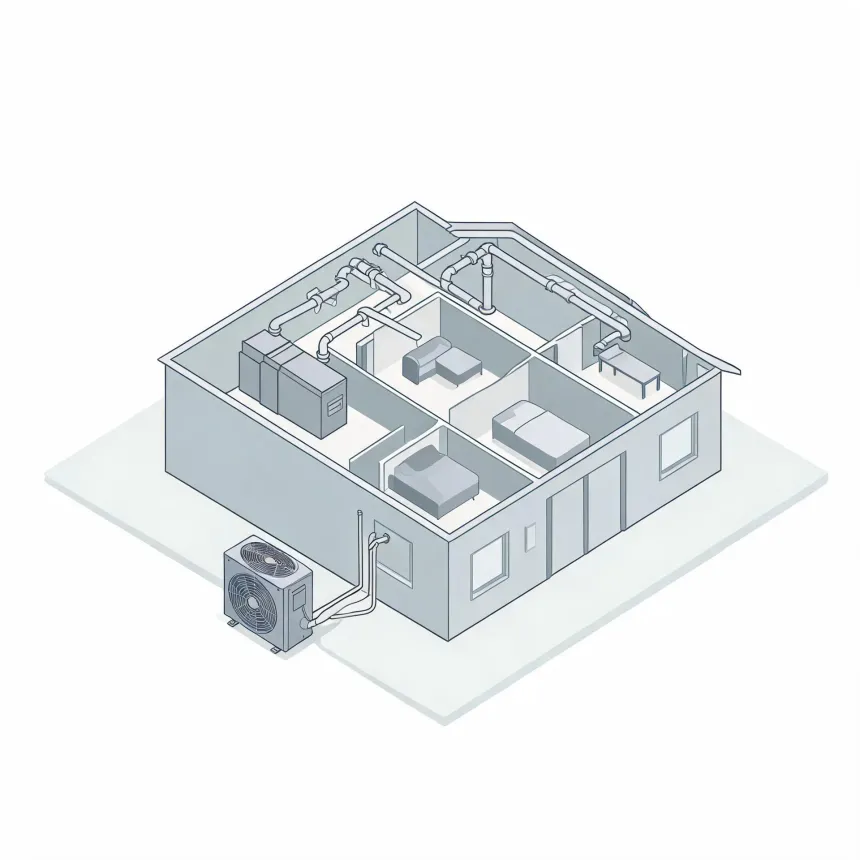
Isometric line illustration of a cutaway single-story house showing interior rooms with beds and furniture, ceiling ductwork connected to an indoor air handler, and an outdoor condenser unit linked by refrigerant lines.
Your system heats September through May and cools July through August.

NOAA nClimDiv, 1991–2020 normals

Electricity here runs 11.57 cents per kilowatt-hour, cheaper than most of the country.

A heat pump that's struggling still runs up that bill every month until the actual problem gets fixed.

Half the homes here were built in 1967 or earlier, and this machine doesn't care how old the house is

Half the homes here were built by 1967
Climate zone 6A
Power here costs 11.57 cents per kilowatt-hour

September is when heat kicks back on here, and that first cold snap is when a weak part finally gives out. A heat pump that's been limping along in low-demand months can still get by. Once it has to run most of the day, every day, there's nowhere for a bad capacitor or a failing defrost control to hide. Same story in reverse come July, when cooling starts and the unit switches modes after months of not needing to. Nine months of heat a year means this machine spends most of its life working, not resting, so the start of each season is when trouble tends to surface.

Get the real cause checked, not just the symptom

A heat pump working this hard doesn't fail cleanly. It struggles for a while first, running longer than it should to make the same heat. Getting the actual part checked now means the fix holds instead of covering up something that comes back.

Find a contractor
A man in a dark t-shirt and tan work pants carries a worn canvas tool bag up wooden porch steps toward a red-orange front door of a gray-sided house, with a red ceramic planter holding a shrub to the right.
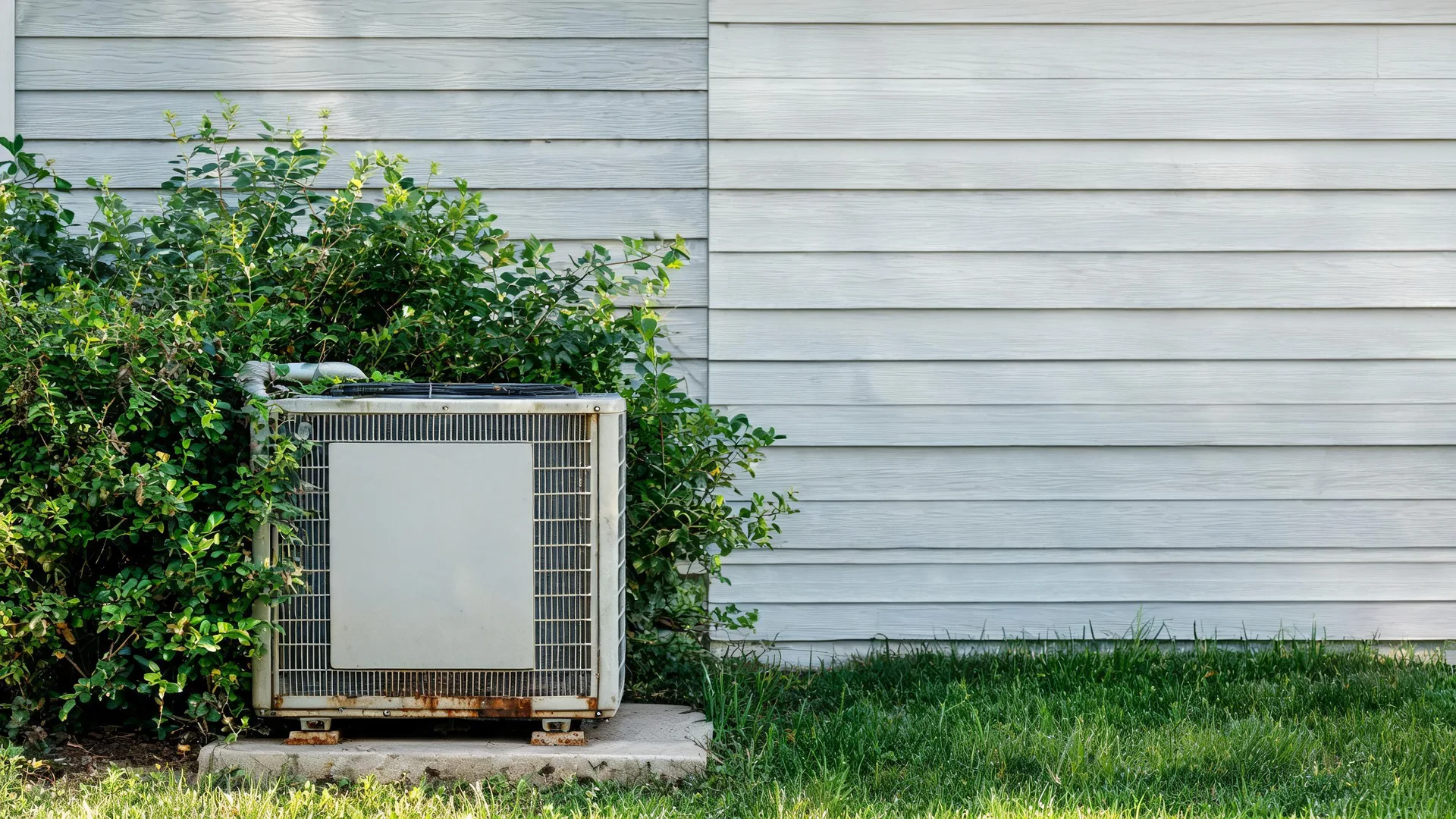
A gray heat pump outdoor unit mounted on a concrete pad next to the stone-accented exterior wall of a house.

What happens when someone comes to look at it

A diagnostic visit starts outside, at the outdoor unit. A tech checks the reversing valve first since that's what fails most often, listening for it to shift cleanly between heating and cooling. From there it's the electrical side: the capacitor, the contactor, the defrost control board. Each gets tested under power, not just looked at, because a part can look fine and still be weak. Refrigerant charge gets checked too, but a good tech rules out the common failures before touching the refrigerant, since low charge is rarely the real problem. The indoor side matters as much as the outdoor unit. Airflow across the coil, the condition of the filter, whether the blower is pulling its full amount of air. A system can have a perfectly good compressor and still run poorly if something upstream is choking it. The visit ends with a part named, not a guess. If someone leaves without telling you what failed, the repair hasn't actually started yet.

What wears out first

The reversing valve is usually the first thing to show its age, since it's what switches the system between heating and cooling and it's shifting state every time demand changes. After that it's the defrost control board, the contactor, and the capacitor that gets the compressor started. The compressor itself is the expensive one, and it's almost always a downstream failure, something else went bad first and made the compressor work harder until it quit.

What the signs usually mean

Ice building up on the outdoor coil that won't clear on its own points to a defrost control problem, not low refrigerant. Short cycling, where the unit kicks on and off every few minutes, usually traces back to a failing capacitor or a clogged filter choking airflow. If the system runs constantly but the air coming out doesn't feel hot enough or cold enough, that's often a reversing valve stuck partway between modes. Each of these is worth naming to whoever comes out, since it points straight at the part instead of a guess.

A heat pump that's struggling doesn't need a rest, it needs the part replaced, and running it anyway usually makes the failure worse. Take a failing capacitor. It can't quite get the compressor started, so the motor draws more current trying anyway, and that extra draw wears the windings down. Keep running it and a problem that was a capacitor swap turns into a compressor replacement. Ice on the outdoor coil works the same way. If the defrost cycle isn't clearing it and the unit keeps running, that ice blocks airflow across the coil, and the system works harder to move heat through it than it did before. A stuck reversing valve is worth watching too. Left alone, the constant strain of trying to shift between modes it can't fully reach puts load on the compressor it wasn't built to carry.

A heat pump that's struggling doesn't idle quietly, it runs longer to make up the difference, and every one of those extra hours shows up on the bill. Cheap power here softens that some, but it doesn't erase it. The fix isn't to wait until the unit fails outright. It's to get the part identified now, while the repair is still a capacitor or a defrost control and not a compressor. Have the contractor name the part before they leave. That's how you know the bill goes back to normal instead of just getting a quieter version of the same problem.