A chain-link fence runs diagonally across a mown grass field in front of a row of similar two-story light-colored houses with porches and gray roofs, framed by overhanging tree branches.

Heat Pump Repair in New England, ND

Tell us about the job

Takes about a minute. No obligation.

RepairHeat PumpHettinger County, ND
Step 1 of 2

What ZIP code is the job in?

A long heating season asks a lot of the unit

Hettinger County sits in zone 6A, a cold climate with a long heating season. A heat pump here spends months pulling heat out of cold air, which is harder on the compressor than cooling a home ever is. When a part starts to fail, this is usually why.


What that means for your repair

A breakdown here is rarely bad luck. The strain of a long cold season catches up with a component eventually, and when it fails, something specific failed, not the whole system at once. Finding that part and fixing it right is what makes the repair hold.

9 months
September through May, your system heats
2 months
July through August, it cools
8°F
the average winter night it heats against
81°F
the average summer afternoon it cools against
Isometric line illustration of a cutaway single-story house showing interior ductwork, an indoor air handler unit, and an outdoor condenser connected by refrigerant lines, with a dark shingled roof.
Your system heats September through May and cools July through August.

NOAA nClimDiv, 1991–2020 normals

Half the homes in Hettinger County were built in 1964 or earlier.

A heat pump in a house that old is closer to the end of its life than the middle.

Power here is cheap, but a heat pump running wrong will still cost you every month

Power here costs 12.64 cents per kilowatt-hour
Climate zone 6A
Cooling runs July through August

Heat here starts in September, which means August is when a weak part gets found out. The system has been sitting since spring, and the first real call for heat puts load on whatever was already marginal. A compressor or a reversing valve that struggled last winter doesn't heal over the summer. Get it looked at before that first cold morning, not after the overnight lows settle in around 8 degrees. Once winter sets in here, it stays, and a repair put off in August is a cold house in December.

Get the real problem found, so the fix holds

A long cold season put the strain on this unit that led to the breakdown. Have a contractor find the part that actually failed and repair that, instead of guessing at the whole system. That's what makes a repair worth doing here.

Find a contractor
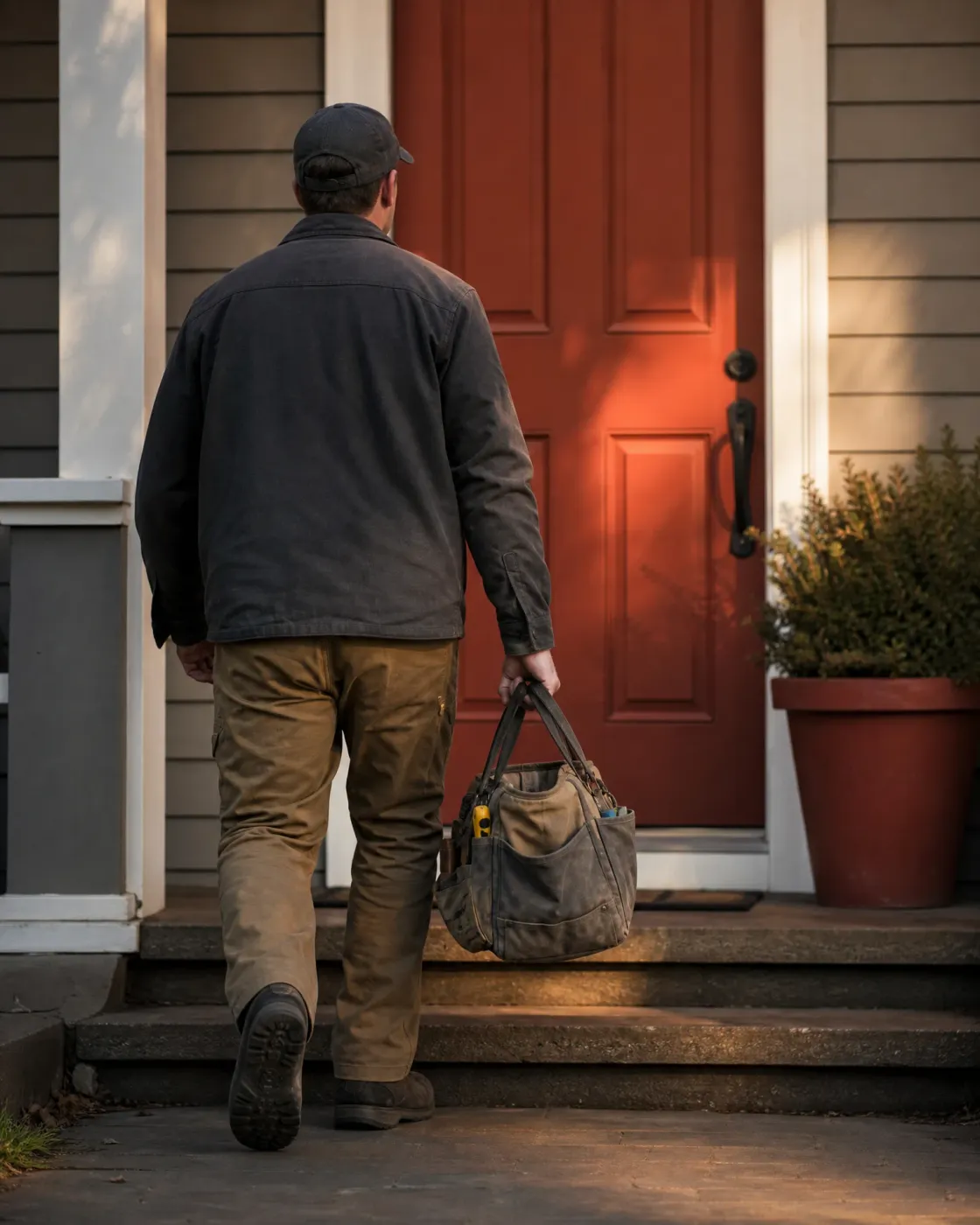
A man in a cap, dark jacket and tan work pants walks up concrete steps toward a red front door, carrying a worn canvas tool bag, with a potted shrub beside the entry.
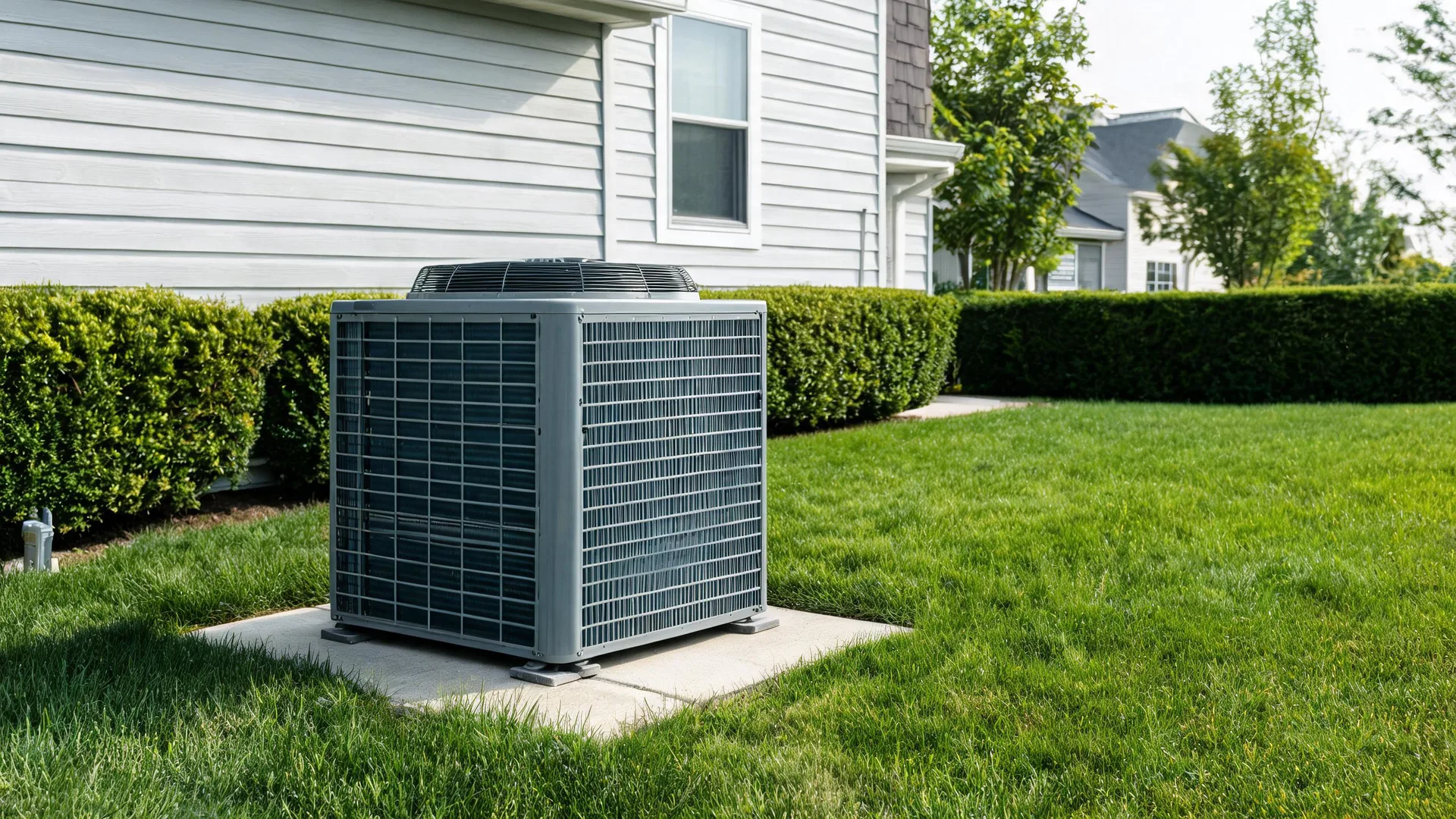
A gray outdoor HVAC unit mounted on a concrete pad beside a house with gray lap siding and a stone foundation.

What this repair is really buying you

If the heat pump came with the house, ask the contractor how old it is before paying for this repair. A unit installed when the house was built could be approaching the end of its working life, and a repair now might just be a bridge to a bigger one next winter. That's worth knowing before the bill, not after.

What actually wears out first

The reversing valve is usually the first thing to go. It switches the system between heating and cooling every time it cycles, and that constant switching wears the valve's seals until it starts sticking or leaking refrigerant past it. The compressor fails next most often, usually from years of starting up against liquid refrigerant that didn't fully evaporate, or from running low on charge for a long time without anyone noticing. Defrost board and sensor failures are common too. That board tells the unit when to melt frost off the outdoor coil, and when it fails, ice builds up on the coil until the system can't pull any heat out of the air at all.

What a bad part looks like before it quits

A failing reversing valve often shows up as a system stuck in one mode, blowing cold air when it should be heating. A weak compressor sounds different before it dies, a hard clunk or hum on startup instead of a smooth start, or it trips the breaker and restarts on its own a few minutes later. A bad defrost control shows up as ice on the outdoor unit that never clears, sometimes thick enough to stop the fan blade from turning. None of these get better by waiting. Catching one early is a part replacement. Waiting until it fails completely usually takes something else down with it.

Before calling anyone, check the thermostat batteries and the setting itself. A thermostat set to cool or set lower than the room temperature will leave a heat pump sitting idle for no mechanical reason at all. Next, go look at the outdoor unit. If it's buried in ice or packed with snow, that airflow is blocked and the system can't pull in anything to heat. Check the indoor filter too. A filter clogged with dust chokes airflow across the coil and can cause the whole system to underperform or shut itself down. While you're at the breaker panel, check that the breaker for the outdoor unit hasn't tripped. If the system is running but blowing air that feels cold when it should be warm, that's worth telling the contractor exactly, since it points at a specific failure rather than a general one. None of these checks require opening the cabinet or touching refrigerant lines. That part is not a homeowner job, and going past it risks a burn or a system that's worse off than when you started.

Power is cheap here, but a heat pump that's cycling on a bad part still runs up the bill every time it kicks on. A failing reversing valve or a weak compressor can pull a lot more current than a healthy one, and it keeps pulling it every day until someone replaces the part. That cost shows up on the bill whether or not you've called anyone about it yet. Fixing the actual part stops that drain. Waiting through a winter on a bad component doesn't save you the repair, it just adds months of bad running on top of it.