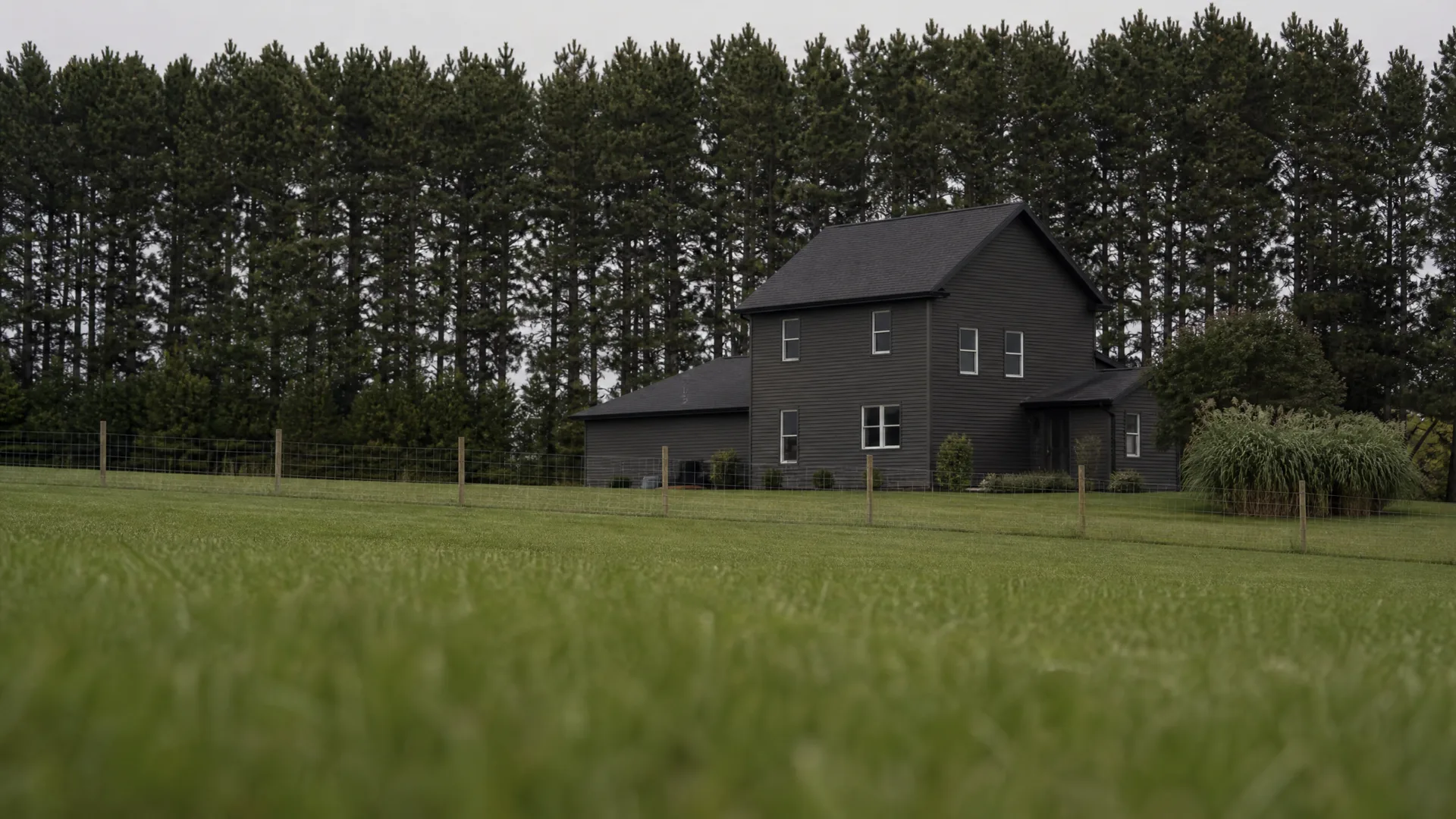
A dark-clad two-story house with a gabled roof and white-trimmed windows stands behind a wire fence at the edge of a mown grass field, with a dense row of tall conifers behind it under an overcast sky.

Heat Pump Repair in New Rockford, ND

Tell us about the job

Takes about a minute. No obligation.

RepairHeat PumpEddy County, ND
Step 1 of 2

What ZIP code is the job in?

A heat pump works year round here

A heat pump in Eddy County doesn't get a season off. Winter storms, heavy snow, ice and blizzards, hit the county 42 times between 2015 and 2024, and the system has to keep up through all of it. Then it switches over for the summer stretch, when the dew point still averages 53°F. Two different jobs, back to back, with no real break between them.


What that means for the repair

A system that runs this much wears on a different schedule than one in a milder place. The reversing valve, the defrost control, the outdoor coil, all of them see more cycles here. The part that failed probably didn't fail for no reason. It failed because of what this county asks it to do, and that's worth knowing before anyone guesses at a fix.

9 months
September through May, your system heats
2 months
July through August, it cools
2°F
the average winter night it heats against
78°F
the average summer afternoon it cools against
Isometric cutaway illustration of a two-room house showing an indoor air handler with ductwork connected by lines to an outdoor condenser unit on a pad.
Your system heats September through May and cools July through August.

NOAA nClimDiv, 1991–2020 normals

Heat starts running in September here, right after the switch back from cooling.

A part that was already weak from last winter often gives out in those first cold weeks, not months later.

Half the homes here are pushing sixty

Half the homes here were built by 1966
Climate zone 6A
Power here costs 11.03 cents per kilowatt-hour

Electricity here runs 11.03 cents a kilowatt-hour, cheaper than most of the country pays. That's a break most places don't get. But a heat pump that's struggling still burns through that cheap power fast, because it has to run longer to make up for whatever's wrong with it. A weak system working overtime erases the savings this county's power rates are supposed to give you. The low rate doesn't help much if the machine behind it is working twice as hard to do the same job.

Get the real reason diagnosed, not just the symptom

This system has been running hard for a while now, through blizzards and the switch back to cooling and back again. Whatever failed on it failed for a reason tied to that workload, not bad luck. A proper diagnosis finds that reason instead of guessing at a part. Fix the actual cause and the repair holds.

Find a contractor
A man in a dark cap, dark shirt and tan work pants, seen from behind, carries a canvas tool bag up steps toward a red front door of a gray clapboard house, with a potted shrub to the right.
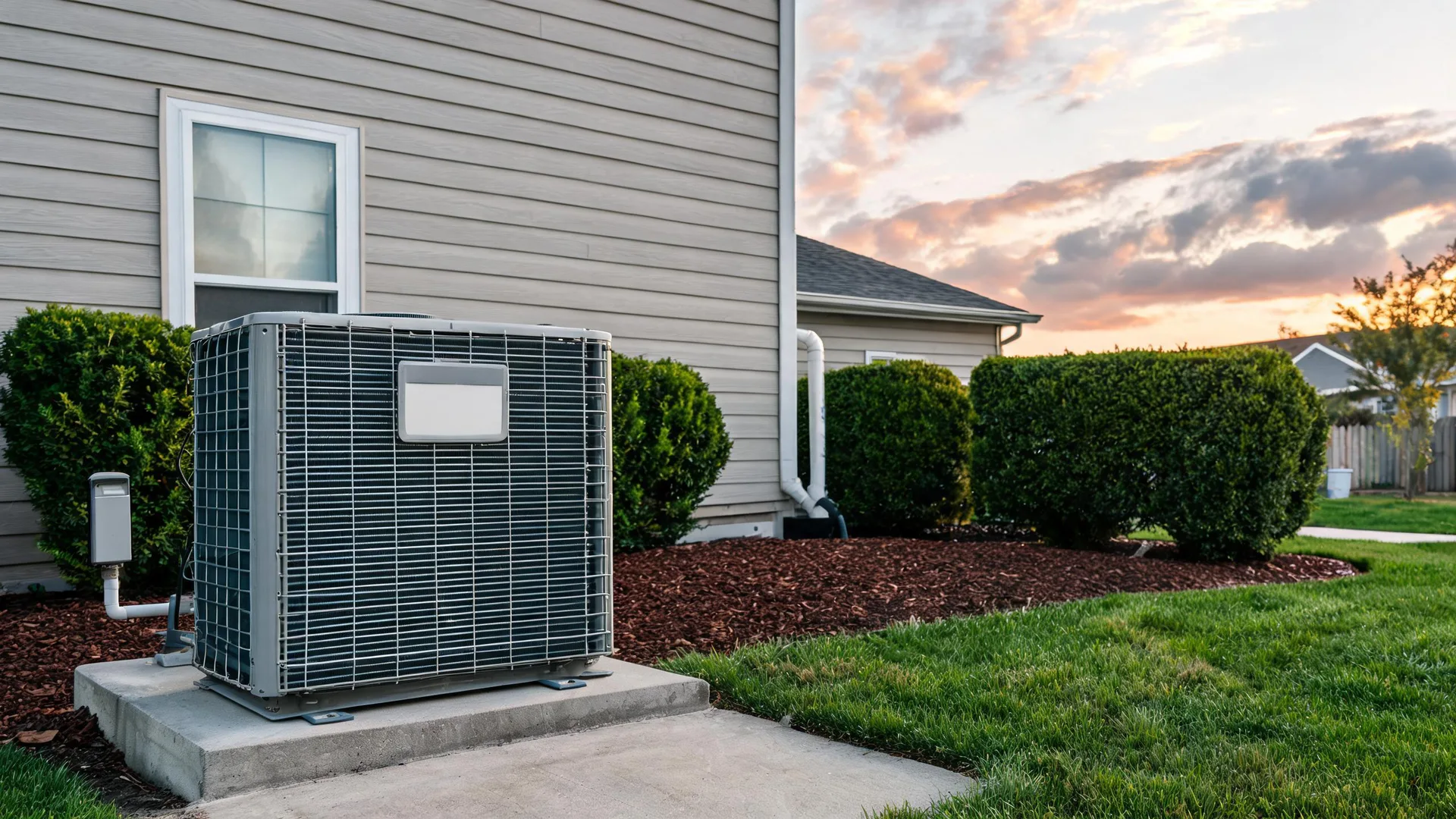
A residential heat pump outdoor unit mounted on a concrete pad next to a house with gray vinyl siding.

How much life is left in this one

A heat pump installed when a lot of these houses were built is well past the point where every repair is a gamble. If yours is old enough to have come with the house, ask the contractor how many years it has left before you spend money on this repair. Sometimes the answer is to fix it. Sometimes a system that old is better replaced than patched again next winter.

A small fault doesn't stay small

A heat pump that's low on charge or struggling to defrost will keep trying to hit the set temperature no matter what. The compressor keeps working against a problem it can't fix on its own, and that strain is what turns a cheap repair into a compressor replacement.

Running it while you wait for the tech costs more than the call

Turning the system off until someone can look at it is usually the safer move. Let it run with a bad component and the parts around that failure start absorbing stress they weren't built for, the way a weak capacitor drags down a motor that was fine on its own.

Before calling anyone, check the thermostat batteries and the setting itself. A thermostat stuck in the wrong mode or with a dead backup battery can look exactly like a failed system. Next, look at the outdoor unit. If it's buried in snow or caked in ice beyond the normal thin frost layer, that's worth noting, but don't chip at the coil yourself. Inside, pull the air filter and hold it up to a light. A filter packed with dust chokes airflow and can make a perfectly good system act like it's failing. Check the vents and registers in each room to make sure none are closed or blocked by furniture. Last, look at the outdoor unit's power disconnect and any visible breaker. If it's tripped, that tells the tech something before they even arrive. None of this fixes a bad reversing valve or a low charge, but it rules out the easy stuff first.

If the system's been limping along, the fix is simple: stop waiting on it. Call now instead of in a week, because every day spent running hard on cheap power is still money going out for a job half done. A contractor who gets out there while the fault is fresh has an easier time finding it too. Wait until the unit quits outright on a cold night and the same visit costs the same call but comes with no heat until it's done.