A snow-covered suburban street at dusk with lit houses and bare trees under a twilight sky.

Heat Pump Repair in New Town, ND

Tell us about the job

Takes about a minute. No obligation.

RepairHeat PumpMountrail County, ND
Step 1 of 2

What ZIP code is the job in?

Warm air that isn't warm enough

A heat pump in heating mode puts out air that feels cooler than what a furnace blows. That's normal. What's not normal is the system running long stretches without the house catching up to the thermostat setting, or the outdoor unit icing over and not shutting off to defrost on its own. Either one points to a refrigerant leak, a failing reversing valve, or a defrost control that's stopped doing its job.

Worth a call before it strands you

A heat pump that's struggling still usually keeps running, which makes it tempting to wait. The trouble is a strained compressor or a motor pulling more amps than it should tends to fail all at once, usually when it's working hardest. Getting a tech out for the early signs, the short cycling, the ice, the weak airflow, is what keeps a repair from turning into a full replacement in the middle of a cold snap.

10 months
September through June, your system heats
2 months
July through August, it cools
4°F
the average winter night it heats against
79°F
the average summer afternoon it cools against
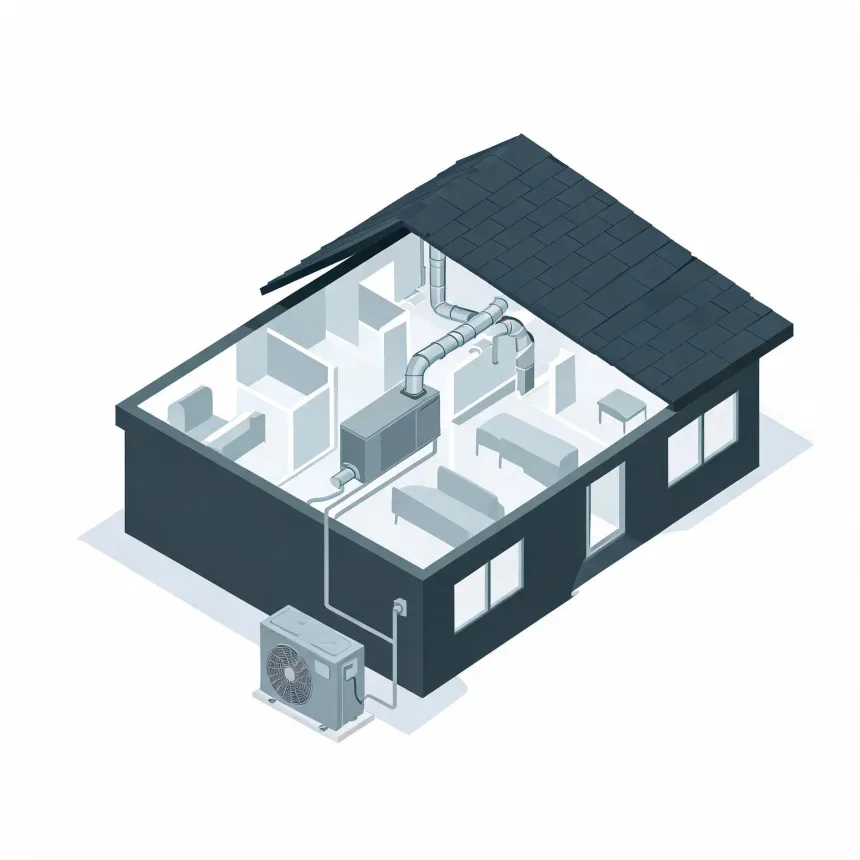
Isometric cutaway illustration of a single-story house showing interior rooms, ceiling ductwork connected to an air handler, and an outdoor condenser unit linked by a line set.
Your system heats September through June and cools July through August.

NOAA nClimDiv, 1991–2020 normals

Electricity here runs 9.61 cents a kilowatt-hour, cheaper than most of the country.

A heat pump that's icing up or short cycling is still pulling power the whole time it struggles.

Ten months of heat a year does not leave a weak part much time to hide

Cooling runs July through August
Heat runs September through June
59 damaging wind events from 2015 to 2024
Half These Homes Are Younger Than ThatHalf the homes in Mountrail County were built in 1997 or later, and a system that came with one still has years of work left in it.

A heat pump that's icing up or short cycling doesn't stop pulling power, it just stops turning that power into heat you can feel. Every hour it runs like that is an hour you're paying for air that isn't doing its job. That adds up fast here, where power is cheap but the system runs most of the year to begin with. Getting the reversing valve or defrost control checked now is what stops that waste. Put off the call and the machine keeps drawing the same power for less and less heat.

Get it diagnosed properly

Your heat pump works hard here, and that's usually what's behind the problem. Have it diagnosed properly so the fix lasts.

Find a contractor
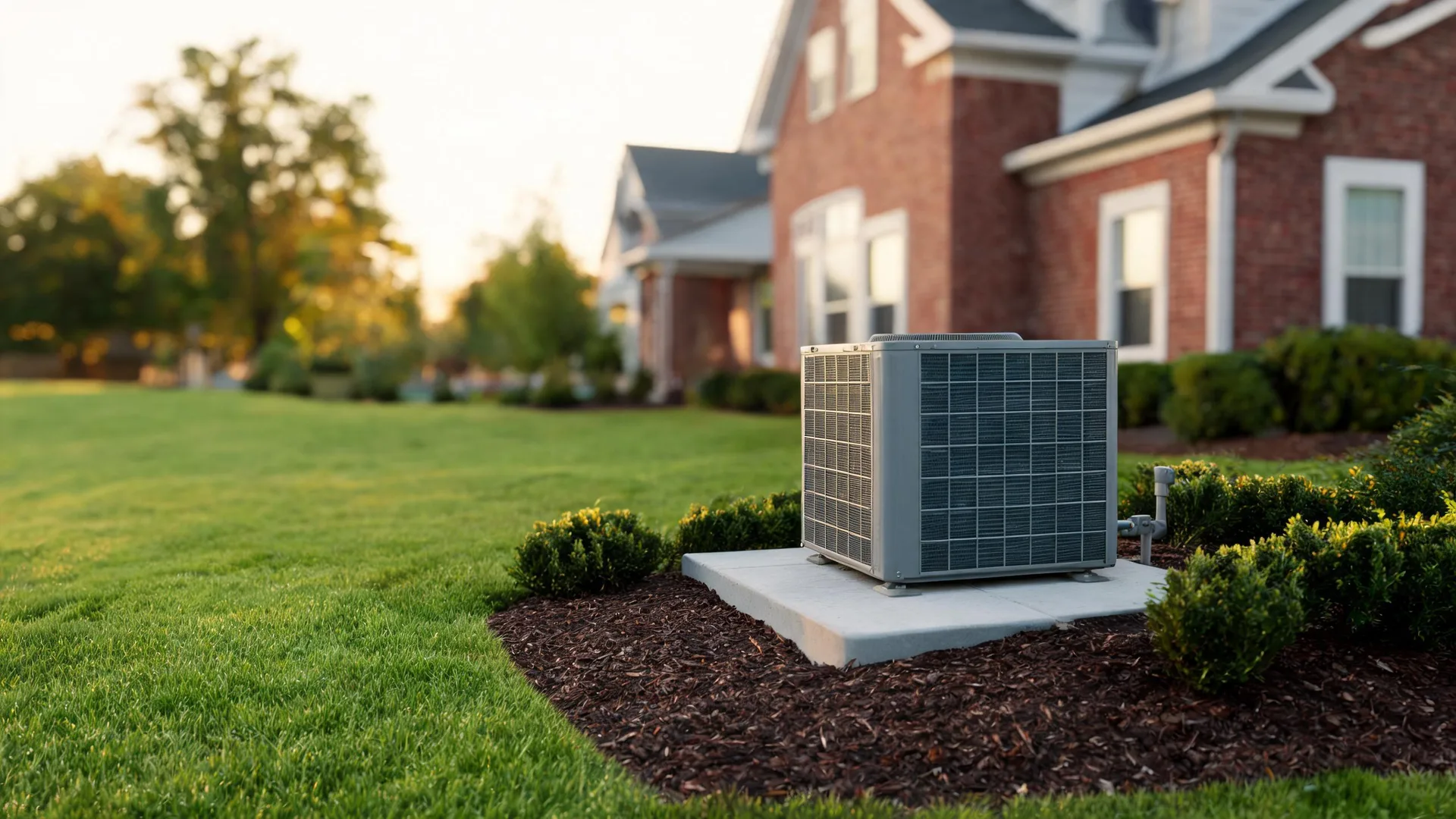
A gray heat pump outdoor unit mounted on a concrete pad next to a residential house with lap siding and stone accents.

How Many of These Hours Are Still Ahead of It

If the system came with the house, the paperwork will say what year that was. A system from a newer build still has most of its working life ahead of it, which is exactly why a repair is worth doing instead of skipped over. The time-lapse above shows the same wear either way, an older unit and a newer one both run these same hours. What's different is how much life is left on the other side of a repair. That's worth knowing before you decide how far to go with the fix.

What actually wears out first

The reversing valve is usually the first thing to go. It switches the system between heating and cooling by moving refrigerant a different direction, and that switching is mechanical wear every single cycle. After that it's the defrost control board, which tells the outdoor unit when to melt off ice and when to go back to heating. A stuck sensor or a bad relay there means the unit either ices over or defrosts when it doesn't need to. Compressors fail too, but usually because something upstream, low refrigerant or a bad capacitor, made them work harder than they were built for.

Why catching it early matters more here

A heat pump doesn't get a break between seasons the way an air conditioner does. It's either moving heat into the house or out of it almost year round, so a part that's starting to fail doesn't get months of rest to make it to spring. A weak capacitor or a sticking contactor that a furnace might tolerate for a season tends to finish failing fast on a heat pump, because the compressor it's feeding never really stops being asked to run.

Before calling anyone, look at the outdoor unit. If it's covered in ice or snow, that's worth knowing and worth mentioning when you call, but don't chip at it or hose it off. You can check the air filter inside, since a clogged one starves the system of airflow and can look like a bigger problem than it is. Walk around the house and check that every supply vent is open and nothing is stacked in front of a return. Check the thermostat batteries if it uses them, and make sure it's set to heat and not fan only. Listen for how the system is running: short bursts that shut off fast, or one long stretch that never quite catches up, both of those are useful to describe to a tech. What you shouldn't do is open the outdoor unit's panels or touch anything electrical. That part of the job needs the power locked out and gauges on the line, and it's where the actual diagnosis happens.

A diagnostic visit starts with gauges, not guesswork. The tech connects them to the line set and checks refrigerant pressure on both the high and low side, because too little refrigerant or too much tells a different story than a bad part would. From there it's the electrical side: amp draw on the compressor, a check of the capacitor and contactor, continuity on the reversing valve's solenoid. The defrost control board gets tested too, since a sensor that's reading wrong will tell the system to skip defrost cycles it needs or run them when it doesn't. None of this takes guessing once the gauges and meter are on, because each reading rules something out or points straight at it. What's left after that is the part of the job you can't do from the thermostat: opening the unit, confirming what the readings already pointed to, and telling you whether it's one part or several.