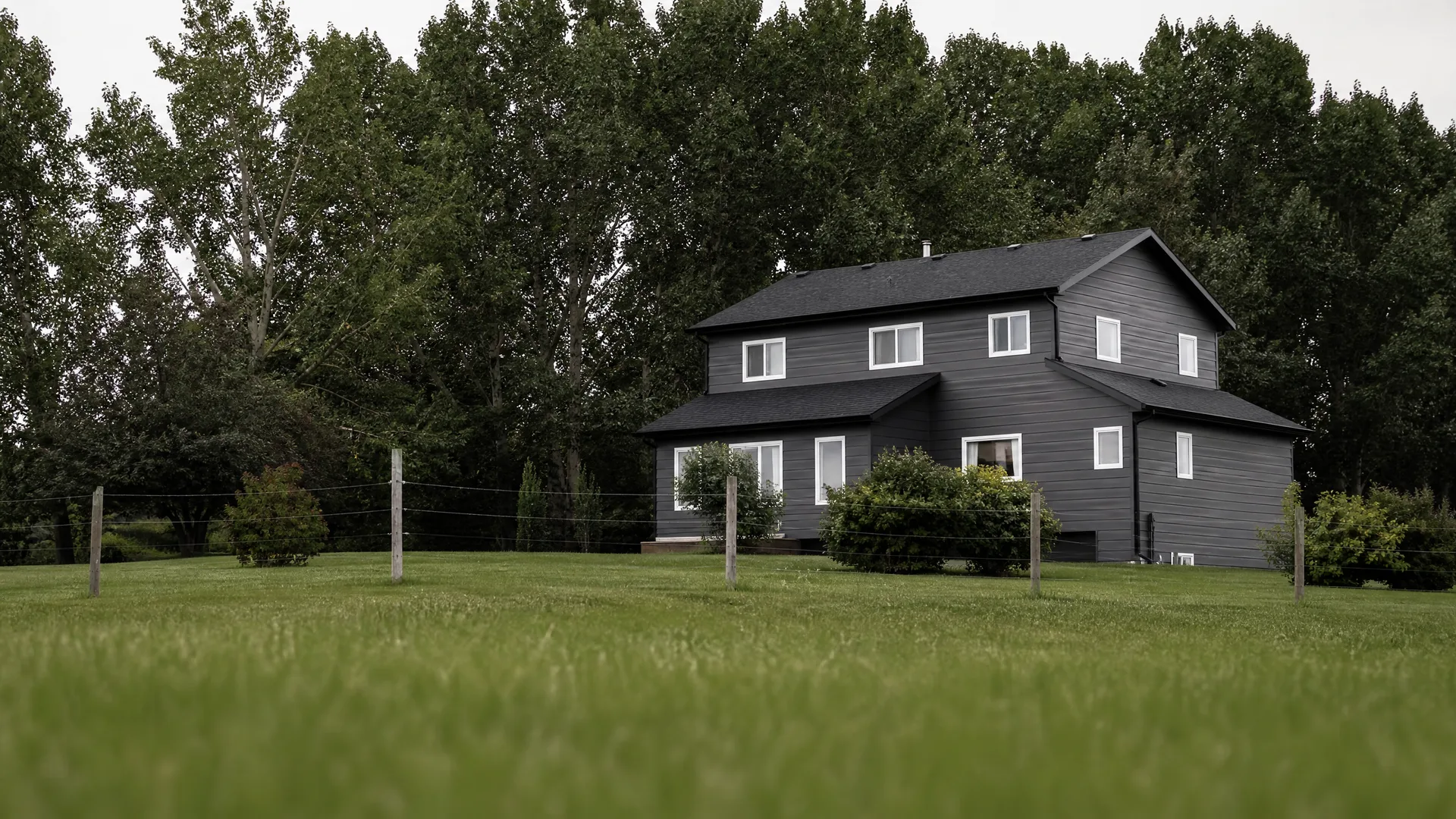






A two-story black house with white-trimmed windows stands behind a wire fence and a mown grass field, backed by tall deciduous trees under an overcast sky.

Heat Pump Repair in Oakes, ND

Tell us about the job

Takes about a minute. No obligation.

RepairHeat PumpDickey County, ND
Step 1 of 2

What ZIP code is the job in?

A heat pump in Dickey County has to pull heat out of winter air that's often well below freezing, and that's harder on a system than the mild shoulder-season loads it sees in milder states. The long heating season here means more hours run, more cycles, more wear on the parts that start and stop the system. Then summer asks it to run the other direction, and in between there's hail and winter storms hitting the outdoor unit that homes elsewhere just don't deal with as often. All of that adds up to strain most systems never see. When a heat pump here starts acting up, the cause is usually tied to that wear, not a one-off fluke. A proper diagnosis finds what's actually failing instead of guessing.

9 months
September through May, your system heats
3 months
June through August, it cools
6°F
the average winter night it heats against
79°F
the average summer afternoon it cools against
Isometric cutaway illustration of a single-story house showing interior rooms with furniture, an attic duct system connected to an indoor air handler, and an outdoor condenser unit linked by lines along the exterior wall.
Your system heats September through May and cools June through August.

NOAA nClimDiv, 1991–2020 normals

Half the homes in Dickey County were built in 1964 or earlier.

A heat pump that old has likely used up most of what it had to give.

Nine months of heat, three of cooling, and September is when the weak part gives out

Cooling runs June through August
Heat runs September through May
Climate zone 6A

Electricity here runs 12.17 cents per kilowatt-hour, cheaper than most of the country pays. That's one thing working in your favor. But a heat pump that's struggling doesn't know the rate is low, it just runs longer to make up for whatever's wrong, and longer runtime on a bad part turns a low rate into a real bill anyway. A failing capacitor, a low charge, a stuck reversing valve, any of these make the system work harder for the same heat. Cheap power helps less once the machine itself is the problem.

Get the real problem found before another hard winter asks more of it

The outdoor unit here has taken 39 hail events and 42 winter storms between 2015 and 2024, on top of a heating season that already runs it longer than most systems ever see. Whatever's acting up now is likely tied to that wear. A proper diagnosis tells you what's actually failing, so the fix holds instead of masking the next thing waiting to go.

Find a contractor
A man in a cap, dark jacket and tan trousers climbs porch steps toward a red door, carrying a worn olive duffel bag, with a potted shrub beside gray clapboard siding.
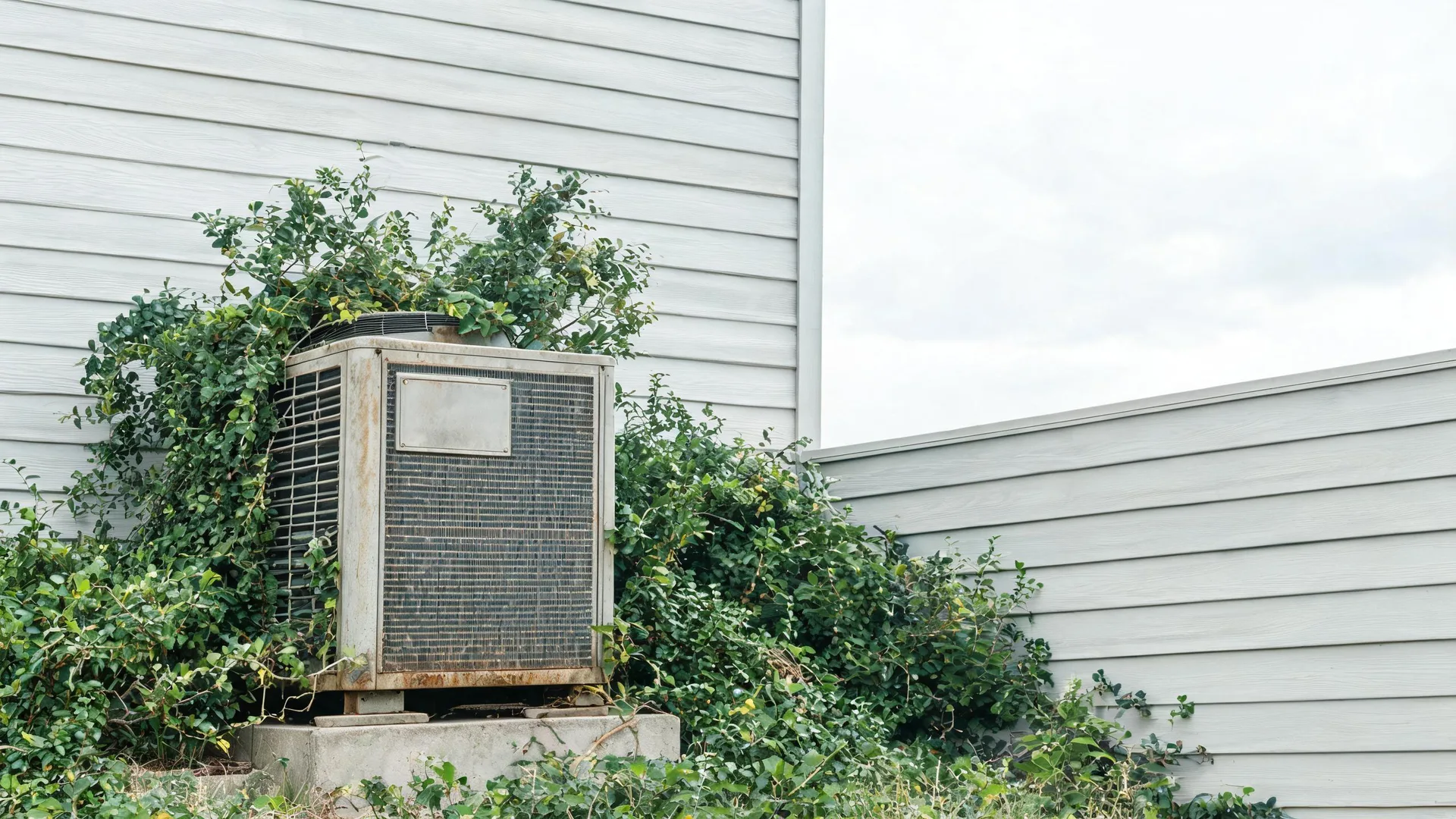
A gray heat pump outdoor unit mounted on a concrete pad next to a residential house with lap siding and stone accents.

How old is the one in your house

If your heat pump came with the house, ask how old it actually is before you pay for a repair. Half the homes around Oakes date to 1964 or earlier, and a unit that's been running since anywhere near then has already given you more years than most systems get. A repair on a system that old is a bet that nothing else fails soon after. Worth knowing before the bill, not after.

A small fault asks the compressor to cover for it

A reversing valve that won't fully shift, or a charge that's dropped, still leaves the heat pump trying to hit the thermostat setting. The compressor runs longer to make up the difference. Heat that leaves a compressor running past where it's built to stop wears the bearings and the windings faster than normal cycling ever would.
Waiting turns one repair into two

A failing capacitor makes the compressor draw hard every time it starts. Keep running it that way and the start puts real strain on the compressor itself, the one part in the system that costs the most to replace. The part that's cheap to fix now is often the one protecting the part that isn't.

Most heat pump failures trace back to a handful of parts, and they tend to go in recognizable ways. The capacitor weakens over time and starts giving the compressor and fan motors a harder time on every start, until one day it doesn't start at all. Refrigerant charge drops slowly through a small leak, and the system keeps running but moves less heat for the same effort. The reversing valve, the part that switches the system between heating and cooling, can stick from built-up wear and leave the system blowing the wrong temperature air or stuck in one mode. Contactors pit and burn from the arcing that happens every time they close, until they stop making contact reliably. Outdoor coils get coated in debris or damaged by impact, and airflow across them drops, which makes the whole system work harder to do the same job. None of these fail without warning. They show up first as longer run times, a system that keeps up less well than it used to, or a unit that cycles more than it should.

If the diagnosis finds a weak capacitor or a contactor going bad, that's usually a straightforward fix and worth doing regardless of the age of the system. But if the problem is a slow leak or a compressor already showing strain, think about what that repair buys you before you pay for it. A low charge gets topped off today and the same leak is losing refrigerant again next season. On an older unit already running longer hours than it should, that's money spent twice on the same problem. Get the actual cause found first, then decide whether it's a repair or a point to stop paying into a system that's already given you most of what it had.