



A snow-covered residential street at twilight with illuminated houses, bare trees, and an orange horizon glow beneath a deep blue sky.

Heat Pump Repair in Rolla, ND

Tell us about the job

Takes about a minute. No obligation.

RepairHeat PumpRolette County, ND
Step 1 of 2

What ZIP code is the job in?

A heat pump in Rolette County runs through weather built to wear it down. Thirty-three winter storms hit the county between 2015 and 2024, each one burying the outdoor unit in snow and ice while it keeps trying to pull heat from that cold air. Hail has come through 23 times in the same stretch, and that outdoor unit sits outside year round taking whatever falls. Summers don't add the heavy, humid strain you'd get further south, the dew point here runs lower than most of the country, but that's the one break this machine gets. The rest of the year it's working against the weather, not with it. When a part fails, there's usually a reason it wore out when it did, and that reason is worth finding before anything gets replaced.

10 months
September through June, your system heats
1 months
July through July, it cools
0°F
the average winter night it heats against
76°F
the average summer afternoon it cools against
Isometric illustration of a cutaway single-family house showing interior ductwork and an air handler, with an outdoor condenser unit connected by lines along the exterior wall.
Your system heats September through June and cools July through July.

NOAA nClimDiv, 1991–2020 normals

Electricity in Rolette County averaged 10.99 cents per kilowatt-hour in 2025, cheaper than most of the country.

A heat pump that's struggling still runs up a bigger bill every month it sits unfixed.

A heat pump that's low on charge or fighting a bad part doesn't just underperform, it pulls more power trying to do the same job. Electricity here is cheap, but a struggling unit still runs up a bigger bill every month it sits unfixed. Waiting doesn't save anything if the system is already straining to keep the house warm or cool. Getting a tech out to find the actual problem stops that sooner than letting it limp along another month.

A heat pump working this hard needs a real diagnosis, not a guess

Whatever part failed on your heat pump, it likely wore out because of what this machine has been doing all year, not from one bad day. Finding the actual cause now is what makes the fix hold.

Find a contractor
A man in a gray long-sleeve shirt and brown work pants, seen from behind, climbs wooden porch steps toward a red door while carrying a canvas tool bag holding pliers and screwdrivers, with a potted plant at right.
A white mini-split heat pump outdoor unit mounted on a concrete pad beside a gray-sided house, surrounded by gravel and green shrubs.

Why running it longer makes the repair bigger

A heat pump that's low on refrigerant will keep running, and that's the problem. The compressor still cycles on, but it's pulling vapor instead of liquid, and that wears the compressor faster than if the system just shut off. A failing run capacitor does something similar. The motor it's feeding starts to struggle, draws harder to make up for it, and heats up more than it should every time it kicks on. None of this looks dramatic from inside the house. The air still comes out warm or cool, just not as well, and it's easy to let it ride. But a motor that's overheating on every cycle is shortening its own life each time it runs, and a compressor starved for refrigerant can seize. Once that happens, it's not a repair anymore. Catching the problem while it's still a bad capacitor or a slow leak is what keeps it from turning into a full replacement.

What shows up first

The house takes longer to reach the set temperature, or never quite gets there. Air coming out of the vents feels lukewarm instead of properly warm or cool. The outdoor unit runs longer than it used to, or cycles on and off more than it should. Ice builds up on the outdoor coil and doesn't clear during the defrost cycle. Any of these means the system is working harder to do the same job, and that's usually noticed on the thermostat before anyone sees a part fail.
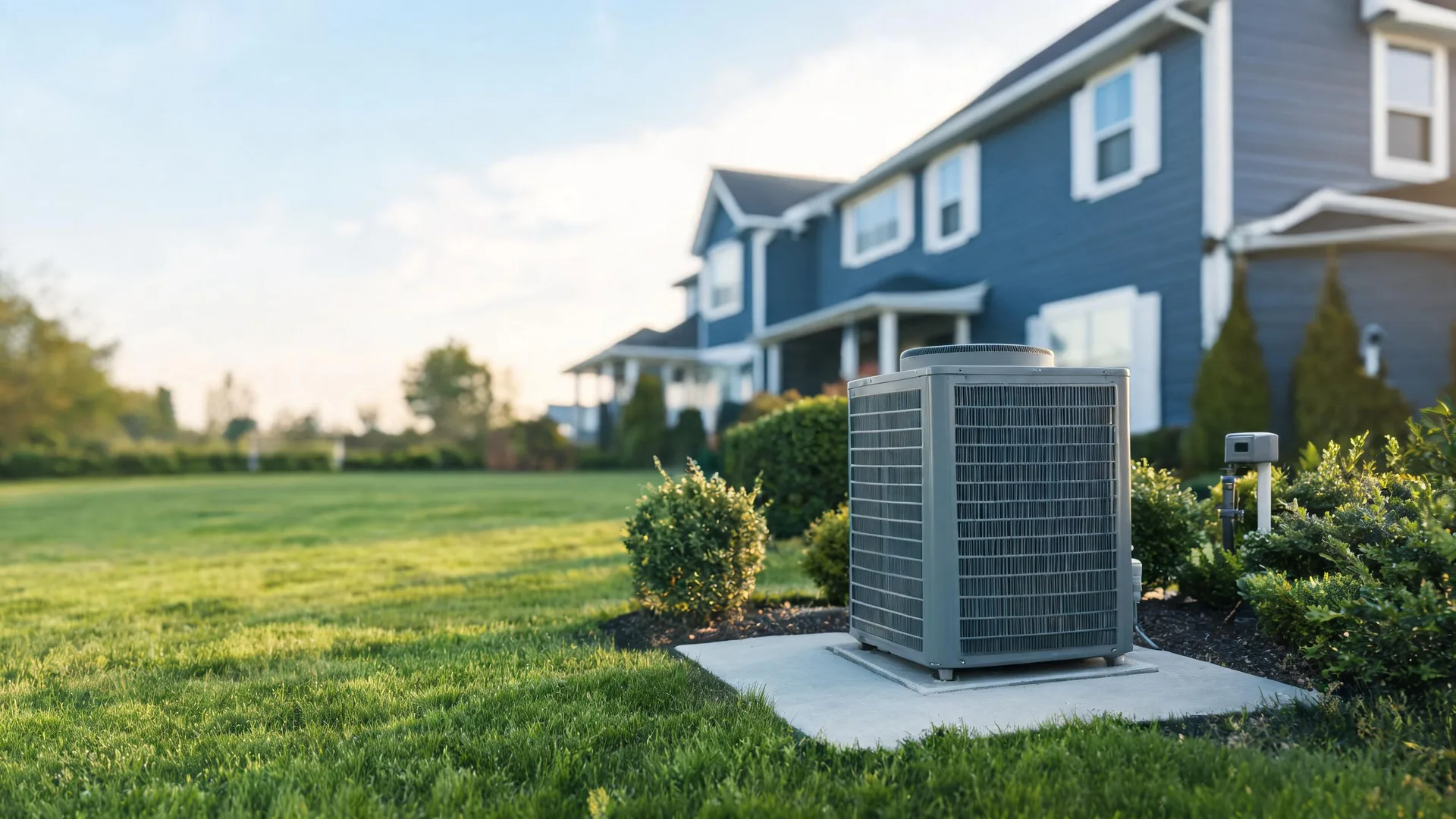
What it means for the call

Describing what's actually happening helps a tech narrow down the problem before they even arrive. Short cycling points one direction, a unit that runs constantly but underperforms points another, and ice that won't melt off during defrost points somewhere else entirely. The sounds matter too: a hum with no fan movement, a clicking that won't resolve into a start, a hiss near the lines. None of this requires guessing at a cause. It just means paying attention to what the system is doing right before calling it in.

Most heat pump failures trace back to a handful of parts, and they tend to go in the same order. The contactor and capacitor wear out first because they're the ones switching the compressor and fans on with every single cycle, year after year. A capacitor that's weakening won't always stop the system outright. It'll just make the motor struggle to start, which is its own kind of damage over time. The reversing valve is the other common failure point, and it's the part that lets the system switch between heating and cooling in the first place. When it sticks, the system gets stuck blowing the wrong temperature air, or it won't switch modes at all. Refrigerant leaks show up slower, usually at a joint or a coil, and they don't announce themselves. The system just does less work for the same run time until someone notices. None of these parts fail because the unit is old. They fail because they've been cycling on and off for years, and that's true of every heat pump whether it's new or not.

Age by itself doesn't mean replace it. What matters more is which part failed and what it would take to fix that part versus what the system has left in it. A bad capacitor or a stuck reversing valve is a straightforward repair on a unit that's otherwise sound, and fixing it is usually the right call no matter how old the system is. A compressor that's seized is a different conversation, because the compressor is most of what the unit does, and replacing just that part can cost close to replacing the whole system. The other thing worth asking is how often this same unit has needed a tech out. One failure is a part wearing out on schedule. A string of them in a short stretch means something is working against the equipment more broadly, and the next part is probably not far behind the one that just failed. A tech who's inside the unit can tell the difference between a system that's got years left in it and one that's failing in sequence.