A two-story dark-clad house with white-trimmed windows and a low attached wing, set behind a wire fence and a wide grassy lawn with tall deciduous trees behind it.

Heat Pump Repair in Rugby, ND

Tell us about the job

Takes about a minute. No obligation.

RepairHeat PumpPierce County, ND
Step 1 of 2

What ZIP code is the job in?

The cold puts more hours on it

A heat pump in Pierce County runs against hard winters and against ice and heavy snow that hit the county 32 times between 2015 and 2024. Every storm like that is more hours of runtime and more strain on the parts that keep it moving.

That strain shows up as a repair call

A unit working this hard wears sooner than one in a milder climate. The part that fails first is usually the one that was already carrying the heaviest load. Getting it diagnosed right matters more here, since the same symptom can point to ordinary wear or to something the winter made worse.

9 months
September through May, your system heats
2 months
July through August, it cools
1°F
the average winter night it heats against
78°F
the average summer afternoon it cools against
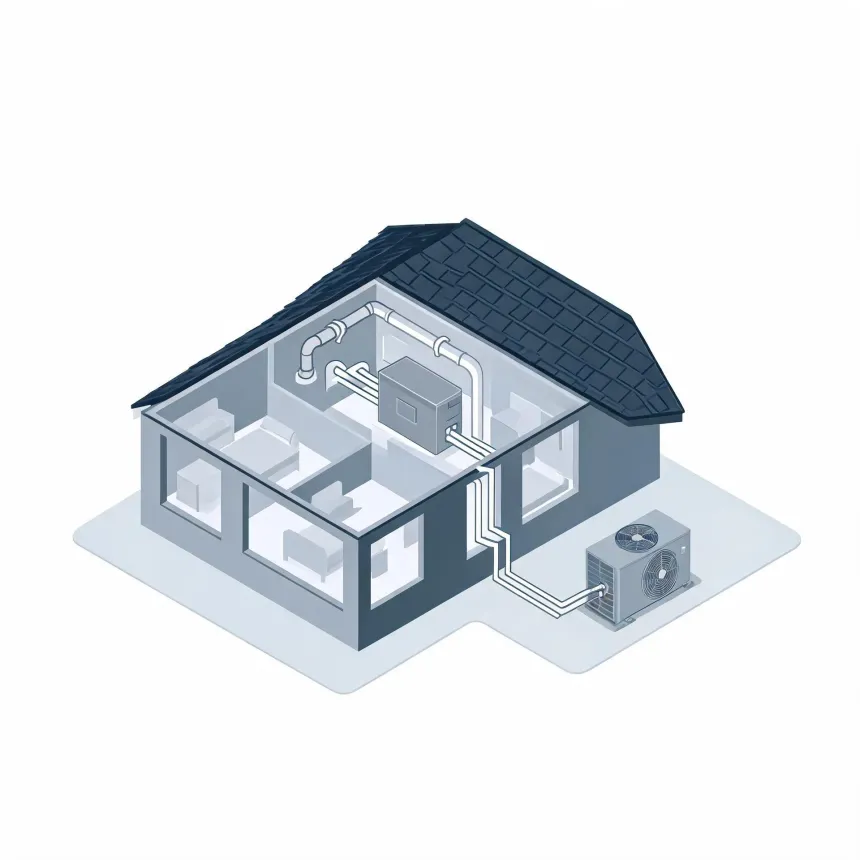
Isometric cutaway illustration of a gray house showing interior rooms, a central air handler with ducts in the attic, and refrigerant lines running to an outdoor condenser unit beside the building.
Your system heats September through May and cools July through August.

NOAA nClimDiv, 1991–2020 normals

Half the homes in Pierce County were built in 1972 or earlier.

A heat pump in a house that old is more likely to be near the end of its own life, on top of whatever brought on this repair call.

Cheap power still adds up when a heat pump is running wrong

Power here costs 11.00 cents per kilowatt-hour
Climate zone 7
Cooling runs July through August
The first cold snap finds the weak partHeat here runs September through May, and August is the last easy month to catch a problem before the load does.

A heat pump that's icing up, short cycling, or running its backup strip heat too much is already costing more than it should every month. Power here is cheap compared to most places, which is exactly why it's easy to miss how much extra a struggling unit is pulling. That strip heat especially: it's a straight electric element, no efficiency to it at all, and a heat pump that leans on it more than it used to is telling you something is wrong. The longer a bad repair sits, the more months it runs that way. Getting it looked at now stops the bleeding instead of paying for it all winter.

A hard-working unit deserves a real diagnosis

Whatever is wrong with it right now has probably been building for a while under the weight this county puts on it. Guessing at the fix wastes a call. Getting it diagnosed properly means the part that's actually worn gets replaced, not just the one that happened to fail first.

Find a contractor
A man in a gray long-sleeve shirt and brown work pants, seen from behind, climbs wooden porch steps toward a red door while carrying a canvas tool bag holding pliers and screwdrivers, with a potted plant at right.
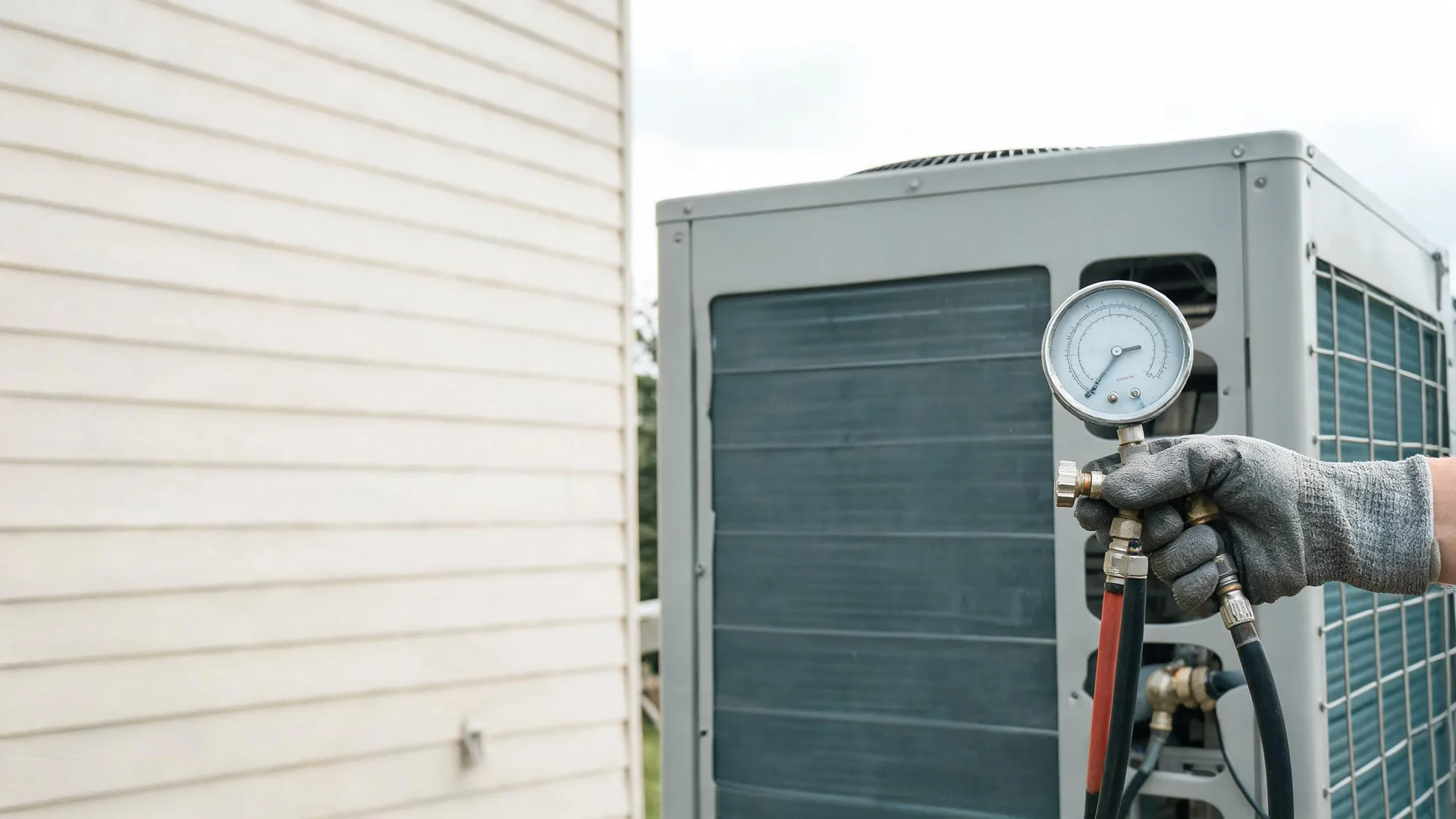
A residential heat pump outdoor unit mounted on a concrete pad next to a house with gray vinyl siding.

Ask what's left in it, not just what broke

Ask the contractor how much life is left in the unit, not just what broke today. If it came with the house, that question is worth more here than in most places. A repair on a system this old can turn into a second repair within a year or two. Better to hear that now than after paying for the first fix.

Check the thermostat and the breaker first

Make sure the thermostat is set to heat or cool as needed and the temperature is actually calling for one. Check the breaker box for a tripped breaker or a switch sitting halfway between on and off. Some outdoor units also have a shutoff switch nearby in a small box. If that got bumped off, the unit will sit there doing nothing and look like it failed.

Look at the filter and the outdoor unit

Pull the air filter and hold it up to a light. If you can't see light through it, it's choking off airflow and the system will struggle no matter what else is right. Walk outside and check that the outdoor unit isn't buried in snow, ice, or leaves. Airflow has to move freely through those fins on both ends or the whole system backs up.

A heat pump usually tells you something is wrong before it quits outright. It might run longer than it used to without the house feeling any warmer. The outdoor unit might ice over even when the weather doesn't call for it, or it might short cycle, kicking on and off every few minutes instead of running a steady stretch. Some units start making a new sound, a clicking at startup, a hard clunk when the reversing valve switches over, a rattle from the outdoor fan. Warm air that isn't actually warm, just less cold than the room, often means the system has shifted onto backup heat because the compressor side isn't carrying the load anymore. None of these mean the same repair, but all of them mean the same thing: something inside is already struggling and waiting won't make it cheaper to fix.

Age is the real question behind repair or replace, and it isn't about the thermostat on the wall, it's about the compressor outside. A compressor that's original to the unit and still under warranty is almost always worth fixing, whatever broke around it. One that's older and already had a refrigerant leak or a hard start kit added is a different conversation, because the next failure is rarely far behind the first. Look at what's being replaced, too. A capacitor or a contactor is a small, ordinary fix on a unit of any age. A reversing valve or the compressor itself is a major repair, and on an older unit that money starts competing with the cost of a new system instead of just patching the old one. The honest way to decide is to ask what else on that unit is close behind the part that just failed, not just what the part itself costs to replace.