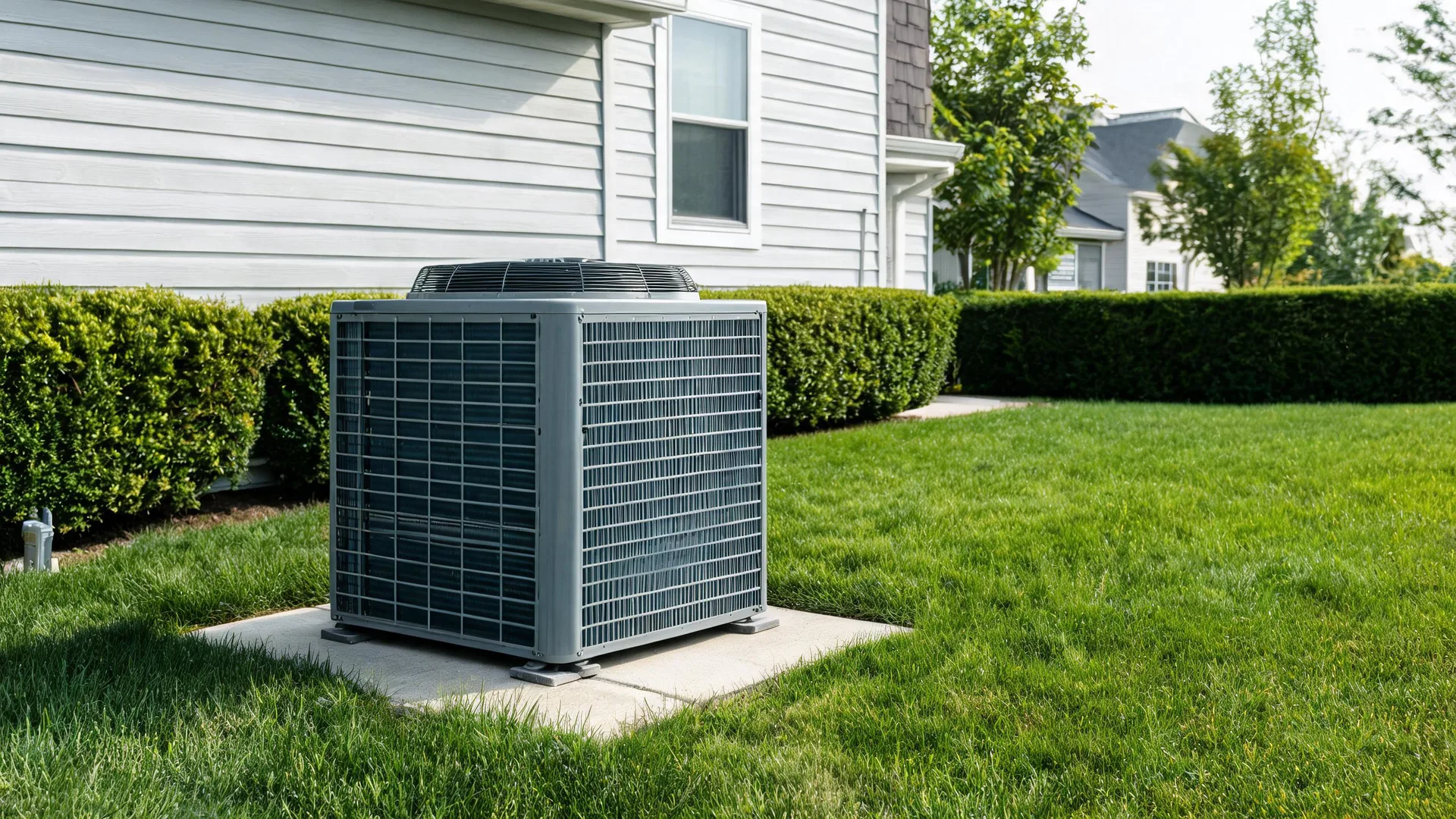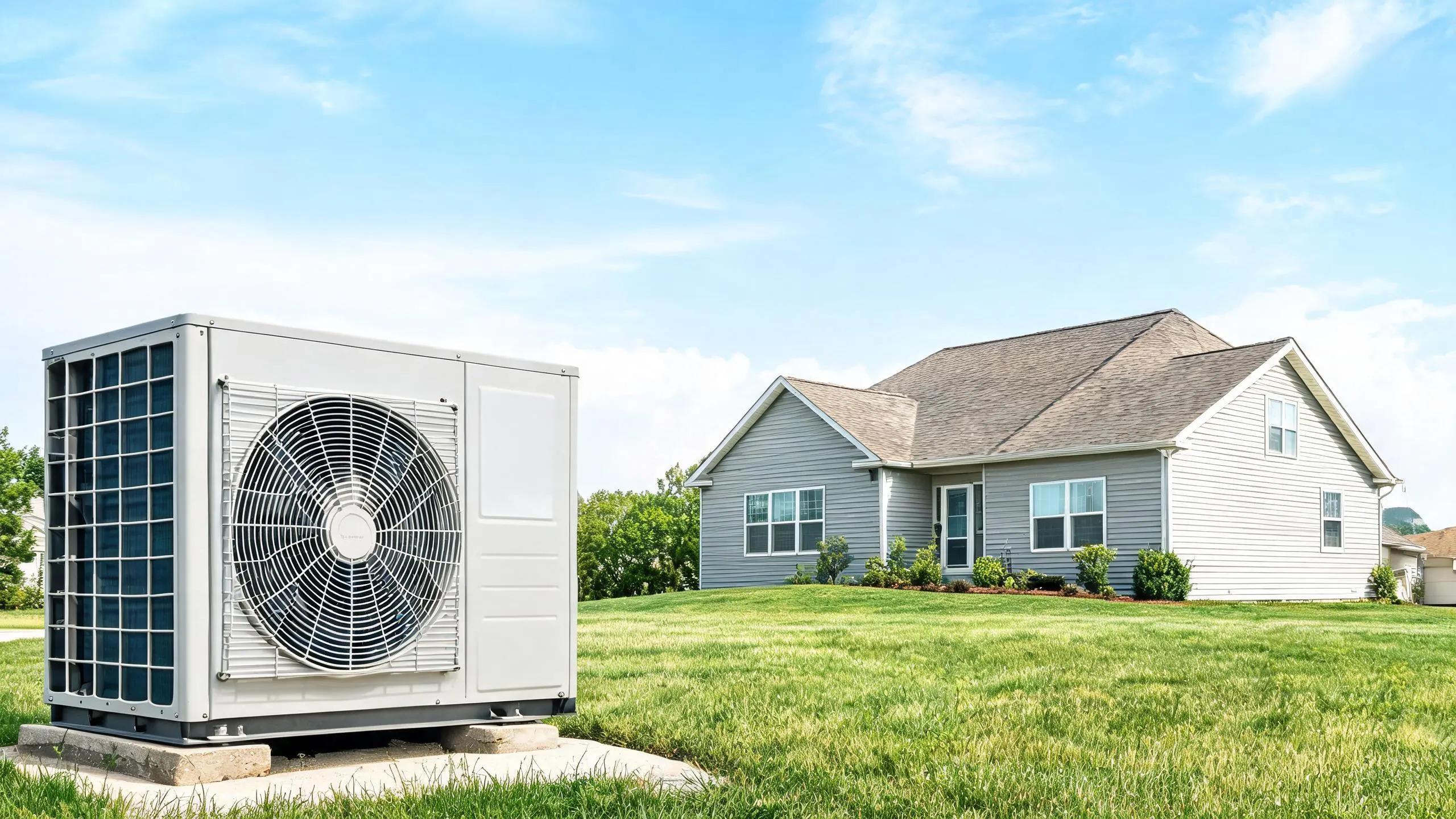
An outdoor HVAC condenser unit on a concrete pad in front of a single-story house with gray siding and a shingle roof.

Heat Pump Repair in Valley City, ND

Tell us about the job

Takes about a minute. No obligation.

RepairHeat PumpBarnes County, ND
Step 1 of 2

What ZIP code is the job in?

Half these homes were built in 1966 or earlier

Barnes County is an older county. Half the homes here were built in 1966 or earlier, half after. A heat pump that came with a house that old is not likely to be the original one, and whatever is running now has its own age to account for.


Age changes what a repair call is for

If your heat pump has been in the house a long time, a repair call is also the moment to ask how much life is left in it. A major repair is a harder sell on a unit that is already old.

9 months
September through May, your system heats
2 months
July through August, it cools
3°F
the average winter night it heats against
79°F
the average summer afternoon it cools against
Isometric cutaway illustration of a small house showing interior rooms with furniture, an indoor air handler with flexible ducting, and refrigerant lines running to an outdoor condenser unit beside the building.
Your system heats September through May and cools July through August.

NOAA nClimDiv, 1991–2020 normals

Nine months of heat a year, and September is when a weak heat pump quits

Cooling runs July through August
Heat runs September through May
Climate zone 6A

Ask how much life it has left

If your system came with an older house, it may be near the end of its life. Ask how much life it has left before paying for a big repair.

Find a contractor
A man in a cap, dark jacket and tan work pants walks up concrete steps toward a red front door, carrying a worn canvas tool bag, with a potted shrub beside the entry.
A gray outdoor HVAC unit mounted on a concrete pad beside a house with gray lap siding and a stone foundation.

What you can check before anyone shows up

Before anyone comes out, walk outside and look at the unit itself. If it's buried in leaves, grass clippings or ice, clear what you can reach. A blocked coil makes a heat pump work harder and can stop it from heating at all. Check the thermostat next. Make sure it's set to heat and actually calling for a higher temperature than the room is at, and swap the batteries if it takes them. Inside, pull the air filter and hold it up to a light. If dust blocks the light, it's choking the airflow the whole system depends on, and it's the most common reason a heat pump runs without keeping up. Walk the house and check that no vent or return grille is blocked by furniture or rugs. Check the breaker panel for anything tripped, and if there's a shutoff switch near the outdoor unit, make sure it wasn't bumped off. If the air feels cold when it should be warm, that's not automatically bad news. Heat pumps pause to defrost the outdoor coil in cold weather, and warm back up again within a few minutes on their own. If it's still not working after checking all that, that's the point to call someone rather than keep guessing.

Ice does not wait for you to notice it

A heat pump that is low on refrigerant or losing airflow will frost up the outdoor coil faster than it can defrost. Run it like that and the ice builds with every cycle instead of clearing. Once ice packs around the coil fins, the unit can't pull heat from the air at all, and what started as weak heating turns into no heating.

A struggling compressor is wearing out faster

If the system is low on charge or a component is failing, the compressor works harder to do the same job. Compressors are built to run within a certain range of pressure and current. Push it outside that range for days or weeks and you shorten what was left of its life, turning a part replacement into a full compressor failure.

A heat pump that needs attention usually tells you in how it runs, not just whether it runs. Listen for a clang or rattle when the outdoor unit kicks on, especially if it settles down after a minute. That can mean a fan blade hitting ice or debris, or a loose part inside the cabinet. Watch how long each cycle runs. A heat pump that used to run for a while and shut off, now running almost constantly, is losing ground somewhere, whether that's airflow, charge, or a failing component. Short cycling, where it kicks on and off every few minutes, wears on the compressor and rarely fixes itself. And if the air coming out of the vents feels barely warm, or outright cool, when the thermostat is set higher than the room, that's the system telling you it can't move enough heat anymore, not just a sign it's working hard.

Repair or replace usually comes down to what else is wrong besides the thing that just broke. A cracked capacitor or a failed contactor is a clean fix on its own, cheap parts that don't say much about the rest of the system. A compressor on its way out is a different conversation, because the compressor is most of what the unit is worth. If a tech opens the cabinet for one problem and finds the coil corroding or refrigerant oil weeping from a fitting that shouldn't be wet, that's the system telling you the next failure is already lining up behind this one. Ask what else they saw in there, not just what they came to fix. A unit that's needed a tech out more than once this year is worth weighing differently than one that's been quiet for years and just hit a bad week.