






An outdoor heat pump unit mounted on a concrete pad beside a house with beige siding and a landscaped garden bed.

Heat Pump Repair in Watford City, ND

Tell us about the job

Takes about a minute. No obligation.

RepairHeat PumpMcKenzie County, ND
Step 1 of 2

What ZIP code is the job in?

A heat pump in McKenzie County earns its keep through a zone 6A winter, which is the cold end of the scale. That long heating season means the compressor runs more hours here than it would almost anywhere else, and every one of those hours is wear on the same set of parts. Winter brings its own hazards too: 16 winter storms hit the county between 2015 and 2024, along with 79 damaging wind events and 65 hail events over that same stretch. An outdoor unit that takes wind-driven debris or a battering from hail can end up with a bent coil fin or a cracked fan blade that strains the system from then on. When a heat pump here is acting up, a hard duty cycle or a mark from the weather is usually part of the reason why, and whoever repairs it needs to know which one it is to fix it right.

9 months
September through May, your system heats
2 months
July through August, it cools
7°F
the average winter night it heats against
81°F
the average summer afternoon it cools against
Isometric cutaway illustration of a single-story house showing interior rooms, ceiling ductwork, an indoor air handler, and an outdoor condenser unit connected by lines on the ground.
Your system heats September through May and cools July through August.

NOAA nClimDiv, 1991–2020 normals

Half the homes in McKenzie County were built in 2011 or later.

A heat pump that came with a house that age still has a lot of working life in it, which makes repair the right first call.

Nine months of heat start in September, and the first cold snap finds the weak part

Cooling runs July through August
Heat runs September through May
Climate zone 6A
Cheap power still adds up on a struggling machineElectricity here runs 9.60 cents per kilowatt-hour, low for the country, but a heat pump working this hard runs up a bill every month it's left broken.

If your house dates to 2011 or later, the heat pump likely has years of working life left, and that makes a targeted repair the right call over a replacement. A technician can check the compressor, the reversing valve and the board for the specific part that failed rather than treating the whole unit as a loss. Mobile homes make up close to a fifth of the housing here, and those often run a package unit or a different setup than a house built on a slab, so what gets checked and how it gets fixed depends on which you have. Either way, a worn part on a system with years ahead of it is usually a straightforward fix, not a reason to start over.

Find the worn part, fix that

A heat pump acting up here is usually wearing out from the same long heating season and the same weather that hits every unit in the county. Get a contractor to check the compressor, the reversing valve and the board and find the actual part at fault before anything else.

Find a contractor
A gray heat pump outdoor unit mounted on a concrete pad next to the stone-accented exterior wall of a house.

What a struggling heat pump tells you before it fails

A heat pump that's struggling doesn't usually quit all at once. It shows you first in small ways. It runs longer to hit the same setpoint. Air coming out of the vents feels lukewarm instead of warm. The outdoor unit ices over and doesn't clear itself in the defrost cycle like it should. You hear it cycling on and off more than it used to, short bursts instead of a steady run. Sometimes it switches into emergency heat and won't come out of it, which usually points to the reversing valve sticking or a control board losing track of what the system should be doing. A compressor that's wearing out can make a hard starting noise before it kicks on, or hum without starting at all. None of these mean the whole system is done. They mean a specific part is failing, and most of the time that part can be found and replaced on its own.

A frozen coil pulls in more ice the longer it runs

Once frost builds past what the defrost cycle can clear, the coil keeps icing because airflow across it keeps dropping. Running the system through that doesn't melt the ice, it just makes the compressor pull refrigerant through a coil that can't do its job, and that's load the compressor wasn't built to carry for long.
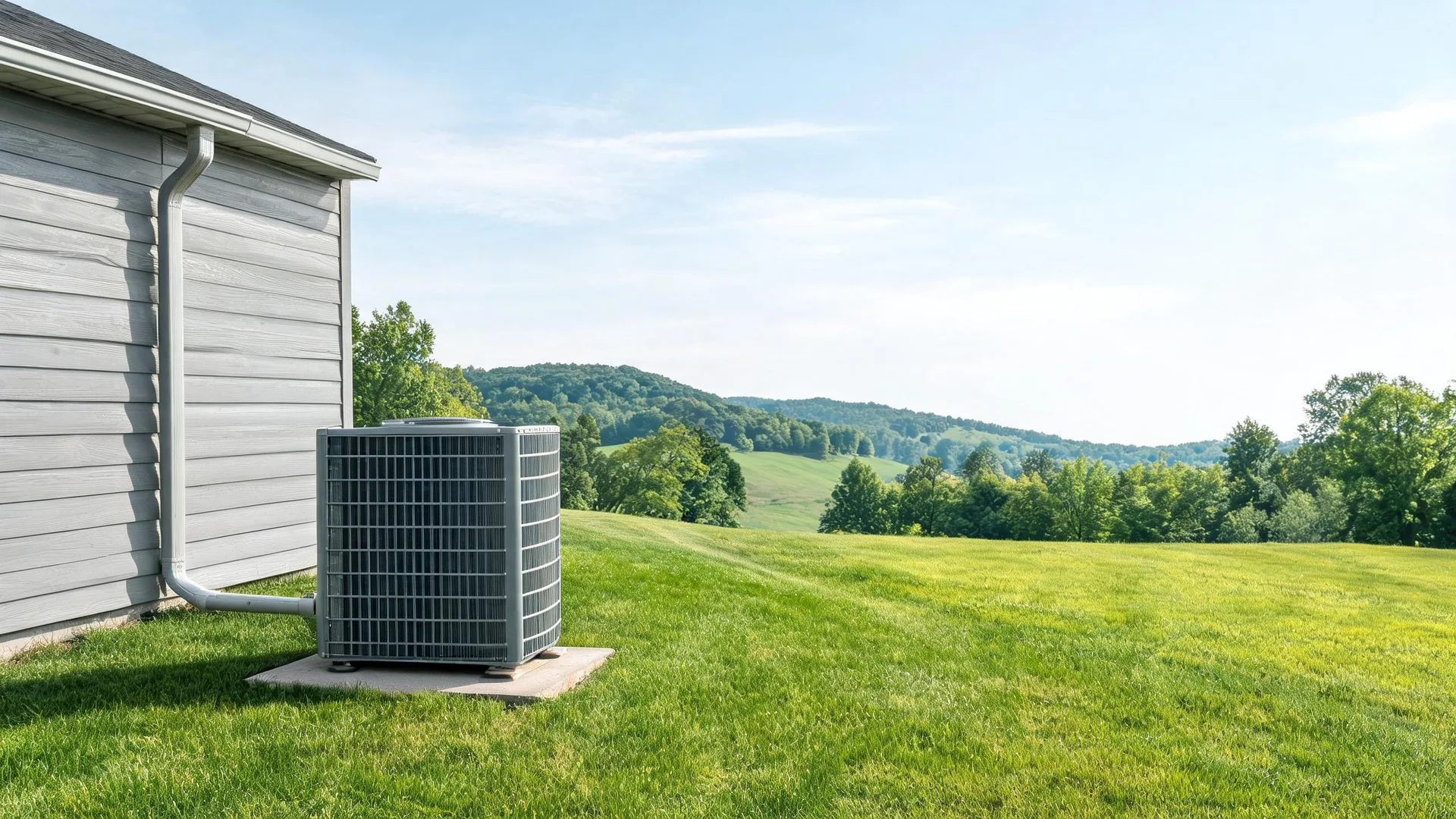
Let a technician see the fault before it hides itself

A compressor that hums without starting or a reversing valve stuck in one mode leaves a trail: a hard start sound, a specific error on the board, a pattern to when it fails. Keep running the unit past that point and a second part can fail trying to compensate for the first, and now there are two problems instead of one to sort out.

Power is cheap in McKenzie County, but a heat pump isn't free to run even here, and a bad part makes it worse. A reversing valve stuck in one mode, a compressor pulling hard to start, a coil icing up: whatever the specific fault is, the system keeps drawing power trying to do a job it can't finish. That's not a one-time cost. It's on the bill every month the fault sits there unfixed. Getting a technician to find the actual part at fault stops that drain instead of just paying it over and over.

Age and the pattern of failure tell you more than how the system looks or sounds. A unit that's given a decade or more of regular service, taking on failures one at a time as parts wear, is usually worth repairing again unless the failure points straight at the compressor. The compressor is the expensive part to replace, and often the cost of swapping it alone starts to close in on a new system priced to match. A reversing valve, a capacitor, a control board, a fan motor: those fail on their own and get replaced on their own, and doing that keeps a sound unit running. What matters most is whether this is the first real failure or the latest in a string of them. One fixable part is a repair. A unit that keeps finding new ways to fail is telling you the whole system is wearing out at once, not just the piece in front of you.