Mini split leaking water in Mandan, ND

Hand it over

Water dripping from a mini split in Mandan usually means a clogged condensate line or a drain pan that's backed up, and it rarely stays a small problem once the floor or the wall behind it starts taking on moisture. That's not something to leave sitting through a cold snap or while you're waiting on a callback. Finding a contractor who actually works on mini splits in Morton County can take longer than the leak gives you. Send the request here and that search is off your plate. It goes to one local contractor, not a handful of companies competing for the job, so you're not fielding calls all afternoon. Someone who services this equipment all year in this area has seen this particular leak before and knows where it tends to start. Fill out the form and let that part be someone else's job for a while.

Why is my mini split leaking water?

You walked by your mini split and found water dripping onto the floor or running down the wall. It wasn't doing that before, and you want to know if this is something minor or something that's about to turn into a bigger mess in your house.

Water is backing up because the condensate line or drain pan can't drain the way it should

Your mini split pulls moisture out of the air and sends it down a small drain line, out of the house. When that line gets clogged with dust, algae or a kink, the water has nowhere to go and backs up into the drain pan until it overflows. A dirty air filter can do the same thing, because it lets the coil ice up, and when it melts, more water lands in the pan than the line can carry away. Either way, the water is going to keep finding its way out, onto your floor or down the wall, until the line or the pan is cleared.

A white wall-mounted mini-split indoor unit high on a beige interior wall, with a potted olive-like tree at right and an armchair and window visible through a doorway at left.

Running the way it should

No water on the wall, no drip at the base of the unit. Condensation forms inside and drains out through the line without you ever seeing it. That olive tree and the chair across the room stay dry because the line is doing its job.

A wall-mounted mini-split air conditioner indoor unit with visible dust and staining, installed on a beige interior wall below white crown molding.

When grime takes over

Dust and grime built up around the vents block airflow across the coil and clog the drain path. Once that happens, water backs up instead of draining out, and it finds its way down the wall or across the floor below.

Clogged Line or Frozen Coil

Clogged drain line

  • Algae and dust build up inside the drain line over time and narrow it until water backs up and finds another way out.
  • Water usually shows up at the base of the indoor unit or drips straight down from it rather than running along the wall first.
  • A contractor can clear the line with a wet vacuum or flush it, and the unit drains the way it's supposed to again the same visit.
  • This is the more common reason a mini split leaks, especially if the unit has run for a few summers without the line being checked.
  • If the line was never cleaned since it went in, this is the first thing worth ruling out.

Frozen or low refrigerant

  • A low refrigerant charge or restricted airflow lets the indoor coil frost over, and the water shows up when that ice melts faster than the pan can clear it.
  • Water tends to show up after the unit has been running a while, not right when it kicks on.
  • You may notice the mini split cooling less well before the leak ever starts, since a low charge affects output too.
  • Fixing this means a contractor checking the charge and sealing any leak in the line set, not just clearing a drain.
  • Ice on the indoor coil or lines is the clearest sign this is what's going on, not a clog.
  1. Warm indoor air passes over the cold evaporator coil inside the unit.

  2. Moisture in that air condenses into water on the coil's surface.

  3. Water drips down into a drain pan built under the coil.

  4. The pan channels water into a condensate drain line.

How much does Mandan's weather ask of your mini split?

  • Cooling runs July through August

    Only two months of cooling means the coil and drain line sit idle most of the year, so a clog that formed last July can go unnoticed until summer brings it back.

  • Heat runs September through May

    Nine months of heat keeps the system working most of the year, and a mini split that also heats still produces condensation that needs somewhere to go.

  • Power here costs 12.82 cents per kilowatt-hour

    At 12.82 cents per kilowatt-hour, running a mini split here costs less than in most places, which makes a leak worth fixing rather than living with.

NOAA nClimDiv 1991-2020 · EIA-861 2025

A woman in a knitted shawl sits in a living room with a fireplace, shelves, a sofa with cushions, and a lamp by a bright window, looking off to the side.
A woman with long brown wavy hair in a green shirt over a white top stands in a living room with built-in white shelves, a ceiling fan, a potted plant and a sliding glass door.
A woman with shoulder-length gray-streaked hair in a light gray knit sweater stands smiling and looking off to the side in a living room with a sofa, houseplant, framed picture, and sunlit sliding glass door.
A woman with shoulder-length curly gray hair wearing a gray knit sweater stands near a window with a sheer curtain, looking to the side, with a blurred interior room behind her.

What are you seeing around your mini split right now

Look at the wall below the indoor unit first. A stain that's spreading, paint that's starting to bubble, or a dark line running down toward the baseboard all point to the same thing. Check the floor too, especially if there's carpet or wood under the unit, since standing water there will warp boards or leave a ring in carpet fibers if it sits long enough. Some people notice a musty smell before they see anything, which usually means water's been collecting somewhere out of sight for a while. If the drip has been going on more than a day or two, pull back the baseboard or press on the drywall near the unit. Soft spots mean the water already got in.

A dim room with a wall-mounted mini-split air conditioner above a water stain running down the gray wall to a towel on the wood floor, with a black shelving unit, a desk with a lamp and potted plant by a window, and an office chair at right.

It's late afternoon and the office is warm from the window behind the desk. You're at the desk when you notice the streak on the wall under the mini split, a dark line running down toward the outlet. You go get a towel and lay it along the baseboard where the water's pooling. The drip isn't fast, but it hasn't stopped since you sat down an hour ago. You check your phone, fill out the form, and set it on the desk next to the towel. For the first time since you noticed it, you're not the one who has to figure out what's wrong with it. Someone local who deals with this every summer will.


One request and it's handed off

A mini split that's dripping doesn't need a guess, it needs someone to open the unit and find the clog or the cracked pan. That takes a hand on the equipment, not another look at the wall stain. Mandan runs its mini splits through two months of real cooling and nine months of heat, so the drain line sits unused most of the year and a contractor who services these units here knows that's usually where the trouble starts. Someone local who works on this equipment every season has seen the same pan crack and the same line clog more times than you have, and knows which one you're looking at before they take the cover off. Sending the request means one contractor gets your situation, not a list of strangers. That water isn't waiting on you to figure out the cause. The wall behind it and the floor under it are taking on moisture while it sits, and that's the part worth handing off now.

How the drain actually fails

  • A reversing valve lets a mini split pull heat from outside air and push it indoors, so the coil works in both directions through the year.
  • In winter that same coil can frost over, and the unit runs a defrost cycle that melts the frost into water the drain line has to carry off.
  • A drain line with a belly or low spot holds standing water that freezes overnight and blocks the line until a thaw lets it run again.
  • The condensate pump, if the unit has one, lifts water uphill to the drain and fails quietly, so water backs up with no warning sound.
  • Insulation wrapped around the line keeps warm indoor air from sweating onto the pipe itself, and torn or missing insulation shows up as a damp line along the wall.
  • A slightly tilted indoor unit sends condensation to the wrong side of the pan, past the drain opening instead of into it.

A mini split moves heat both directions, and the same coil that cools your house in July works in reverse come January, pulling what little warmth it can from the outside air. Running the system backward like that means the outdoor coil can frost up, and the unit clears that frost on its own with a built-in defrost cycle. That cycle melts the frost, and the water has to go somewhere, down the same drain line that handled condensation all summer. If that line has a belly in it, a low spot where it sags, water sits there instead of draining, and on a cold night in Morton County it freezes solid. The line stays blocked until things warm up enough to thaw it, and until then the water finds another way out. Some units lift the water uphill with a condensate pump instead of relying on gravity, and when that pump quits, there's no sound or warning, just water backing up where the line can't carry it off. The line itself should be wrapped in insulation so warm room air doesn't sweat onto the cold pipe and run down the wall on its own. And if the indoor unit itself has tilted even slightly, water inside the pan can miss the drain opening entirely and spill over the wrong edge, no clog required.

A dusty, stained white wall-mounted mini-split air conditioner indoor unit installed high on a plain off-white interior wall near the ceiling.
Before you get your mini split repair
A white wall-mounted mini-split air conditioner unit installed high on a beige interior wall below white crown molding, with a window and woven shade at the left edge showing green foliage outside.
After you get your mini split repair

Why the pan matters more in winter

A mini split's indoor coil isn't just pulling moisture out of warm air in summer. Come winter, with Mandan running its heat pump hard through the cold months, the outdoor coil frosts up and the unit runs a defrost cycle to clear it. That defrost water has to go somewhere, and it drains through the same pan and line as summer condensation. A pan that's cracked or sitting slightly off level won't show it in July the way it will in January, when defrost cycles run more often and send more water through.

Why a small drip doesn't stay small

The drain line only has to narrow a little before water stops draining fast enough and starts backing up into the pan instead. Once the pan can't keep up, water finds the nearest low point, usually the wall behind the unit or the floor underneath it. Drywall holds that moisture and the stain spreads before the paint even bubbles. A subfloor under carpet or laminate does the same thing out of sight. The leak usually starts small, but the clog behind it rarely clears on its own.

Cooling runs July through August

Two months of cooling means your mini split's drain line only has to do real work from July through August. A clog that started last summer can sit untouched all winter and show up again the first hot week, so a leak now is worth checking before it closes off for another year.

NOAA nClimDiv 1991-2020

A woman with her hair in a bun holds a sleeping young child against her chest, both wrapped in a textured beige knit blanket on a sofa in a dimly lit room with a lamp, framed picture, and bookshelf behind them.
A smiling older woman with gray hair in a cream knit sweater stands in a dimly lit kitchen beside a window showing snow outside, with a round loaf of bread on the counter in the foreground.

A mini split dripping water in Mandan almost always comes down to a clogged condensate line or a drain pan that's cracked or backed up, and both are things a hand on the unit can find in one visit. You don't need to know which one it is before you call. What matters now is getting someone in front of the unit who works on these systems through Morton County's full stretch of weather, the two months of real cooling and the long winter defrost cycles that keep that drain pan busy even in January. A local contractor who sees this equipment every season knows where to look first and what usually gives out. You'll be matched with one licensed contractor, not a handful of companies competing for your call, so the person who shows up is the one who's already looking into your situation. The water on your wall or floor won't wait for summer to get worse. Getting the clog cleared or the pan replaced now is what stops it from becoming a bigger repair.

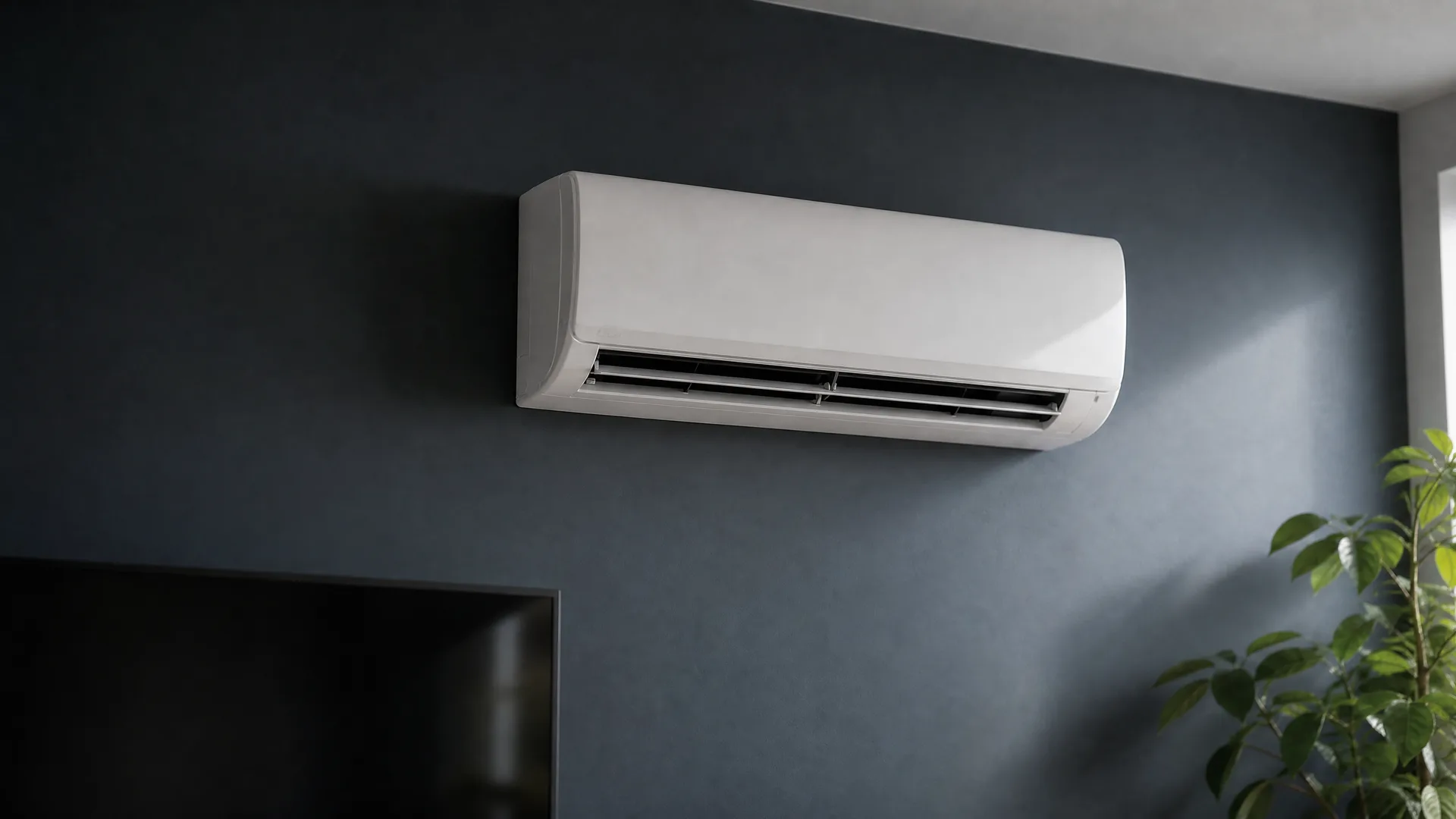
A white wall-mounted mini-split air conditioner on a dark gray interior wall, with a flat screen at lower left and a green leafy plant at lower right.

Done looking for a mini split pro

RepairMini-splitMorton County, ND
Step 1 of 2

What ZIP code is the job in?