A black two-story house with gabled roof and white-framed windows stands behind a mown green lawn, backed by a row of tall deciduous trees and a wire fence.

AC Maintenance in Bismarck, ND

Tell us about the job

Takes about a minute. No obligation.

Tune-up, service, or cleaningCentral ACBurleigh County, ND
Step 1 of 2

What ZIP code is the job in?

Change the filter yourself

A dirty filter is the one thing you can actually see fail. Hold it up to a light. If light barely gets through, swap it. A clogged filter starves the coil of airflow, and a starved coil can freeze over, turning into a solid block of ice on the line.


Leave the refrigerant and the wiring alone

Clearing leaves off the outdoor unit or hosing off the fins is fine. Opening the cabinet, touching the capacitor, or adding refrigerant is not. That work needs gauges and training, and a capacitor can hold a charge strong enough to hurt you even with the power off.

2 months
July through August, your air conditioner is on duty
80°F
the average summer afternoon it cools against
74 hail events
in ten years, and hail bends the fins on outdoor coils
96 wind events
in ten years, and wind drives debris into outdoor units
Isometric cutaway illustration of a house showing interior ductwork, an air handler, and an outdoor condenser unit connected by lines, with simple furniture in the rooms.
Your air conditioner works hardest from July through August.

NOAA nClimDiv, 1991–2020 normals

The coil needs full airflow to do its job, and the drain needs a clear path to get rid of what the coil pulls out of the air.

A coil that stays wet and blocked drips into the cabinet instead of the pan, and that shows up as water stains or a musty smell long before the system quits.

Cooling starts in July here. Have it checked in June.

Cooling runs July through August
Summer afternoons average 80°F
96 damaging wind events from 2015 to 2024
Newer homes, newer systemsHalf the homes in Burleigh County were built in 1988 or later.

A technician checks things a filter swap never touches. The capacitor gets tested under load, not just looked at, because a weak one can still start the compressor on a cool morning and fail by afternoon. The refrigerant charge gets measured against what the system was designed to hold, since a slow leak can run a system low for a year before it ever trips off completely. The contactor gets inspected for pitting, because that's a part that arcs a little every time it cycles and eventually stops making good contact. None of this shows up as a symptom you'd notice from the thermostat. The system still turns on, still blows cold, right up until the day one of these quits.

Book it before the season

It starts running hard in the first month of the season here. Book the check the month before.

Find a contractor
A man in a gray long-sleeve shirt, olive pants, cap and boots walks up porch steps toward a red front door, carrying a canvas tool bag beside a potted plant in a terracotta pot.
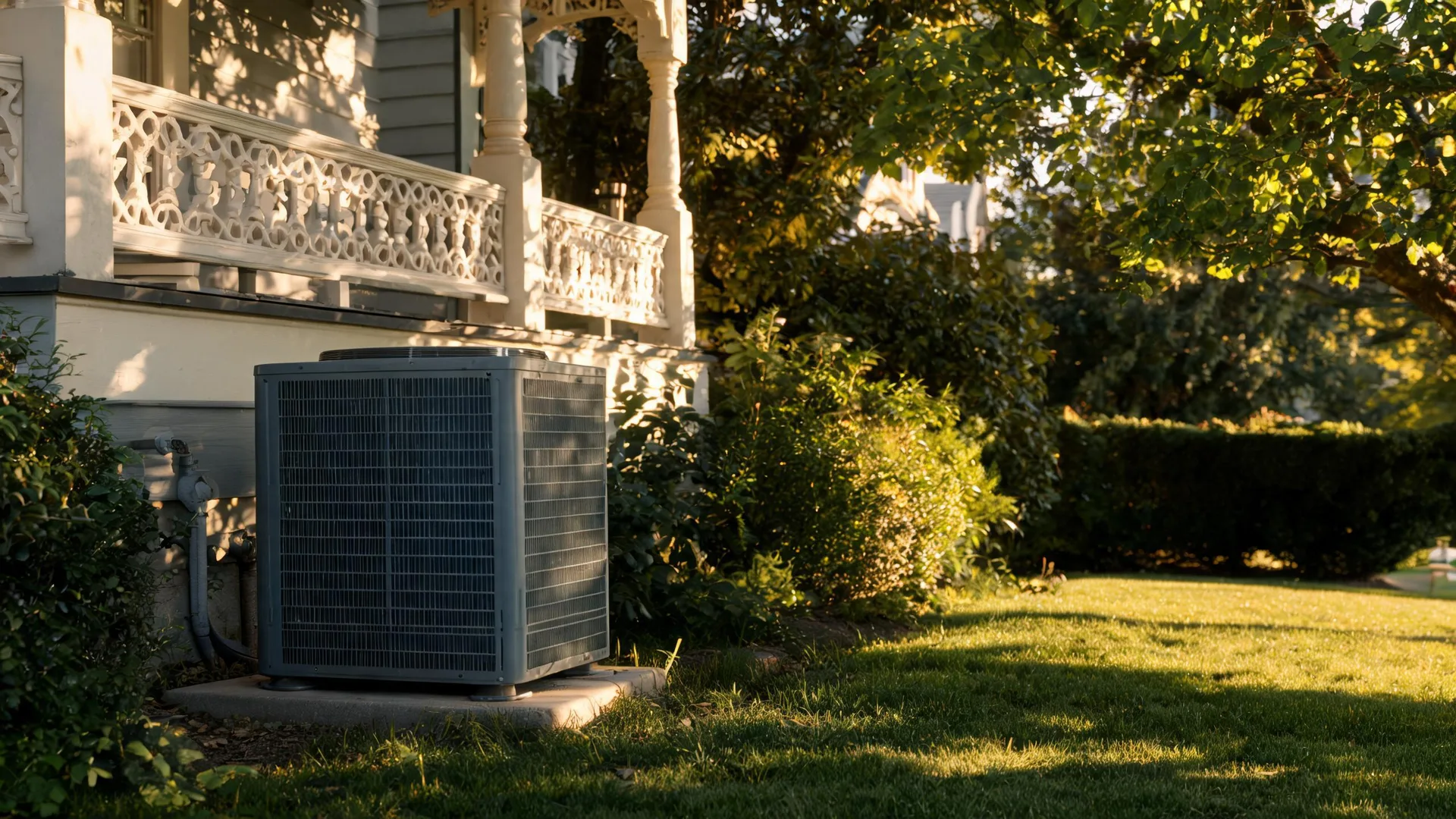
An outdoor residential air conditioning condenser unit mounted on a concrete pad, surrounded by gravel with a blue sky in the background.

It fails on the day it works hardest

An air conditioner that never gets checked tends to fail on the day it works hardest. That's the afternoon it has to run without stopping, and a weak part finally gives out under that kind of load. The contactor arcs a little every time it closes. The capacitor loses a bit of its charge every season it runs. A fan motor's bearings dry out slowly, cycle after cycle. None of that shows up on a mild day, when the system barely has to work. A check catches the part that's most of the way to failing while it's still just a part, not yet a breakdown in the middle of the hardest stretch of the year.

A quick visit checks what you can see

A fast tune-up swaps or looks at the filter, maybe hoses off the outdoor coil, and checks that the system turns on and blows cold air. That tells you the system runs today. It does not tell you how close the capacitor is to failing or whether the charge has been slipping for a while.

A thorough one checks what fails next

A real tune-up tests the capacitor under load, measures the refrigerant charge against what the system was built to hold, and checks the contactor for pitting from arcing. Those are the parts that quit without warning, not the ones you'd notice from the thermostat. Catching one worn down is the whole point of paying for a check instead of waiting on a breakdown.

Aerial view of a gray central air conditioning condenser unit on a concrete pad next to a house with vinyl siding.

Book your AC tune-up in June, before homes here start needing cooling in July.

  1. Jan
  2. Feb
  3. Mar
  4. Apr
  5. May
  6. Jun
  7. Jul
  8. Aug
  9. Sep
  10. Oct
  11. Nov
  12. Dec

A tune-up checks the refrigerant charge, cleans the coils, tests the capacitor and tightens the electrical connections.

A tune-up also covers what moves air and what clears it away. The blower wheel gets checked for dust buildup, since a coated wheel pushes less air without changing speed or sound enough to notice. The condensate drain gets flushed, because algae and dirt narrow that line from the inside long before it clogs outright. Fan blades get checked for wobble, which points to a motor bearing wearing unevenly. Electrical connections at the disconnect and inside the air handler get tightened, since a loose connection heats up under load and that heat damages the wire insulation around it. Refrigerant lines get checked for proper insulation too, because bare line loses efficiency and can sweat enough to drip. None of this is guesswork. It's the same checklist, run the same way, on every system that comes through.