





An outdoor air conditioning condenser unit mounted on a concrete pad next to a blue-sided residential house at sunset.

AC Maintenance in Carrington, ND

Tell us about the job

Takes about a minute. No obligation.

Tune-up, service, or cleaningCentral ACFoster County, ND
Step 1 of 2

What ZIP code is the job in?

Your AC in Carrington only has to work about two months a year, July and August, with afternoon highs averaging 79. That's a short, mild season compared to what a lot of systems deal with elsewhere, and it means less wear on the compressor and coil over the life of the unit. But a hailstorm or straight-line wind doesn't care how light the duty is, and Foster County has seen both plenty of times over the past decade. A yearly check catches a bent fin or a loose connection before it turns into a breakdown in August, when you need the system most.

2 months
July through August, your air conditioner is on duty
79°F
the average summer afternoon it cools against
27 hail events
in ten years, and hail bends the fins on outdoor coils
39 wind events
in ten years, and wind drives debris into outdoor units
Isometric line illustration of a cutaway single-story building showing interior rooms, ceiling ductwork and an air handler, connected by lines to an outdoor condenser unit beside the exterior wall.
Your air conditioner works hardest from July through August.

NOAA nClimDiv, 1991–2020 normals

Cooling in Carrington starts in July.

Have the AC checked in June, before it has to work.

Half the homes here are old enough that a yearly check is what catches trouble early

Half the homes here were built by 1973
Cooling runs July through August
Summer afternoons average 79°F

A check in June is a short visit. A technician clears the condenser fins, checks the refrigerant charge, and tightens the electrical connections, then moves on. With only two months of real work ahead of it, this system doesn't need much more than that to hold up. What it catches matters more than what it takes. A fin bent by hail or a connection shaken loose by wind sits there doing nothing until the first hot day in July, when the system has to run and can't. Catching that in June, before the heat shows up, is the whole point.

Keep up the yearly check

Easy duty still wears parts. A yearly check keeps it going a long time.

Find a contractor
An outdoor air conditioning condenser unit mounted on a concrete pad surrounded by gravel, photographed against a partly cloudy blue sky.

What to watch between checks

Between visits, the filter is the one thing worth your attention. A dirty filter chokes airflow across the coil, and a coil that can't breathe can ice over even on a mild day. Check it monthly through the season and swap it when it looks gray with dust, not just on a fixed schedule. Outside, keep the area around the condenser clear. Grass clippings, leaves, anything piled against the cabinet blocks the airflow it needs to shed heat. A couple feet of open space on every side is enough. If a storm knocks debris into the fins, brush it off, but don't try to straighten a bent fin yourself. That's a job for the technician's next visit. Indoors, keep supply and return vents open and unblocked by furniture or rugs. A closed vent doesn't rest the system, it just unbalances the pressure in the ducts and makes the compressor push harder everywhere else. If you ever hear a new sound, a hum that wasn't there before or a click that repeats, or you see ice forming on the lines, shut the system off and leave it off. Running it through a problem turns a small repair into a bigger one.

The charge gets checked against what the system actually needs

A technician gauges refrigerant pressure against the outdoor temperature at the time, not just a fixed number. A system can be low on charge and still blow cold air at the vent while the compressor works harder than it should every time it runs.

A failing capacitor rarely says so before it quits

The capacitor gives the compressor and fan motor the jolt they need to start. It can test weak on a gauge while still starting the system every time, right up until the day it can't. That's the kind of part a check catches and a homeowner never sees coming.

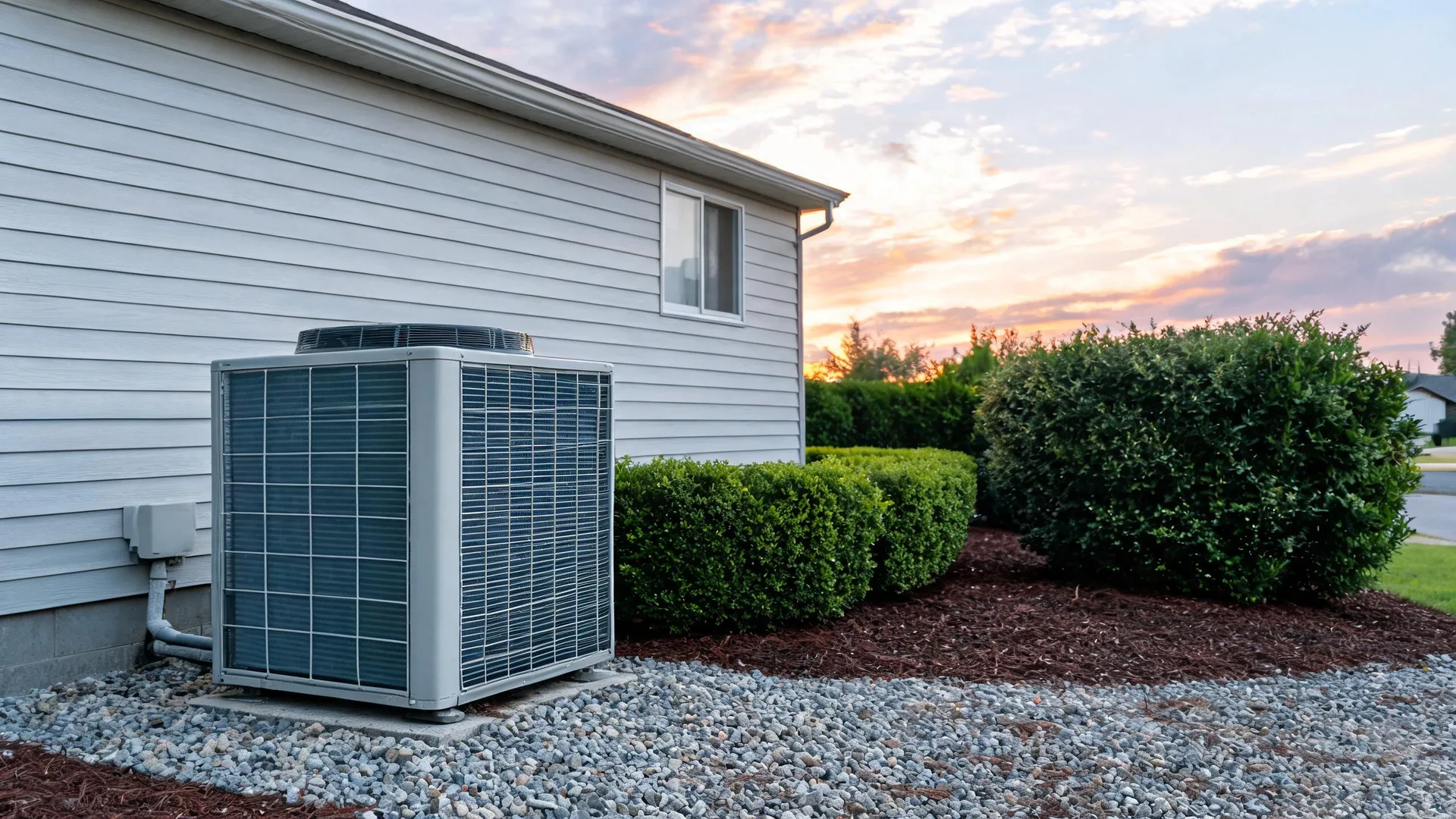
An outdoor air conditioning condenser unit installed beside the exterior wall of a blue vinyl-sided house at sunset.

Book your AC tune-up in June, before homes here start needing cooling in July.

  1. Jan
  2. Feb
  3. Mar
  4. Apr
  5. May
  6. Jun
  7. Jul
  8. Aug
  9. Sep
  10. Oct
  11. Nov
  12. Dec

A tune-up checks the refrigerant charge, cleans the coils, tests the capacitor and tightens the electrical connections.

A full tune-up also covers things a homeowner never sees from the thermostat. The technician checks the blower motor and wheel, since a wheel caked with dust moves less air even when the motor sounds fine. The evaporator coil gets inspected for dirt or mold, because a coil that's coated can't absorb heat the way a clean one does, and airflow suffers even though nothing looks broken from outside. Drain lines get checked too. A clogged condensate line backs up and can shut the system down or let water sit where it shouldn't. Refrigerant lines get looked over for rubbing or wear on the insulation, since a line that's chafed against metal long enough will eventually leak. None of this shows up as a problem yet. That's the point of catching it now instead of in the middle of a hot afternoon.