A snow-covered residential street at twilight with illuminated houses, bare trees, and an orange horizon glow beneath a deep blue sky.

AC Maintenance in Crosby, ND

Tell us about the job

Takes about a minute. No obligation.

Tune-up, service, or cleaningCentral ACDivide County, ND
Step 1 of 2

What ZIP code is the job in?

The refrigerant charge is never visible

A system can look fine and still be running low on refrigerant, and a low charge makes the compressor work harder while cooling less. A gauge set on the lines during a tune-up is the only way to see it. By the time low refrigerant shows up as warm air from the vents, the compressor has already been straining for a while.

A dirty coil hides behind full airflow

The outdoor coil can be coated in dust and grass clippings while the fan still spins and air still blows through the vents, so nothing seems wrong. A coated coil can't shed heat the way it should, and the system runs longer to reach the same temperature. Washing it out is a basic part of the visit, not an upsell.

2 months
July through August, your air conditioner is on duty
78°F
the average summer afternoon it cools against
20 hail events
in ten years, and hail bends the fins on outdoor coils
36 wind events
in ten years, and wind drives debris into outdoor units
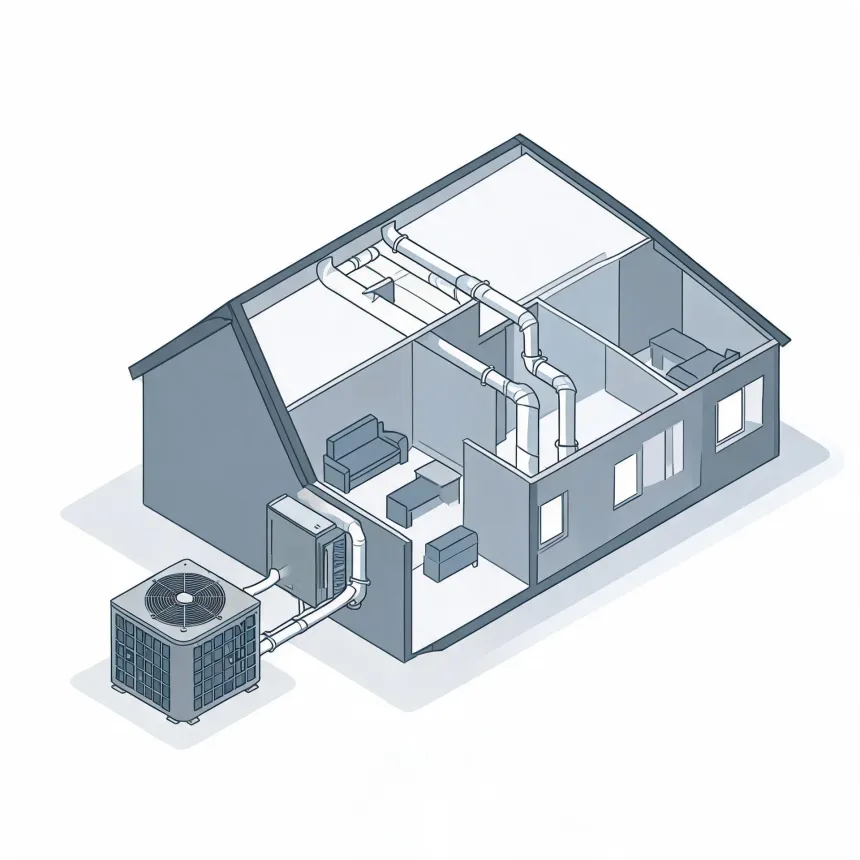
Isometric line illustration of a cutaway house showing interior rooms with ductwork, an indoor air handler, and an outdoor condenser unit connected by lines, on a white background.
Your air conditioner works hardest from July through August.

NOAA nClimDiv, 1991–2020 normals

Crosby air conditioners only earn their keep two months a year, July and August, with afternoon highs averaging 78.

A compressor that light on work can still fail from age or a clogged coil, so a yearly check still pays off.

Half the homes in Divide County date to 1963 or earlier, and an AC that old has seen a lot of years, whether it works hard or not

Half the homes here were built by 1963
Cooling runs July through August
Summer afternoons average 78°F

Skip the yearly check and the coil is usually the first thing to suffer, since nothing else is out there washing off the dust and grass clippings between visits. A dirty coil makes the system run longer to reach the same temperature, and that extra runtime wears on the compressor. A slow refrigerant leak works the same way. It doesn't announce itself, it just means the compressor works harder each week to do less. None of this shows up as a sound or a smell. It shows up later as a system that struggles to keep up, or one that won't start at all.

A yearly check is how an older system gets looked at

If your system came with a house built in 1963 or earlier, a yearly visit is how the coil and the refrigerant charge actually get checked. Nothing else does it in between.

Find a contractor
A man seen from behind in a gray long-sleeve shirt and dark pants carries a canvas duffel bag up a porch step toward a red front door of a gray shingled house, with a potted shrub to the right.
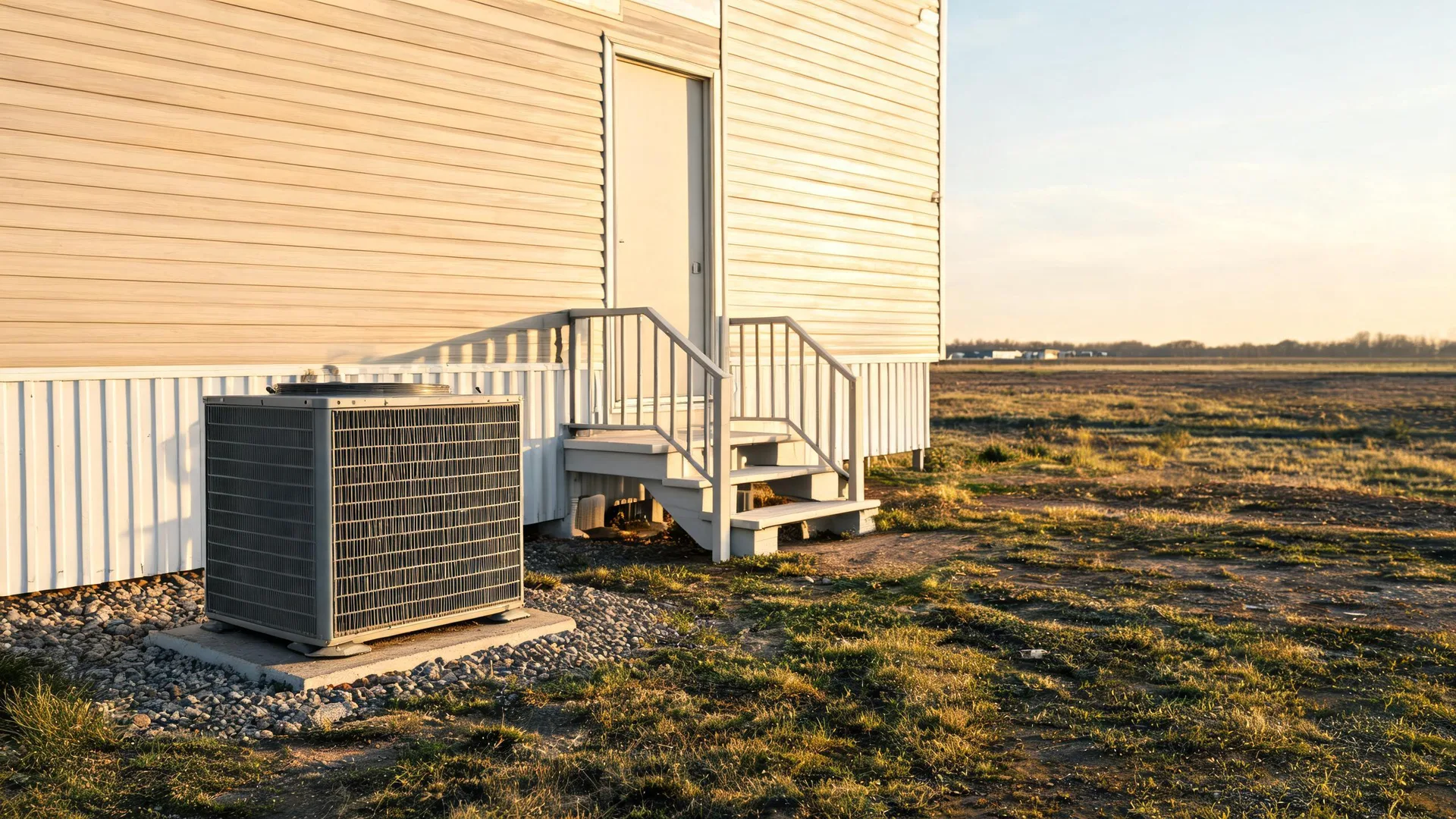
A gray metal air conditioning condenser unit mounted on a concrete pad in a flat grassy field under a partly cloudy sky.

What's yours to do, and what isn't

Between visits, the easiest thing to check is the outdoor unit itself. Keep grass clippings, leaves, and mulch from piling up against the cabinet, and trim back any bushes crowding the sides so air can pull through freely. Inside, change the air filter on a regular schedule. A clogged filter starves the system of airflow, and the coil behind it can ice over even in hot weather. If you ever see ice on the lines or the indoor coil, shut the system off and let it thaw completely before running it again. Running a frozen system just pushes liquid refrigerant back toward the compressor, which is not built to handle it. Beyond that, there isn't much a homeowner should open up. The refrigerant circuit is sealed, and the electrical components inside the cabinet aren't something to test without the right meters. Keeping the area clear and the filter clean is the real work between visits. The rest is what the yearly check is for.

A reading taken, not a glance given

A thorough visit puts gauges on the lines and checks refrigerant pressure against what the system is supposed to carry at that temperature. It also checks the temperature split between the air going into the return and the air coming out of the supply. A quick visit skips both and just checks that the system turns on and blows cold.

The capacitor and contactor get tested, not just looked at

The capacitor gives the compressor and fan motor the extra push they need to start, and it weakens with age long before it fails outright. A real check tests it under load, not just by eye. The contactor gets the same attention, since its contacts can pit and burn with normal use even while it still closes the circuit every time. Catching either one worn is the difference between a planned fix and a system that simply won't start one morning.

An outdoor air conditioning condenser unit installed beside the exterior wall of a blue vinyl-sided house at sunset.

Book your AC tune-up in June, before homes here start needing cooling in July.

  1. Jan
  2. Feb
  3. Mar
  4. Apr
  5. May
  6. Jun
  7. Jul
  8. Aug
  9. Sep
  10. Oct
  11. Nov
  12. Dec

A tune-up checks the refrigerant charge, cleans the coils, tests the capacitor and tightens the electrical connections.

A full tune-up walks through more than the coil and the charge. The condensate drain gets checked for algae or sludge buildup, since a clogged drain backs water up and can shut the system down through a safety switch. The blower wheel gets looked at too, because dust cakes onto the blades over time and that buildup cuts airflow the same way a dirty filter does. Electrical connections in the cabinet get tightened, since a loose connection builds heat at that point and can burn a wire over time. The thermostat gets checked against what the system is actually doing, so a bad sensor or a miscalibrated reading isn't left to run the system longer than it needs to. Each of these fails quietly on its own, which is why a tune-up checks them on a schedule instead of waiting for one to cause a breakdown.