





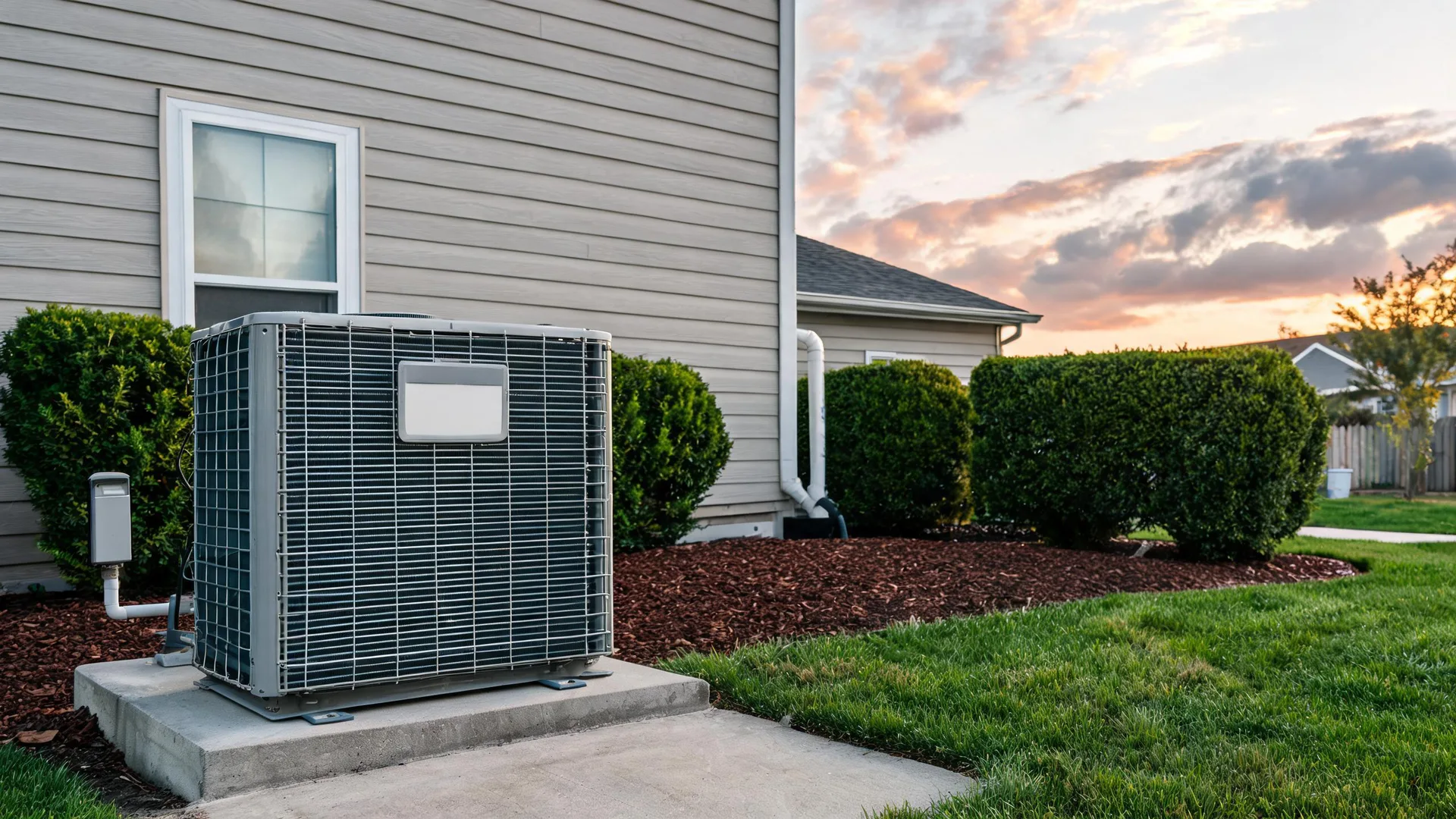
An outdoor central air conditioning unit mounted on a concrete pad beside a blue-sided house at sunset.

AC Maintenance in Dickinson, ND

Tell us about the job

Takes about a minute. No obligation.

Tune-up, service, or cleaningCentral ACStark County, ND
Step 1 of 2

What ZIP code is the job in?

Your air conditioner only works July and August here, with afternoons averaging around 81 degrees. That is two months of real duty a year, not the kind of stretch that wears a compressor down. The rest of the year it sits idle. A system that sits idle still has a coil that collects dust and a capacitor that weakens with age, whether it ran hard or not. A yearly check before summer catches that while the unit is off the hook, so it starts July ready instead of struggling on the first hot day.

2 months
July through August, your air conditioner is on duty
81°F
the average summer afternoon it cools against
64 hail events
in ten years, and hail bends the fins on outdoor coils
95 wind events
in ten years, and wind drives debris into outdoor units
Isometric cutaway illustration of a house interior showing ducted air handling equipment, ceiling ducts, furniture in two rooms, and an outdoor condenser unit connected by lines outside the wall.
Your air conditioner works hardest from July through August.

NOAA nClimDiv, 1991–2020 normals

Half the homes in Stark County went up in 1986 or later.

A system installed with a newer house still has years ahead of it, and a yearly check is what gets it there.

July starts the season here. Book the check in June.

Cooling runs July through August
Summer afternoons average 81°F
95 damaging wind events from 2015 to 2024

Keep up the yearly check

Easy duty still wears parts. A yearly check keeps it going a long time.

Find a contractor
A gray residential air conditioning condenser unit mounted on a concrete pad outdoors, surrounded by green grass under a partly cloudy blue sky.

What a real tune-up touches

A quick visit gets you a glance at the filter and a check of the thermostat, maybe a reading on the refrigerant pressure. A thorough one gets the cabinet opened up. The tech pulls the panel, washes the coil out instead of just looking at it, and checks the capacitor against what it should read rather than whether it's still working at all. A capacitor can be weak and still keep the compressor running for months before it fails outright, so a reading matters more than a glance. The condensate drain gets flushed too, not just eyeballed, because a drain that looks clear can still be slow. Electrical connections get tightened, since a loose one runs hot and wears out whatever it feeds. And the refrigerant charge gets checked against what the system calls for, not just whether the air coming out feels cold. Ask what the visit covers before it starts. If the answer is just filter and thermostat, that's the short version.

The warning signs show up before the breakdown does

A unit that struggles to hold the temperature you set it to, or runs longer each cycle to get there, is losing capacity somewhere. Warm air from a vent that used to run cold, ice on the copper line running to the outdoor unit, or a hissing sound near the lines are all signs worth a look. So is short cycling, where the compressor kicks on and off in quick bursts instead of running a steady stretch. None of these stop the system cold, so it's easy to live with them for weeks before calling anyone.

Waiting for a sign means waiting for a part to fail

A capacitor doesn't announce that it's weak. It just makes the compressor work harder to start, until one day it doesn't start at all. A coil caked with dust doesn't make noise, it just makes the whole system run longer to do the same job, which is its own kind of strain. The signs you can catch early, like a warm vent or a longer cycle, are the system telling you something's already wearing out. A check finds the weak part while it's still working.

An outdoor air conditioning condenser unit positioned beside a blue-sided house at sunset.

Book your AC tune-up in June, before homes here start needing cooling in July.

  1. Jan
  2. Feb
  3. Mar
  4. Apr
  5. May
  6. Jun
  7. Jul
  8. Aug
  9. Sep
  10. Oct
  11. Nov
  12. Dec

A tune-up checks the refrigerant charge, cleans the coils, tests the capacitor and tightens the electrical connections.

A tune-up is more than a filter swap. The outdoor unit has a fan motor and a compressor, both of which need clear airflow to last, so part of the visit is making sure nothing is blocking the cabinet and the fins on the coil aren't bent flat. Inside, the blower wheel can collect a layer of dust that throws it out of balance, which makes it work harder to move the same amount of air. The tech also checks the contactor, the switch that sends power to the compressor, since the points on it burn down a little every time it cycles. None of these parts fail on a schedule. They wear at different rates depending on how clean the air moving through them has been and how many times they've cycled on and off, which is exactly why someone has to look at each one instead of assuming.