






Aerial view of a square outdoor air conditioning condenser unit on a concrete pad beside a house wall with a sliding glass door.

AC Maintenance in Garrison, ND

Tell us about the job

Takes about a minute. No obligation.

Tune-up, service, or cleaningCentral ACMcLean County, ND
Step 1 of 2

What ZIP code is the job in?

Your air conditioner only runs two months a year here, July and August. That's a short window to find out something is wrong. June is the month to get it checked, before the heat shows up and asks the system for everything it has. A capacitor or a refrigerant charge can sit fine all winter and still fail the first time it has to run hard. Have it looked at in June and it's already sorted by the time July gets there.

2 months
July through August, your air conditioner is on duty
79°F
the average summer afternoon it cools against
57 hail events
in ten years, and hail bends the fins on outdoor coils
88 wind events
in ten years, and wind drives debris into outdoor units
Isometric cutaway illustration of a single-story house showing interior ductwork and an air handler connected by lines to an outdoor condenser unit on a pad beside the building.
Your air conditioner works hardest from July through August.

NOAA nClimDiv, 1991–2020 normals

Warm air from the vents when the thermostat is set cold means the system is running without actually cooling.

A low charge or a failing compressor causes that, and either one gets worse the longer the unit keeps running this way.

Two months of work a year is not what wears a system out

Cooling runs July through August
Summer afternoons average 79°F
88 damaging wind events from 2015 to 2024
Garrison, NDHalf the homes in McLean County were built in 1975 or earlier, half in 1975 or later.

Most of what a tune-up finds is invisible from the thermostat. A system can cool the house just fine while running on a charge that's a little low, or a capacitor that's weeks from failing, because the symptoms only show up under full load. A homeowner feels cold air and assumes everything behind it is fine. A tech pulls the panel and sees the start of corrosion on a wire lug, or a blower wheel caked enough to be cutting airflow without yet freezing the coil. None of that announces itself. It just sits there getting worse until the day it doesn't, usually on the hottest afternoon of the summer, which is exactly when nobody wants to be without cooling.

Book it before the season

It starts running hard in the first month of the season here. Book the check the month before.

Find a contractor
A gray residential air conditioning condenser unit mounted on a concrete pad outdoors, surrounded by green grass under a partly cloudy blue sky.

What a skipped year does to the system

A system that never gets opened up still ages, just not from use. Oil settles out of the refrigerant and stops reaching the compressor the way it should. Dust works into the blower wheel and throws it slightly out of balance, so the motor bearing takes load it wasn't built for. None of that announces itself. The system keeps running, a little weaker each season, until the one afternoon it needs full output and doesn't have it. That's usually when the compressor goes, and a compressor failure takes the whole system down with it. Catch the same wear a season earlier and it's a cleaning and an adjustment instead.

Checking the gauges against taking a reading

Anyone can hook up gauges and look at the pressure. A thorough check compares that reading against what the system should be running at for the outdoor temperature that day, because the right pressure shifts with the weather. Skip that comparison and a charge that's quietly low can get called fine.

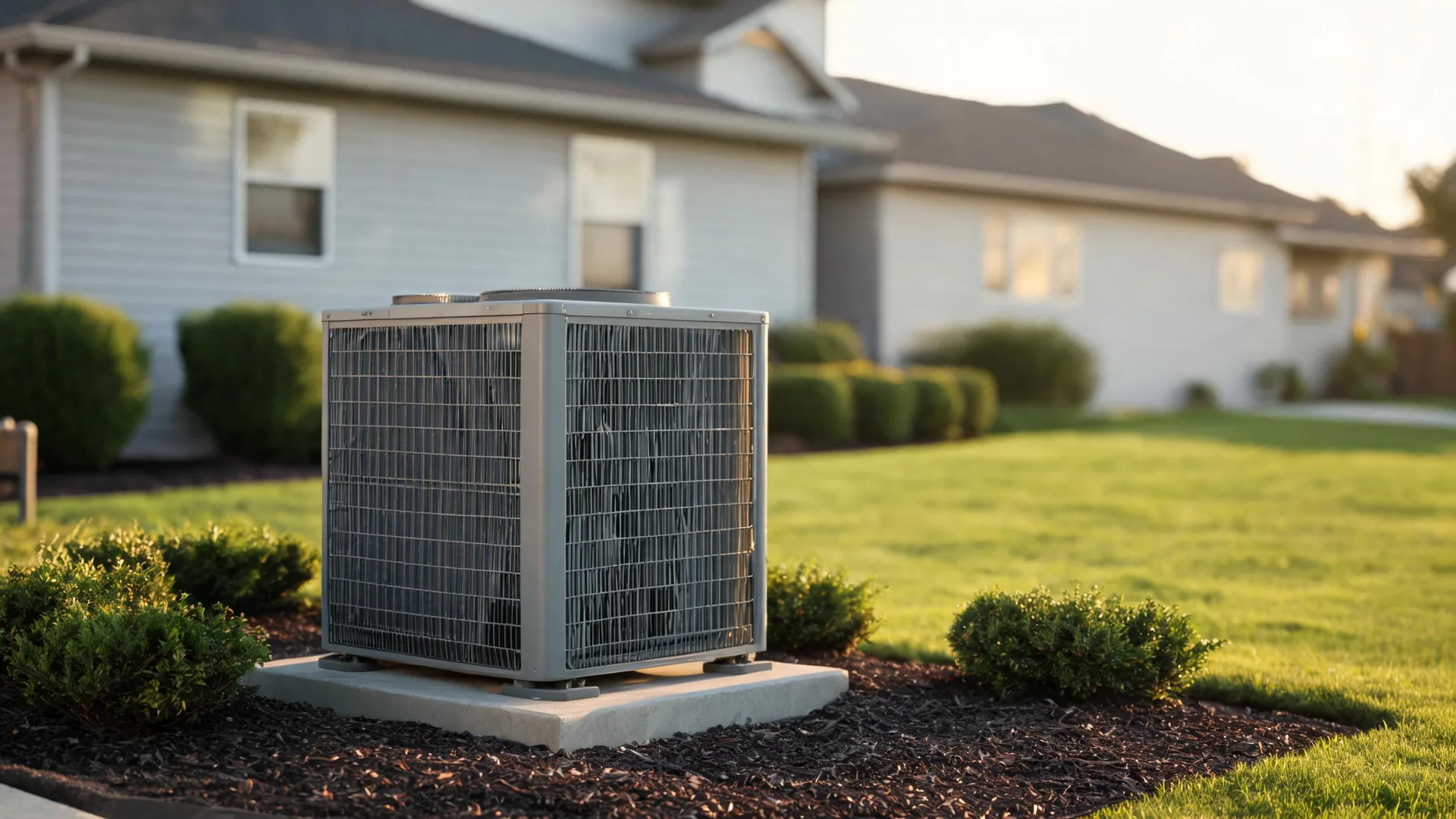
Washing the coil instead of looking at it first

A quick visit hoses off the outdoor coil and moves on. A thorough one pulls the panel, checks the contactor for pitting, tightens the electrical connections, and tests the capacitor under load instead of just eyeing it. Those are the parts that fail mid-summer without ever showing on the coil.

Overhead view of a gray residential air conditioning condenser unit mounted on a concrete pad beside a house with asphalt shingle roofing.

Book your AC tune-up in June, before homes here start needing cooling in July.

  1. Jan
  2. Feb
  3. Mar
  4. Apr
  5. May
  6. Jun
  7. Jul
  8. Aug
  9. Sep
  10. Oct
  11. Nov
  12. Dec

A tune-up checks the refrigerant charge, cleans the coils, tests the capacitor and tightens the electrical connections.

A proper tune-up starts with power to the unit off, then the panel comes off the outdoor unit so the capacitor can be tested under load, not just looked at. A weak capacitor often reads fine sitting still and fails the moment the compressor tries to start. The contactor gets checked next for pitting, since a pitted contactor can stick or fail to make contact at all. Refrigerant charge gets checked against the pressure the system should be running at for that day's temperature, not against a fixed number. Indoors, the blower wheel gets looked at for dust buildup, the drain line gets flushed, and the thermostat gets tested to confirm it's calling for cooling correctly. Anything less than that is a wash and a glance, not a tune-up.