






A snow-covered small-town street at dusk, lined with illuminated two-story houses and a grain elevator on the horizon.

AC Maintenance in Grafton, ND

Tell us about the job

Takes about a minute. No obligation.

Tune-up, service, or cleaningCentral ACWalsh County, ND
Step 1 of 2

What ZIP code is the job in?

A few things tell you the air conditioner wants a look. The air coming out of the vents feels weaker than it used to, or less cold, even though nothing else changed. The unit outside cycles on and off more than it should, or runs long stretches without the house catching up. You notice a smell when it kicks on, musty or burnt, either one worth checking. Water pooling near the indoor unit means the condensate drain is clogged or the coil is icing up behind it. None of these mean the system is done. They mean something inside it, a dirty coil, a low charge, a clogged line, is making it work harder than it has to.

2 months
July through August, your air conditioner is on duty
78°F
the average summer afternoon it cools against
49 hail events
in ten years, and hail bends the fins on outdoor coils
71 wind events
in ten years, and wind drives debris into outdoor units
Isometric line illustration of a cutaway house showing interior rooms with ductwork, an indoor air handler, and an outdoor condenser unit connected by lines, on a white background.
Your air conditioner works hardest from July through August.

NOAA nClimDiv, 1991–2020 normals

Grafton's air conditioner works about two months a year, July and August, with afternoon highs around 78 degrees.

A machine with a short season like that rarely wears out from the heat. It wears out from skipping the yearly check.

Half the homes here were built by 1971, which is one more reason to check an older system every year

Half the homes here were built by 1971
Climate zone 7
Power costs 11.51 cents a kWh statewide
One check a year covers itWalsh County sees winter storms far more than hail or wind, which is why timing the visit matters more than the weather itself

July is when cooling starts here, so June is the month to get the unit checked. A tech can catch a weak capacitor or a dirty coil while the system is sitting idle, not while it's trying to keep up on the first hot day. Cooling only runs two months a year in Walsh County, July and August, so June is really the only slow window there is. Wait until the heat is already on and that same check gets booked behind everyone else who waited too.

Keep up the yearly check

Easy duty still wears parts. A yearly check keeps it going a long time.

Find a contractor
A gray metal air conditioning condenser unit mounted on a concrete pad in a flat grassy field under a partly cloudy sky.

Idle time wears parts too

A compressor that only runs part of the year still holds the same oil and the same refrigerant charge all year round. Those don't get a break just because the unit sits idle. Dust still settles on the outdoor coil whether the system ran yesterday or not, and that layer is what makes the compressor push harder to move heat outside. A dirty filter or a weak capacitor doesn't announce itself. It just makes the system run longer to do the same job, over and over, until something gives out. The parts that fail from neglect are usually small ones. A capacitor that's weak but not dead yet. A contactor with pitted points. A coil that needs a rinse before it can shed heat the way it should. Skip enough years and the compressor starts absorbing the strain those smaller parts were built to handle instead.

A quick visit checks that it runs

A fast tune-up tells you the system starts, blows cold air, and the gauges read close enough to normal. That tells you it's working today. It doesn't tell you what's wearing out underneath, or catch the part that's about to quit.

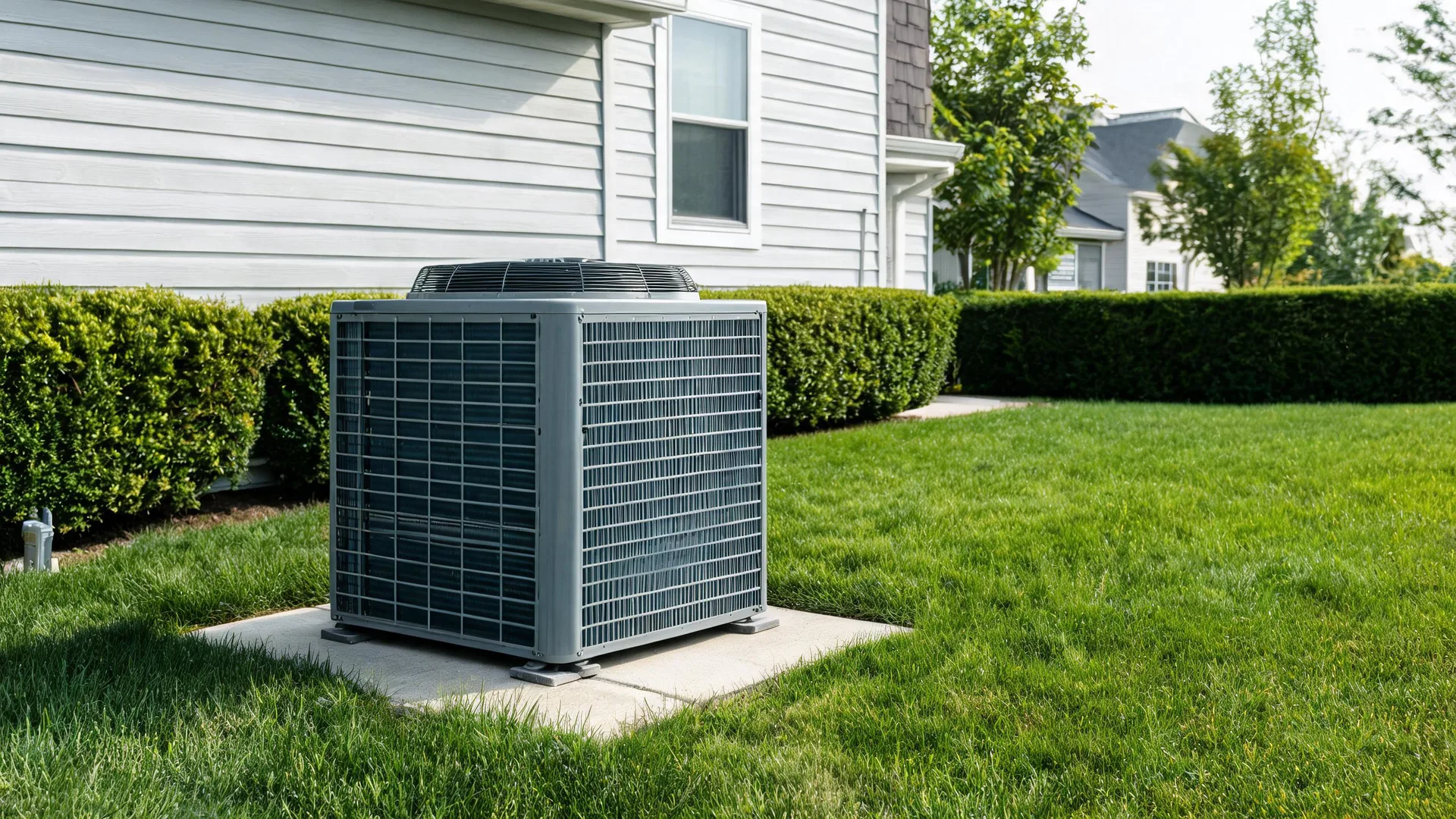
A thorough one checks why

A full tune-up has the tech pull the panel, wash the outdoor coil, test the capacitor under load, and check the refrigerant charge against what the system actually needs, not just whether it's low. That's the difference between a system that passes inspection and one that's actually set up to run the rest of the season without a breakdown call.

Overhead view of a gray residential air conditioning condenser unit mounted on a concrete pad beside a house with asphalt shingle roofing.

Book your AC tune-up in June, before homes here start needing cooling in July.

  1. Jan
  2. Feb
  3. Mar
  4. Apr
  5. May
  6. Jun
  7. Jul
  8. Aug
  9. Sep
  10. Oct
  11. Nov
  12. Dec

A tune-up checks the refrigerant charge, cleans the coils, tests the capacitor and tightens the electrical connections.

A real tune-up starts outside, with the condenser coil. The tech washes it clean, since a coil caked with dust can't shed heat the way it needs to, no matter how strong the compressor is. From there it's the capacitor, tested under load rather than just looked at, because a capacitor can measure fine sitting still and still fail the moment it has to start the compressor against real pressure. The contactor gets checked too, since pitted points make poor contact and poor contact makes heat. Refrigerant charge gets checked against what the system calls for, not just topped off because the gauge reads low. Indoors, the tech checks the blower wheel for dust buildup and makes sure the filter is actually moving air, not just sitting in the slot. Last comes the condensate line, cleared before it clogs and backs water up into the house instead of out of it.