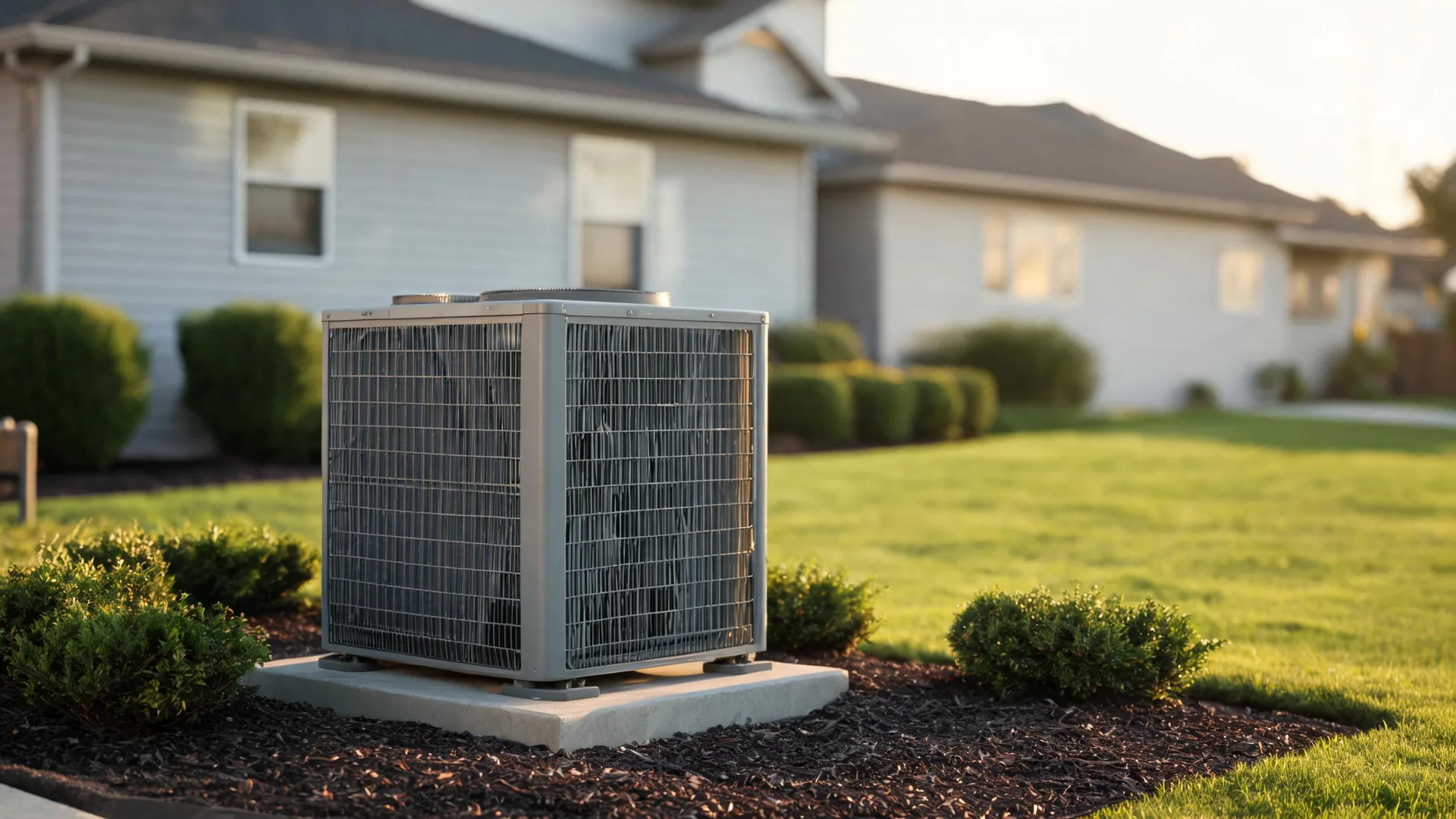
Overhead view of a gray residential air conditioning condenser unit mounted on a concrete pad beside a house with asphalt shingle roofing.

AC Maintenance in Gwinner, ND

Tell us about the job

Takes about a minute. No obligation.

Tune-up, service, or cleaningCentral ACSargent County, ND
Step 1 of 2

What ZIP code is the job in?

The system tells you before it quits

An AC unit rarely stops cold without warning first. It runs longer than it used to before the house feels cool. The air coming out of the vents is weak or barely cool. It cycles on and off more than it should. Any of these means something inside, the charge, the airflow, the capacitor, is already off and getting worse.


Catching it now is a different job than catching it later

A tech who checks the system before anything fails is looking at refrigerant pressure, electrical connections, and the condensate drain while all of it still works fine. That's a short visit. Waiting until the compressor is straining or the coil has frozen over turns the same visit into a repair, and some of what fails under strain doesn't come back with a repair at all.

3 months
June through August, your air conditioner is on duty
80°F
the average summer afternoon it cools against
21 hail events
in ten years, and hail bends the fins on outdoor coils
34 wind events
in ten years, and wind drives debris into outdoor units
Isometric line illustration of a cutaway single-story house showing interior rooms, ceiling ductwork and an air handler, connected to an outdoor condenser unit on a pad beside the building.
Your air conditioner works hardest from June through August.

NOAA nClimDiv, 1991–2020 normals

A dirty filter chokes the airflow the whole system depends on.

The coil and compressor end up working harder until something in that chain gives out.

Three months of real heat is not much to ask of a system

Cooling runs June through August
Summer afternoons average 80°F
34 damaging wind events from 2015 to 2024
The house's age doesn't change what the AC needsHalf the homes in Sargent County were built in 1975 or earlier, half later. Either way, this system needs the same one check a year.

June is when this system starts earning its keep here, so May is when to get it looked at. The system is still idle then, not fighting heat yet, which makes it the easiest time to catch anything off before the season asks something of it. Wait until June and a tech is checking a system that's already under load, which is a different job. Three months is the whole season in Sargent County, so there's no slow ramp-up to catch problems partway through. Whatever isn't right going into June stays wrong for the only three months this system runs all year.

Keep up the yearly check

Easy duty still wears parts. A yearly check keeps it going a long time.

Find a contractor
A man in a dark jacket, cap and tan work pants climbs porch steps toward a red front door, carrying a canvas tool bag in his right hand, with a potted shrub at left.
A gray residential air conditioning condenser unit mounted on a concrete pad outdoors, surrounded by green grass under a partly cloudy blue sky.

Nothing about running wears it out faster than running dirty

Dirt and dust settle on the coil and inside the blower a little at a time. None of it matters on any single day the system runs. It matters because the system doesn't get a season off to shed what built up. Every hour it runs, it runs with whatever is sitting on that coil, in that filter, on those fan blades, and none of it goes away on its own. A capacitor that's starting to weaken doesn't announce itself either. It just asks the compressor to work a little harder to start each time, and the compressor obliges until the day it can't. Maintenance isn't about fixing what's broken. It's about catching the coil before it's coated, the capacitor before it's shot, while the fix is still cleaning instead of replacing.

Change the filter yourself

The filter is the one part of this system built for the homeowner to handle. A dirty one starves the coil of airflow, and that's the fastest path to a coil that ices over. Check it monthly during the months the system runs, and swap it when it looks gray instead of white.

Keep the area around the outdoor unit clear

The outdoor unit needs open air moving through it to shed heat. Grass clippings, leaves, and anything stacked against the cabinet make the compressor work harder to do the same job. Walk out and clear debris off the top and sides whenever you notice it piling up.

Aerial view of a gray outdoor air conditioning condenser unit mounted on a concrete pad next to a house with vinyl siding.

Book your AC tune-up in May, before homes here start needing cooling in June.

  1. Jan
  2. Feb
  3. Mar
  4. Apr
  5. May
  6. Jun
  7. Jul
  8. Aug
  9. Sep
  10. Oct
  11. Nov
  12. Dec

A tune-up checks the refrigerant charge, cleans the coils, tests the capacitor and tightens the electrical connections.

A proper tune-up starts outside, with the condenser coil. A tech will wash it down if it's caked with dirt, because a dirty coil can't shed heat the way a clean one does. Refrigerant pressure gets checked against what the system is supposed to run, since too little or too much both make the compressor work harder than it should. The capacitor gets tested under load, not just looked at, because a weak one can still look fine sitting still. Electrical connections get tightened, since a loose one generates heat right at the connection and that heat breaks things down further. The blower wheel gets checked for dust buildup, and the condensate drain gets cleared so it isn't sitting there waiting to clog. None of this is guesswork. Every one of those is a specific thing that fails in a specific way, and a tune-up means somebody looked at each one while it still worked fine.