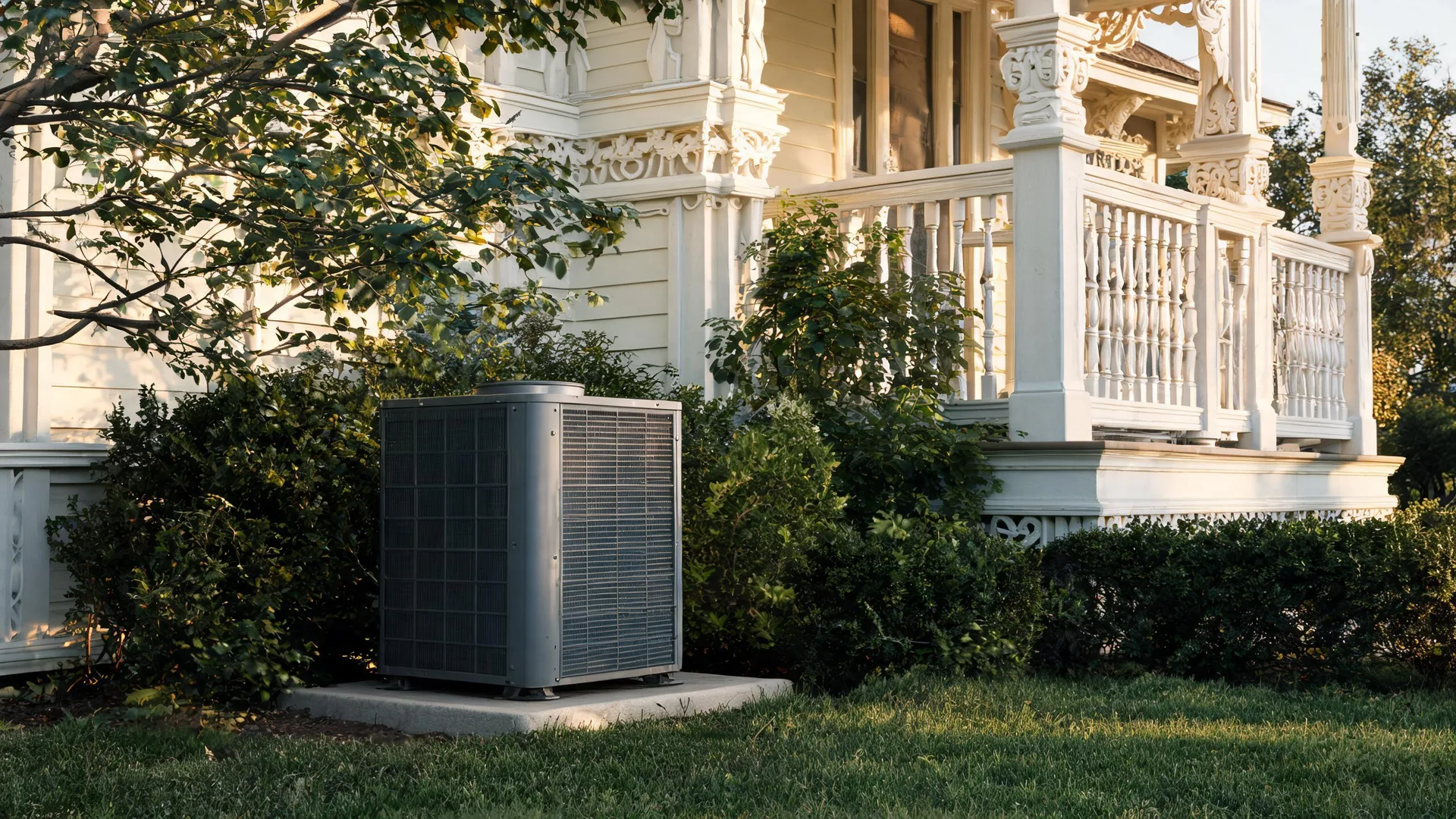
Aerial view of a square outdoor air conditioning condenser unit on a concrete pad beside a house wall with a sliding glass door.

AC Maintenance in Mohall, ND

Tell us about the job

Takes about a minute. No obligation.

Tune-up, service, or cleaningCentral ACRenville County, ND
Step 1 of 2

What ZIP code is the job in?

Dirt is the quiet one

A coil caked with dust cannot shed heat the way a clean one does, so the compressor runs longer to reach the same temperature. Nothing shuts off. Nothing trips. The system just works harder every time it runs, and that strain is what eventually takes out the compressor itself.


The small parts go first

A capacitor weakens, a contactor pits, a blower wheel loses balance. None of these stop the system outright, so they get ignored until the day the unit won't start or the air coming out isn't cold anymore. Catching them early is what a maintenance visit is for.

2 months
July through August, your air conditioner is on duty
79°F
the average summer afternoon it cools against
33 hail events
in ten years, and hail bends the fins on outdoor coils
27 wind events
in ten years, and wind drives debris into outdoor units
Isometric cutaway illustration of a small home interior with furniture and ducting, showing an indoor air handler connected by lines to an outdoor condenser unit on a pad.
Your air conditioner works hardest from July through August.

NOAA nClimDiv, 1991–2020 normals

Mohall only asks for cooling from July through August, with afternoon highs around 79.

A system working that short a season still needs a yearly check to hold up for years.

Half the homes in Renville County date to 1973 or earlier, and a system that old still needs eyes on it every year

Half the homes here were built by 1973
Cooling runs July through August
Summer afternoons average 79°F
A short season still wears partsWind and hail have hit this county dozens of times over the past decade

If your air conditioner came with the house, a yearly check is the only way to know how it's holding up. A technician can see things the thermostat can't tell you. Whether the refrigerant charge is still correct. Whether the electrical connections have loosened with age. None of that shows up as a problem until it does. Catching it early, every year, is what keeps an old system running instead of failing on the one hot week it's actually needed.

Keep up the yearly check

Easy duty still wears parts. A yearly check keeps it going a long time.

Find a contractor
A man in a dark cap, gray shirt and tan work pants walks up porch steps toward a red front door, carrying a worn canvas tool bag in his right hand beside a potted shrub in a red planter.
A gray metal air conditioning condenser unit mounted on a concrete pad in a flat grassy field under a partly cloudy sky.

Airflow and drainage keep the coil doing its job

The filter is the one part of this job that falls to the homeowner, not a technician. A clogged filter starves the system of airflow, and the evaporator coil can't pull heat out of air that isn't moving past it. The coil runs colder than it should and starts icing over, and once ice forms, cooling drops off even with the compressor running flat out. The outdoor coil has its own version of the same trouble. Dirt and grass clippings cake the fins, so the system can't shed heat into the air outside and has to run longer to do the same job. The drain line is the quiet one. It carries condensed water off the indoor coil, and when it clogs, that water backs up into the pan and sometimes past it. None of this fails loud. The system just keeps working harder until something else finally gives out.

What gauges show that eyes don't

A technician checks refrigerant pressure against the actual outdoor temperature, not just whether air feels cold at the vent. Low charge can still blow cool air while the compressor struggles underneath, and that strain goes unnoticed until the compressor itself wears out.

Amp draw tells on a motor early

A blower motor or compressor pulling more amps than it should is working harder to do the same job, usually from a failing bearing or a part wearing down inside it. The motor still runs, so nothing seems wrong, but the reading catches it before the motor quits.

Overhead view of a gray residential air conditioning condenser unit mounted on a concrete pad beside a house with asphalt shingle roofing.

Book your AC tune-up in June, before homes here start needing cooling in July.

  1. Jan
  2. Feb
  3. Mar
  4. Apr
  5. May
  6. Jun
  7. Jul
  8. Aug
  9. Sep
  10. Oct
  11. Nov
  12. Dec

A tune-up checks the refrigerant charge, cleans the coils, tests the capacitor and tightens the electrical connections.

A proper tune-up starts outside, where the condenser coil and fan get cleaned and checked. The technician washes the fins, straightens any that are bent flat, and makes sure the fan spins freely without wobbling. Inside, they check the blower wheel for dirt buildup and test the capacitor and contactor under load, since those are the parts that fail quietly until the day the compressor won't start at all. Refrigerant charge gets checked against the pressure it should read at that outdoor temperature, not just whether the air feels cold. The condensate line gets flushed so it can't back up into the pan. Every electrical connection gets tightened, because a loose one builds resistance and heat right where you don't want either.