





Overhead view of an outdoor AC condenser unit on a concrete pad next to a house with a dark shingle roof.

AC Maintenance in Napoleon, ND

Tell us about the job

Takes about a minute. No obligation.

Tune-up, service, or cleaningCentral ACLogan County, ND
Step 1 of 2

What ZIP code is the job in?

Your air conditioner in Napoleon only has to work about two months a year, July and August, with afternoon highs averaging around 79°F. That is light duty next to most of the country. The compressor isn't straining against triple-digit heat day after day, so it doesn't wear the way it would further south. But a system that sits unused most of the year has its own problems. The capacitor weakens with age whether it ran hard or not, and dust settles on the coil over the months it's off. A check before July finds that before the first hot week does.

2 months
July through August, your air conditioner is on duty
79°F
the average summer afternoon it cools against
38 hail events
in ten years, and hail bends the fins on outdoor coils
24 wind events
in ten years, and wind drives debris into outdoor units
Isometric grayscale illustration of a cutaway house showing interior rooms, ceiling ductwork connected to an indoor air handler, and an outdoor condenser unit linked by lines along the exterior wall.
Your air conditioner works hardest from July through August.

NOAA nClimDiv, 1991–2020 normals

July is when cooling starts in Logan County, and it starts at full demand, not a warm-up.

Get the AC looked at in June, before that first hot stretch puts a weak capacitor or a dirty coil to the test.

If it's been a year, that's reason enough to look

Half the homes here were built by 1967
Cooling runs July through August
Summer afternoons average 79°F

A yearly check in June is what makes the light duty count for something. A tech can test the capacitor before it fails instead of after, and clean the coil that's been collecting dust since the system last ran. Logan County also sees its share of hail and wind, 38 hail events and 24 damaging wind reports, so part of that check is looking at the outdoor unit itself, the fins and the cabinet, for damage that has nothing to do with age. None of that takes long when the system isn't also fighting months of hard heat. Skip it a few years running and age catches up the same as it would anywhere else.

Keep up the yearly check

Easy duty still wears parts. A yearly check keeps it going a long time.

Find a contractor
A gray residential air conditioner condenser unit mounted on a concrete pad in an open grass field.

The filter, the coil and the drain line work together

The filter is the part most people forget, and it sits right in the airflow. Let it clog and the coil behind it starves for air, and a coil starved for air can ice over instead of cooling. Once it's iced, the system runs without doing much. That ice melts back into water, and the water is supposed to run down the drain line. Sitting idle for months, that line grows algae and sludge on its own. A clogged drain backs water up into the pan, and from there it finds the ceiling below. None of this fails loudly. A tech looking at the system before the season starts can clear the line and check the coil before any of it gets that far.

Gauges on, not just a glance

A quick visit gets a filter check and a look at the outdoor unit from a few feet away. A thorough one puts gauges on the system and checks the refrigerant charge against what the manufacturer specifies, measures the temperature drop across the evaporator coil, and tests the capacitor under load instead of just eyeing it for bulges. Anyone can tell you the unit turned on. Only a full check tells you it's running the way it's supposed to.

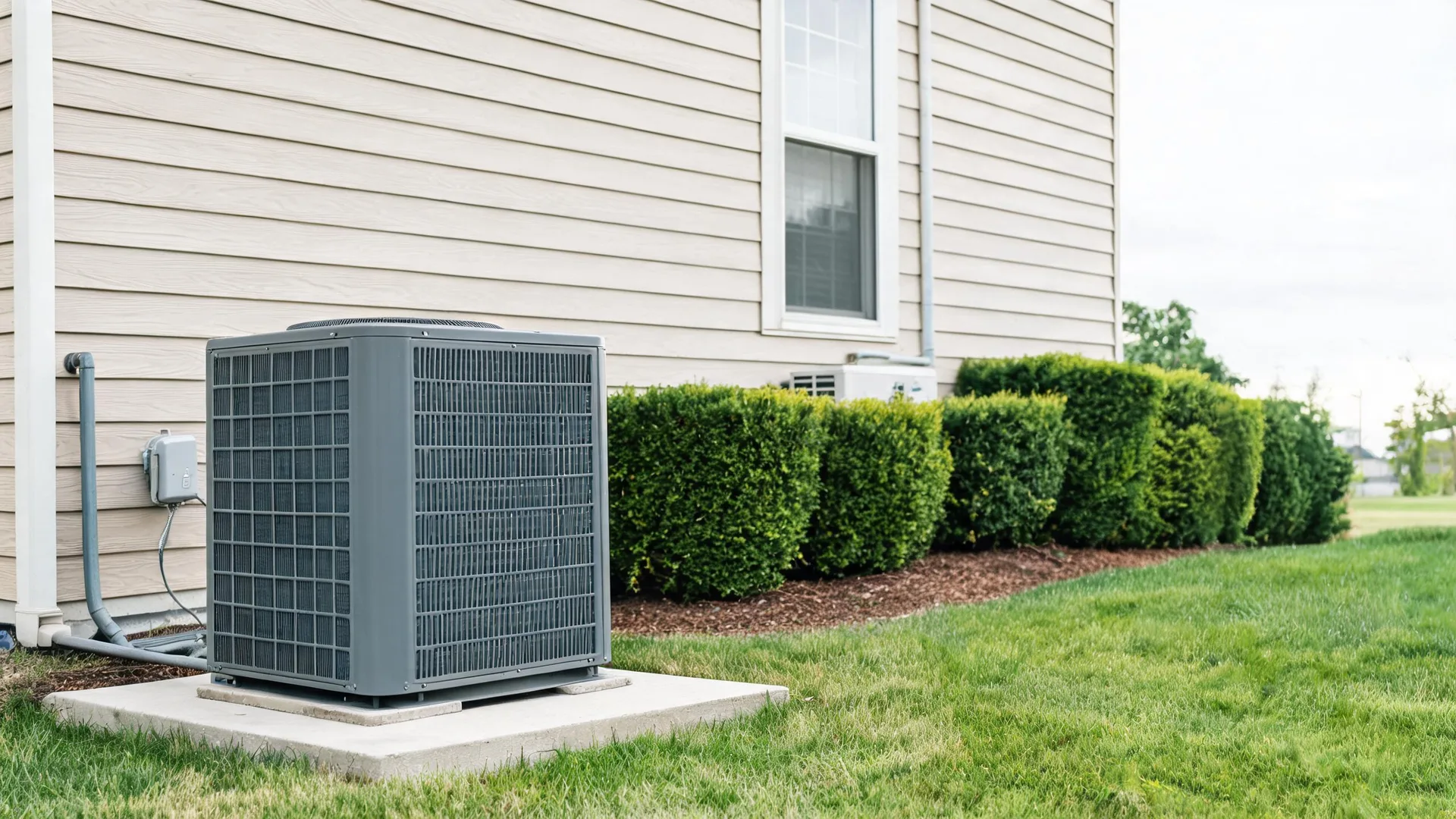
What gets opened up

A tune-up worth paying for means panels come off. The blower compartment gets opened so the wheel can be checked for dust buildup, the condensate line gets flushed, not just looked at, and the electrical connections get tightened since a loose connection is what burns a wire or trips a breaker later. A tech who never takes a screwdriver to the unit is checking that it runs, not whether it'll keep running.

Aerial view of a residential air conditioning condenser unit mounted on a concrete pad next to a house with vinyl siding and a sliding glass door.

Book your AC tune-up in June, before homes here start needing cooling in July.

  1. Jan
  2. Feb
  3. Mar
  4. Apr
  5. May
  6. Jun
  7. Jul
  8. Aug
  9. Sep
  10. Oct
  11. Nov
  12. Dec

A tune-up checks the refrigerant charge, cleans the coils, tests the capacitor and tightens the electrical connections.

A real tune-up starts outside. The tech pulls the disconnect, cleans the fins with a brush or low-pressure rinse so air can actually move through the condenser, and checks that the unit sits level on its pad since a tilted compressor wears its bearings unevenly. Inside, the refrigerant lines get checked for the oily residue that means a slow leak, because low charge isn't something you top off and forget, it's a sign something let go somewhere. The thermostat gets tested too, calling for cooling and confirming the system actually answers and holds the temperature it's told to hold. Any of these can look fine from across the room and still be the thing that fails in the first heat wave.