A two-story black-clad house with a gabled shingle roof stands behind a wire fence, surrounded by deciduous trees and a wide grassy field in the foreground under an overcast sky.

AC Maintenance in New England, ND

Tell us about the job

Takes about a minute. No obligation.

Tune-up, service, or cleaningCentral ACHettinger County, ND
Step 1 of 2

What ZIP code is the job in?

The capacitor is weakening before it fails

A capacitor gives the compressor and fan motor the push they need to start. It weakens slowly, long before it quits outright. From outside the cabinet the unit still starts fine, so there is no way to catch this by watching it run. A tech checks the capacitor against its rating and replaces it when it has drifted too far, before it leaves a motor straining to start.

The coil can be dirty enough to matter and still look clean

The evaporator coil sits inside the cabinet where no one looks, and the outdoor condenser coil can carry a fine film between its fins that is easy to miss from a glance. Either one coated in dust or grime forces the system to work harder to move heat, and that strain lands on the compressor long before the coil looks obviously dirty. A tune-up gets eyes and a brush on both coils, not just a look from across the yard.

2 months
July through August, your air conditioner is on duty
81°F
the average summer afternoon it cools against
54 hail events
in ten years, and hail bends the fins on outdoor coils
72 wind events
in ten years, and wind drives debris into outdoor units
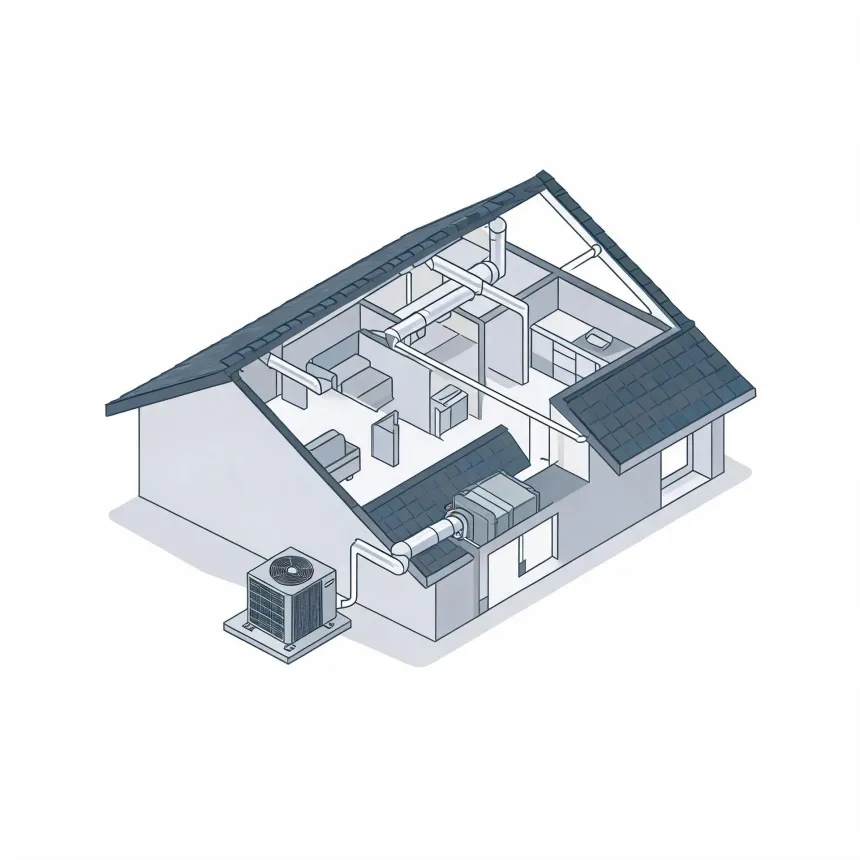
Isometric line illustration of a cutaway single-story house showing interior rooms, ceiling ductwork and an air handler, connected to an outdoor condenser unit on a pad beside the building.
Your air conditioner works hardest from July through August.

NOAA nClimDiv, 1991–2020 normals

AC runs here from July through August.

Have it checked in June, before the season's first hot stretch asks anything of it.

Half the homes in Hettinger County were built by 1964, old enough that a yearly check is how you find a weak part before it leaves you without AC in August

Half the homes here were built by 1964
Cooling runs July through August
Summer afternoons average 81°F
Two months of work a yearCooling only runs July through August here, afternoons averaging 81°F.

A system in a home built around 1964 or earlier has had decades of starts and stops to wear on its parts. If your AC came with a house that old, a yearly check is how a tech catches a capacitor or motor bearing going bad before it leaves you without cooling. The check itself takes a meter and a look inside the cabinet, nothing the system has to be taken apart for. It is worth asking, if you do not already know, roughly how old your unit is and whether it has had a check in the last year.

Book it before the season

It starts running hard in the first month of the season here. Book the check the month before.

Find a contractor
A man in a cap, dark shirt and tan work pants, seen from behind, climbs porch steps toward a red front door while carrying a canvas tool bag filled with screwdrivers.
An outdoor residential air conditioning condenser unit mounted on a concrete pad, surrounded by gravel with a blue sky in the background.

The filter, the coil and the drain all do the same job

The filter is the one part meant for the homeowner, not the tech. Pull it and hold it to the light. If you can't see through it, the blower is pulling air through a mat of dust instead of a screen, and it strains to move the same volume of air. That strain shows up elsewhere, in a coil that ices over because airflow dropped too low to carry the cold away. The evaporator coil only gets found and cleaned during a proper check, since it sits inside the cabinet where a dirty filter's effects pile up first. The drain line is the quiet one. It carries condensation out of the cabinet, and it clogs with the same algae that grows anywhere water sits and air stays damp. A clogged drain backs up into the pan, and a full pan means water finds its way out somewhere it shouldn't. None of these fail loudly. They make the compressor work harder until something gives.

A gauge set goes on, every time

Cooling comes from refrigerant changing state, and the only way to know its pressure is right is to connect gauges to the service ports and read them against what the system calls for. A quick visit skips this because it takes time to hook up, read, and disconnect without leaving a leak at the port. Without it, a system low on charge keeps running, just with less cooling and more strain on the compressor.

The condensate drain gets flushed, not glanced at

Algae grows in the drain line whether anyone checks it or not, and a line that drains fine today can be most of the way to blocked. A thorough check flushes it clear so the pan never fills. A quick one looks to see water moving and calls it done, which misses the buildup clinging to the inside of the line until the day it finally backs up.

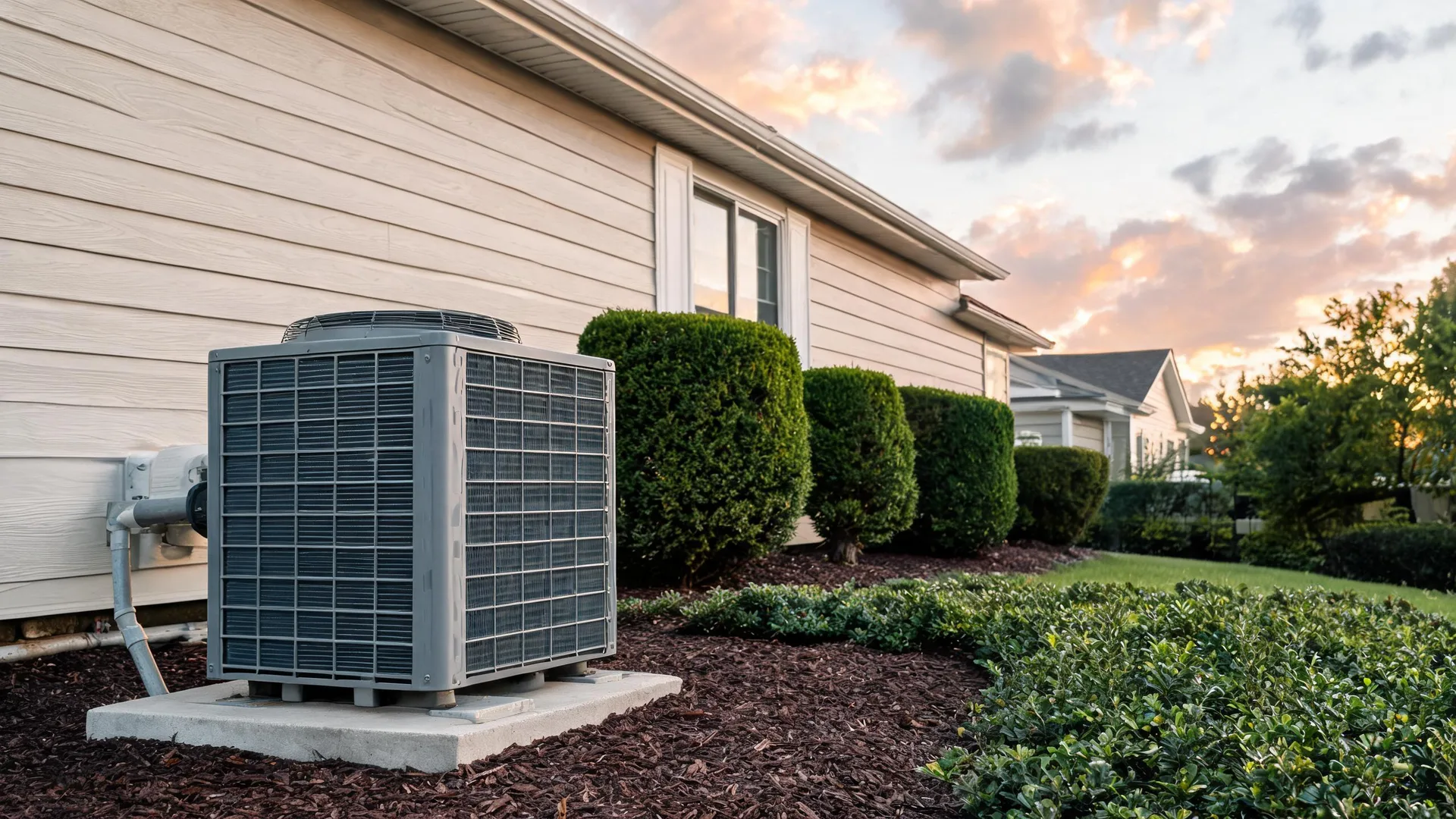
An outdoor air conditioning condenser unit on a concrete pad next to the gray vinyl siding of a residential home.

Book your AC tune-up in June, before homes here start needing cooling in July.

  1. Jan
  2. Feb
  3. Mar
  4. Apr
  5. May
  6. Jun
  7. Jul
  8. Aug
  9. Sep
  10. Oct
  11. Nov
  12. Dec

A tune-up checks the refrigerant charge, cleans the coils, tests the capacitor and tightens the electrical connections.

A proper tune-up starts with power off and the cabinet open. The tech checks the capacitor's output against its rating, not just whether the fan spins. Both coils get inspected and cleaned if there's a film on them, the evaporator inside the cabinet and the condenser outside. Refrigerant pressure gets checked with gauges on the service ports, because that's the only way to know if the charge is right. The condensate drain gets flushed clear, not just glanced at for a drip. The blower wheel and motor get looked over for dust buildup and wear, since a wheel caked in dust moves less air even at full speed. Electrical connections get tightened, since a loose one builds heat over time and eventually fails at the worst moment.