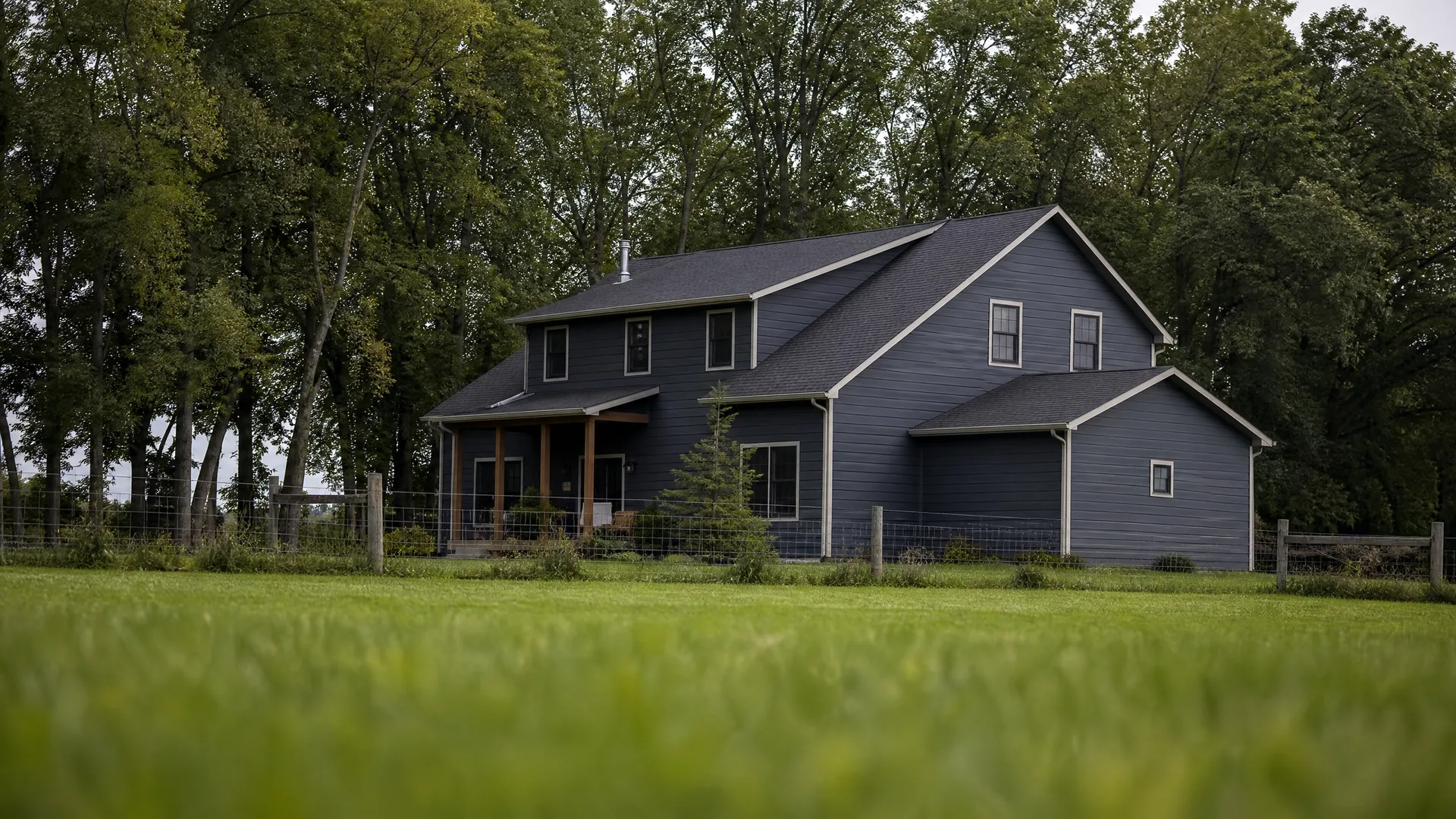





A two-story dark blue-gray house with light trim, gabled roofs and a covered porch, set behind a wire fence with a mowed green lawn in the foreground and deciduous trees behind.

Heat Pump Repair in Fargo, ND

Tell us about the job

Takes about a minute. No obligation.

RepairHeat PumpCass County, ND
Step 1 of 2

What ZIP code is the job in?

The outdoor unit of a heat pump sits outside through everything Cass County weather brings. Damaging wind has hit the county 172 times between 2015 and 2024. Hail has come through 109 times in that stretch, and winter storms, the heavy snow and ice and blizzards, 68 times. That unit runs right through all of it, in a climate already rated cold with a long heating season. So when a heat pump here starts short cycling, running loud, or falling behind on a cold day, it's usually not a one-off. It's wear from this climate landing on one part first. Worth having someone find out which part before it takes the rest of the system with it.

9 months
September through May, your system heats
3 months
June through August, it cools
3°F
the average winter night it heats against
80°F
the average summer afternoon it cools against
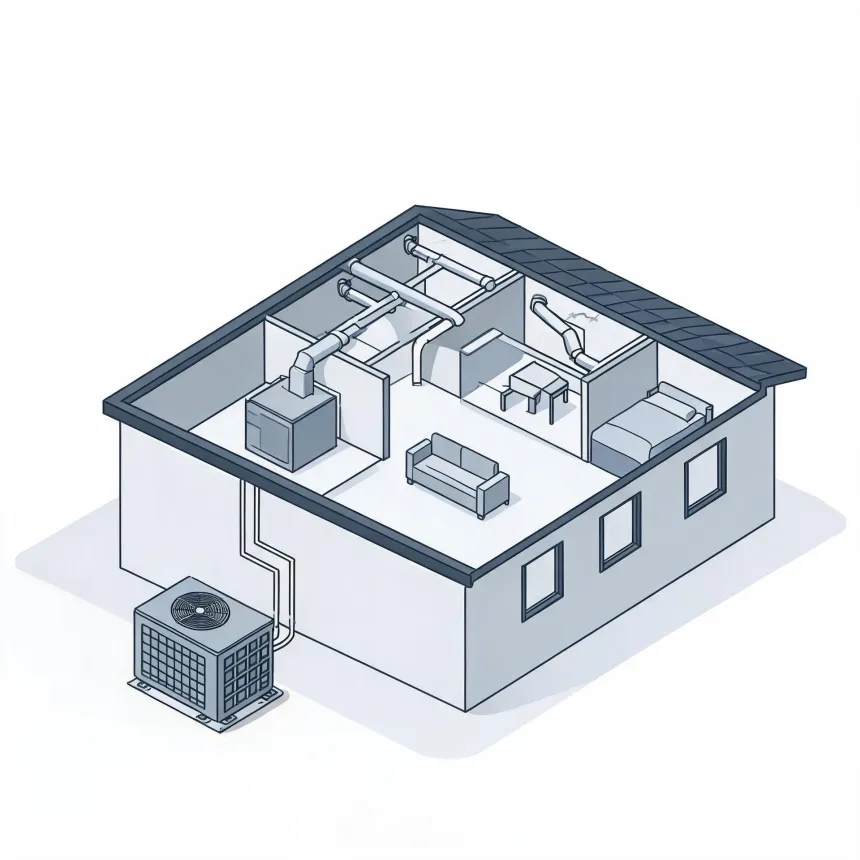
Isometric line illustration of a cutaway single-story house showing interior rooms with ducted air distribution, an indoor air handler, furniture, and an outdoor condenser unit connected by lines outside the wall.
Your system heats September through May and cools June through August.

NOAA nClimDiv, 1991–2020 normals

Heat here runs nine months, September through May.

A heat pump that's already struggling tends to fail right when that stretch begins.

Half the homes here were built in 1993 or later, which is probably younger than this problem feels

Half the homes here were built by 1993
Climate zone 6A
Power here costs 13.26 cents per kilowatt-hour

Cass County saw 354 severe weather events between 2015 and 2024, and 5 of those were tornadoes. That outdoor unit sits exposed to all of it. Hail dents the fins on the outside coil, and wind-blown debris can bend them further or crack the fan blades. A unit that took a hit like that can keep running for weeks before it starts losing capacity or tripping out. Statewide, 7% of households went at least a day without power in 2024, and a heat pump that loses power mid-cycle doesn't always restart the way it should. If the outdoor unit took a hit this year, worth having it looked at even if it still seems to be keeping up.

Find the worn part before it costs you the whole system

A heat pump working this hard does not fail all at once. One part gives out first and the rest keeps running on top of it. Get that part found before it takes the compressor with it.

Find a contractor
A man in a cap, dark jacket and tan trousers climbs porch steps toward a red door, carrying a worn olive duffel bag, with a potted shrub beside gray clapboard siding.
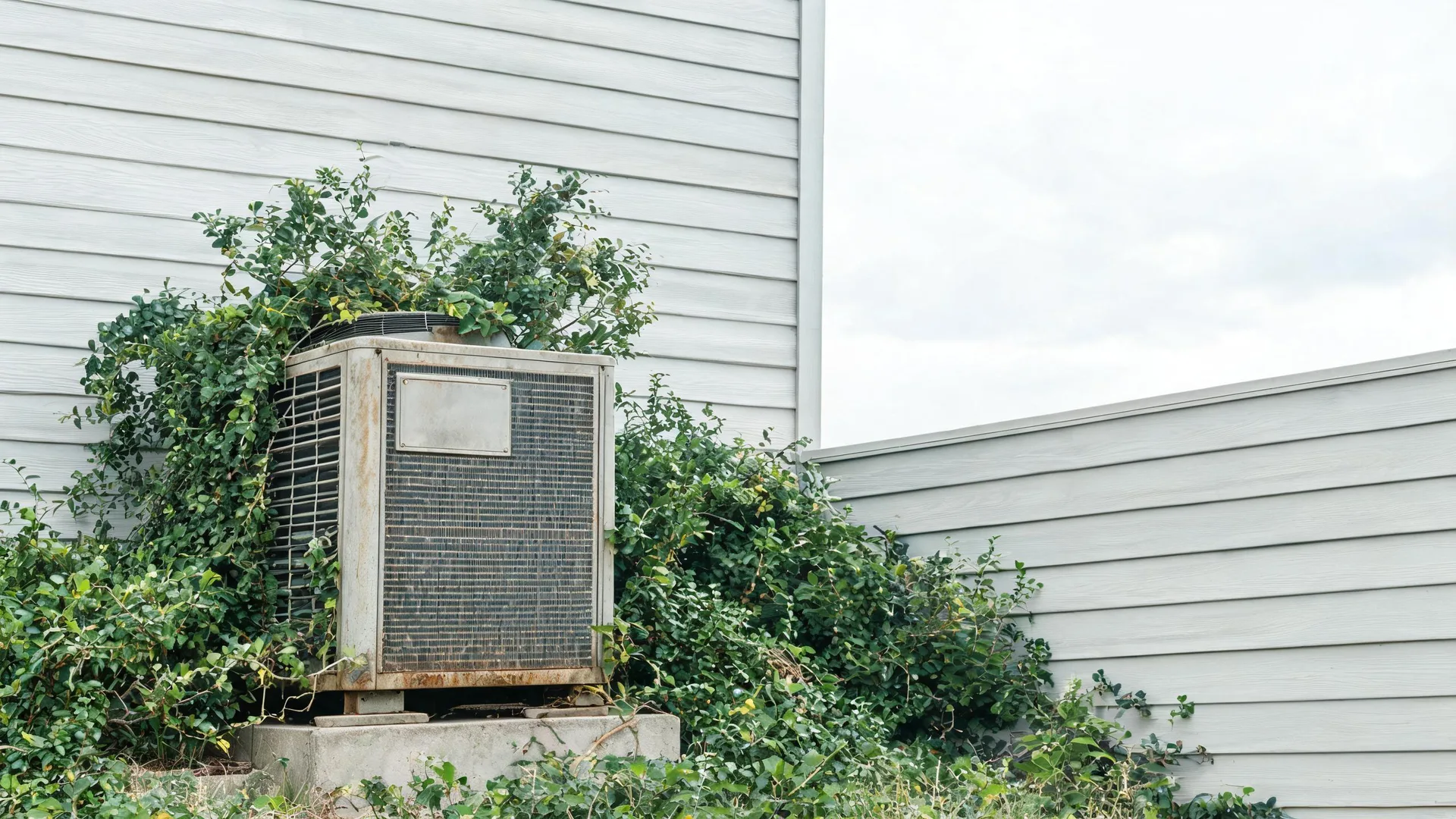
A gray heat pump outdoor unit mounted on a concrete pad next to a residential house with lap siding and stone accents.

Hours tell you more than the age on the label

A heat pump does not wear evenly. One part takes the load first, usually the compressor or the reversing valve, and everything else keeps working while that one part quietly gets worse. Age by itself does not decide repair or replacement. What matters is whether the part that failed is one piece doing one job, or whether it is the kind of part that takes others down with it when it goes. A failed capacitor or a bad contactor is a straightforward swap and the rest of the system does not care. A compressor on its way out is a different conversation, because by the time it is making noise or tripping breakers, it has usually already stressed the parts around it. The system's running hours matter more than its age in years. A unit that sits idle for stretches and then runs hard wears differently than one that holds a steady, moderate pace. A tech can look at what is failing now, what else shows wear, and tell you whether this is a part or a pattern.

What you can check yourself

Look at the outdoor unit first. If snow or ice has piled against the cabinet, clear it away so air can move through the coil. Check the air filter inside and swap it if it's gray or clogged. Walk around the indoor vents and make sure none are blocked by furniture or closed off. Check the thermostat batteries and settings before assuming the system itself is at fault. None of this calls for tools or taking anything apart.
What to leave alone

Don't pull the outdoor unit's panels off or touch anything inside the cabinet. Don't chip at ice that's built up on the coil itself, that can bend the fins or crack a line. If the unit is making a grinding or screeching noise, or tripping a breaker repeatedly, shut it off and leave it off rather than resetting it over and over. A breaker that keeps tripping is telling you something is actually wrong, not asking to be reset again.

A heat pump in trouble usually tells you before it quits outright. It runs for a while, shuts off, then starts again a few minutes later instead of holding a steady cycle. That short cycling wears the compressor faster and it's one of the clearer signs something's off. Listen to it too. A low hum is normal, a clanking, screeching or grinding sound is not, and it usually means a motor bearing or a loose part inside the cabinet. Air coming from the vents that's cooler than it should be on heat mode, or warmer than it should be on cooling, points to a refrigerant problem or a failing reversing valve. Ice building up on the outdoor coil that doesn't clear during the defrost cycle is worth a call too, since that coil has to stay clear to move heat at all.

Electricity here runs 13.26 cents per kilowatt-hour, cheaper than in most of the country. That's one thing working in your favor. It doesn't mean a struggling heat pump is cheap to ignore. A unit that's short cycling or losing capacity has to run longer to hold the house at temperature, and a heat pump around here runs for most of the year. Cheap power buys you some room. It doesn't buy you time to leave a failing part alone.