





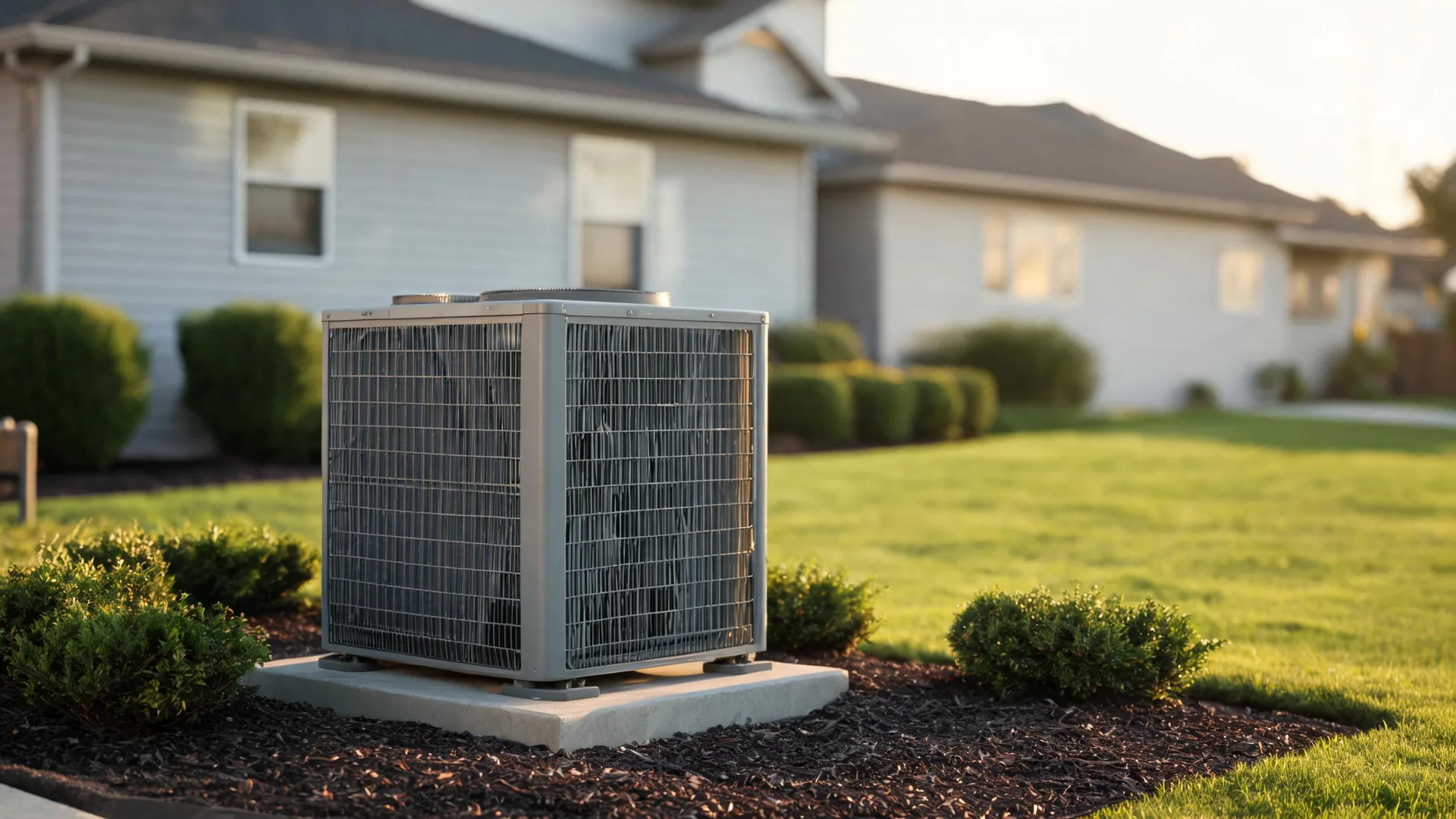
An outdoor HVAC condensing unit on a concrete pad next to a beige single-story house with a dark shingle roof.

Heat Pump Repair in Mandan, ND

Tell us about the job

Takes about a minute. No obligation.

RepairHeat PumpMorton County, ND
Step 1 of 2

What ZIP code is the job in?

A heat pump in Morton County has to work against real cold for a long stretch of the year, and that kind of steady demand wears on a system faster than mild weather would. Add in what the outdoor unit sits through here. Wind hit the county 114 times between 2015 and 2024, hail came through 112 times, and winter storms with heavy snow and ice struck 29 times in that same stretch. That's the coil, the fan, the outdoor cabinet taking a beating year after year. A part that's bent, pitted, or corroded doesn't always fail outright, but it struggles, and that's usually when a homeowner notices the system running longer or keeping the house less comfortable than it used to. When something's off, it's worth having a contractor look at the actual part that's struggling rather than guessing at the fix.

9 months
September through May, your system heats
2 months
July through August, it cools
6°F
the average winter night it heats against
81°F
the average summer afternoon it cools against
Isometric grey-toned illustration of a cutaway house showing interior rooms, ceiling ductwork and an air handler, connected by lines to an outdoor condenser unit beside the building.
Your system heats September through May and cools July through August.

NOAA nClimDiv, 1991–2020 normals

Electricity in Morton County runs 12.82 cents a kilowatt-hour, cheaper than most of the country.

A heat pump losing efficiency still runs up a bill fast here, since winter asks it to run so much of the time.

This county sees 260 severe weather events a decade, and your outdoor unit sits through all of them

260 severe weather events from 2015 to 2024
7% of homes statewide lost power a day or more in 2024
114 damaging wind events from 2015 to 2024

September is when heat here starts in earnest, and that first cold stretch is when a weak part finally gets tested. A heat pump that struggled through last winter without quite failing can go the rest of the year looking fine, because nothing is asking much of it. Then the temperature drops and it has to run for hours at a stretch, and whatever was already worn, a contactor, a weak capacitor, a low charge, gets pushed past where it can keep up. Homes here run heat from September through May, nine months out of the year, so a problem that shows up at the start tends to stay a problem for a long stretch if it's left alone. Getting a system looked at in August, before the load hits it, is what catches that part while it's still just struggling instead of waiting for it to quit in January.

Your heat pump has been working hard. Find out what that's cost it.

The outdoor unit has already taken the wind, the hail, and the winter storms this county sees most years, and that shows up as a worn part before it shows up as a breakdown. A contractor can find the part that's struggling now and fix it, instead of waiting to find out once the cold sets in.

Find a contractor
A dark gray heat pump unit mounted on a concrete pad next to a house with gray siding and a stone veneer wall.

Every hour it runs is wear on something

A heat pump does not wear out all at once. It runs in cycles, on and off, day after day, and every part that starts and stops has a lifespan measured in cycles rather than years. The contactor that switches power to the compressor pits a little more each time it closes. The capacitor that gives the compressor and fan motor their starting kick loses strength with every start, so the hundredth start is harder on it than the first. The reversing valve that switches the system between heating and cooling has seals that take a set from sitting in one position too long, then stick or leak when asked to move. None of these announce themselves early. A capacitor losing strength just makes the compressor labor on startup for a while before it finally fails to start at all. A low refrigerant charge, usually from a slow leak at a fitting or coil, shows up first as weaker heat and longer run times, long before the system quits outright. The outdoor coil collects dirt and grime over time, and the fan motor bearings wear from running against them hour after hour. Most heat pump failures are not one part giving out of nowhere. They are a part that had been struggling for a while, doing less work each cycle, until the day it could not do enough.

Running on a bad part strains what's next to it

A compressor paired with a weak capacitor has to labor on every startup, and that extra draw heats the compressor's windings more than a clean start would. A system low on charge runs longer to make the same heat, so the compressor logs more hours and the fan motor bearings take more wear than they would at full charge. The part that was already failing doesn't fail alone. It drags down whatever depends on it running the way it's supposed to.
Shutting it off is the cheaper damage

A heat pump that's struggling and still gets shut off stops wearing the strained part any further. One that keeps running on a bad contactor or a leaking coil turns a part replacement into a compressor replacement, since the compressor is the expensive part sitting downstream of nearly everything else. Catching the labored sound or the weak airflow early and calling it in is what keeps the job small.

Cheap power doesn't stay cheap when a heat pump is struggling to keep up. A weak capacitor or a low charge makes the compressor work longer to put out the same heat, and every one of those extra hours lands on the bill. The system won't fix itself by running more. It just keeps logging hours against a part that's already failing. Having a contractor check the part that's struggling now is what keeps a bad month from turning into a bad winter.

If the outdoor unit took a hit from hail or wind this year, it's worth having a contractor look at it even if the system still runs fine. A dented cabinet or bent coil fins don't always stop a heat pump cold. They just make it work harder to move the same air, and that's the kind of wear this page has been talking about. Hail dents show up on the coil fins first, and bent fins choke airflow across the coil without ever announcing themselves. A fan blade nicked by flying debris throws the motor slightly off balance, and that shortens the bearing life long before the fan quits turning. None of this shows up as a breakdown right away. It shows up as a system that runs a little longer and heats a little less, and by the time that's obvious, winter is already asking a lot of it.