









Profile view of a bearded man wearing a dark baseball cap and a dark gray T-shirt against a plain off-white background.

Heat pump stuck on emergency heat in Mandan, ND

RepairHeat PumpMorton County, ND
Step 1 of 2

What ZIP code is the job in?

Why is my heat pump stuck on emergency heat in Mandan?

You flip the thermostat and it's sitting on emergency heat, running strip heat instead of the heat pump, and the switch doesn't seem to have been you. Out here winters get hard, and emergency heat on its own costs more to run, so you want to know what's keeping it stuck there before the next cold snap in Morton County drives the bill up.

Something is telling the system the heat pump can't do the job, so it's running on strip heat instead

A heat pump switches to emergency heat on its own when it senses the outdoor unit isn't producing heat, usually from a frozen coil, a stuck reversing valve, or a compressor that isn't running. The thermostat sees no heat coming from the pump and falls back to the backup element to keep the house warm. That backup heat works, but it draws a lot more power to do the same job. With Morton County winters running cold for months at a stretch, a heat pump stuck on emergency heat is worth sorting out before a hard freeze sets in, since the outdoor unit is the part not doing its share.

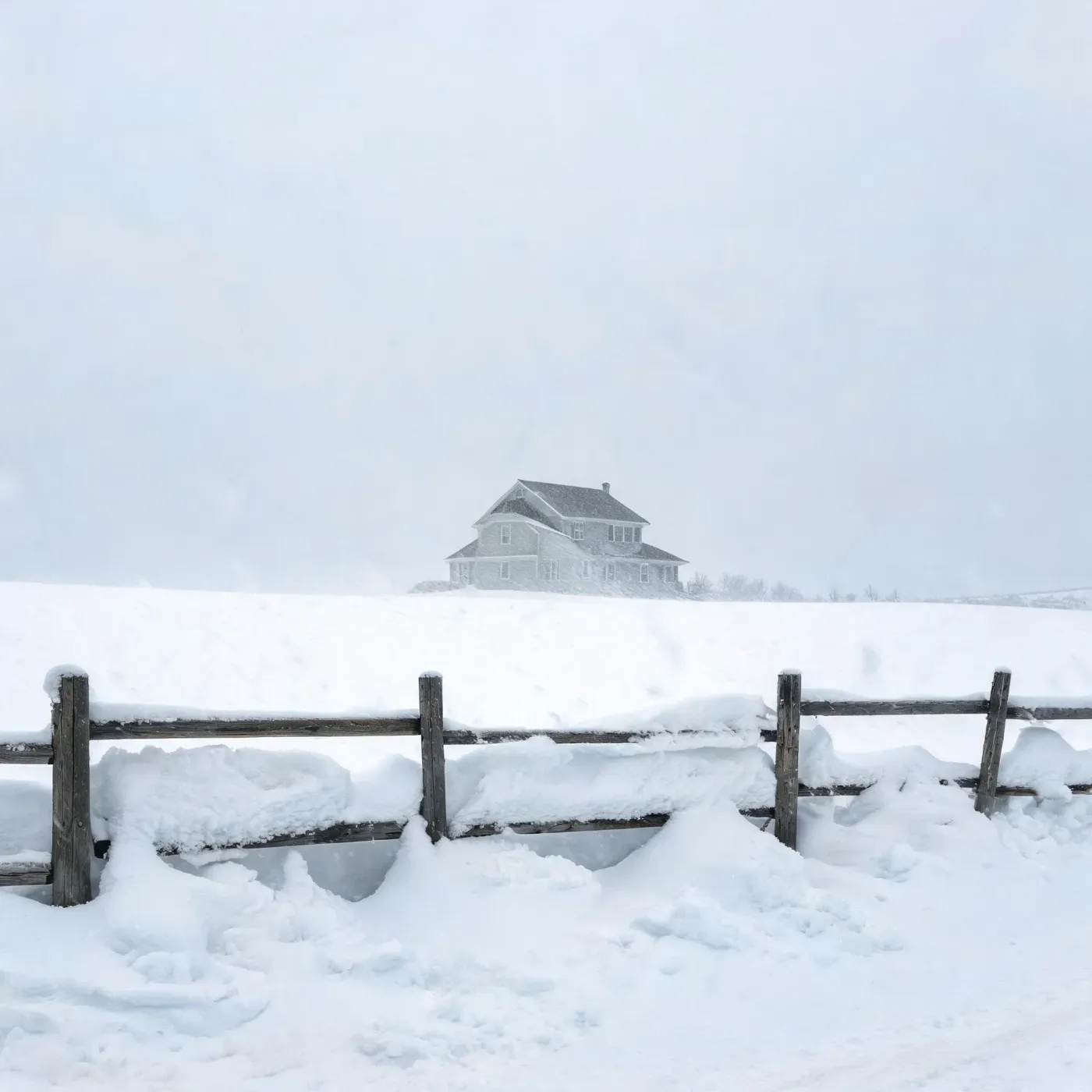
A two-story gabled house stands on a snow-covered rise under a pale overcast sky, with a snow-laden wooden rail fence crossing the foreground.

A 6°F overnight average for December through January through February, Morton County's own numbers, tells you why that heat pump leans on backup so much here. Below a certain outdoor temperature, a heat pump can't pull enough heat from the air alone, and the system shifts to strip heat to keep the house warm. At 6 degrees, that's not a rare dip, it's most winter nights. So the system calling for backup heat on a cold night is often normal. What's not normal is emergency heat staying on once the air warms up some, or running when the thermostat hasn't been touched. That points to the heat pump itself not switching back, not the cold doing its job.

NOAA nClimDiv 1991-2020

A man in a gray knit sweater stands smiling and looking off to the side beside a white marble kitchen island, with a dining table, pendant light, and open shelving in the background.
A smiling man with short dark hair and stubble in a gray sweater sits at a stone-topped counter with a white ceramic mug, in a room with a framed picture, a plant, and shelves holding bowls.
A smiling man in a dark navy sweater sits at a wooden kitchen counter with a light ceramic mug, with white tile backsplash, open shelving and a window with potted plants behind him.
A smiling man with dark hair and a beard, wearing a dark green knit sweater, stands at a kitchen counter with a ceramic mug, with an open living room, sofa, armchair and large windows behind him.

The outdoor unit is built to protect its own compressor, and emergency heat is part of that protection. A control board watches coil temperature and how long the system has been running, and when something about that reading doesn't add up, the board locks the compressor out rather than risk damaging it. That lockout is what sends the system to the electric elements in the air handler, which heat on their own without any help from the outdoor unit. The trigger behind that lockout varies. Sometimes it's a sensor giving a bad reading, sometimes a reversing valve that hasn't moved back where it should, sometimes refrigerant running low enough that the compressor isn't safe to run. Ice on the outdoor unit beyond what a normal defrost clears will do it too. And occasionally the outdoor unit is fine and the trouble is the thermostat itself, since its heat pump setting can fail on its own. A contractor checks the board, the sensors, the charge, and the thermostat to find which one it is.

What Forces the Switch to Emergency Heat

  • A reversing valve stuck in heating position, a bad defrost sensor, or a failed thermostat wire can all force the system into emergency heat on its own.
  • The outdoor unit's defrost board checks coil temperature and runtime, and when it can't get a reading it locks out the compressor and switches to strip heat.
  • Emergency heat runs the electric heating elements in the air handler directly, bypassing the outdoor unit and the compressor entirely.
  • A low refrigerant charge will often trip the same safety switch that emergency heat is meant to protect against, since the compressor can't run safely without enough refrigerant.
  • If the outdoor unit is caked in ice past what a normal defrost cycle clears, the control board can read that as a fault and hold the system in emergency heat until someone resets it.
  • The thermostat's own heat pump setting can fail separately from the outdoor unit, meaning the problem is sometimes the wall control itself and not the compressor at all.
A gray outdoor condenser unit on a concrete pad beside a light-green sided house, surrounded by mulch, ornamental grasses and a shrub, with mowed lawn in the foreground.
This heat pump is running the way it should, pulling heat from the outside air with the fins clear and the fan unobstructed.
A gray outdoor air conditioning condenser unit on a concrete pad beside a house with light vinyl siding, with a gray electrical disconnect box and conduit on the wall to the right.
This unit's fins are caked with dirt, restricting the airflow it needs, which is the kind of problem that can trigger emergency heat.

Why does emergency heat kick in so much here?

  • Winter nights average 6°F

    Nights average 6°F through December, January and February, cold enough that the heat pump alone often can't keep up and backup heat takes over.

  • Heat runs September through May

    Heat runs September through May here, nine months of the system relying on its defrost and backup controls to get through the cold stretch.

  • Cooling runs July through August

    Cooling only runs two months, July and August, so the heat pump spends most of the year working the side that can fail into emergency heat.

NOAA nClimDiv 1991-2020

A bearded man in a dark blue T-shirt sits on a gray couch, smiling and looking down to his left, with a bookshelf and a bright window behind him.
A bearded man in a plaid flannel shirt stands indoors beside a wood-framed, frost-covered window, looking outside, with a steaming brown mug on the sill and a wooden cabinet behind him.
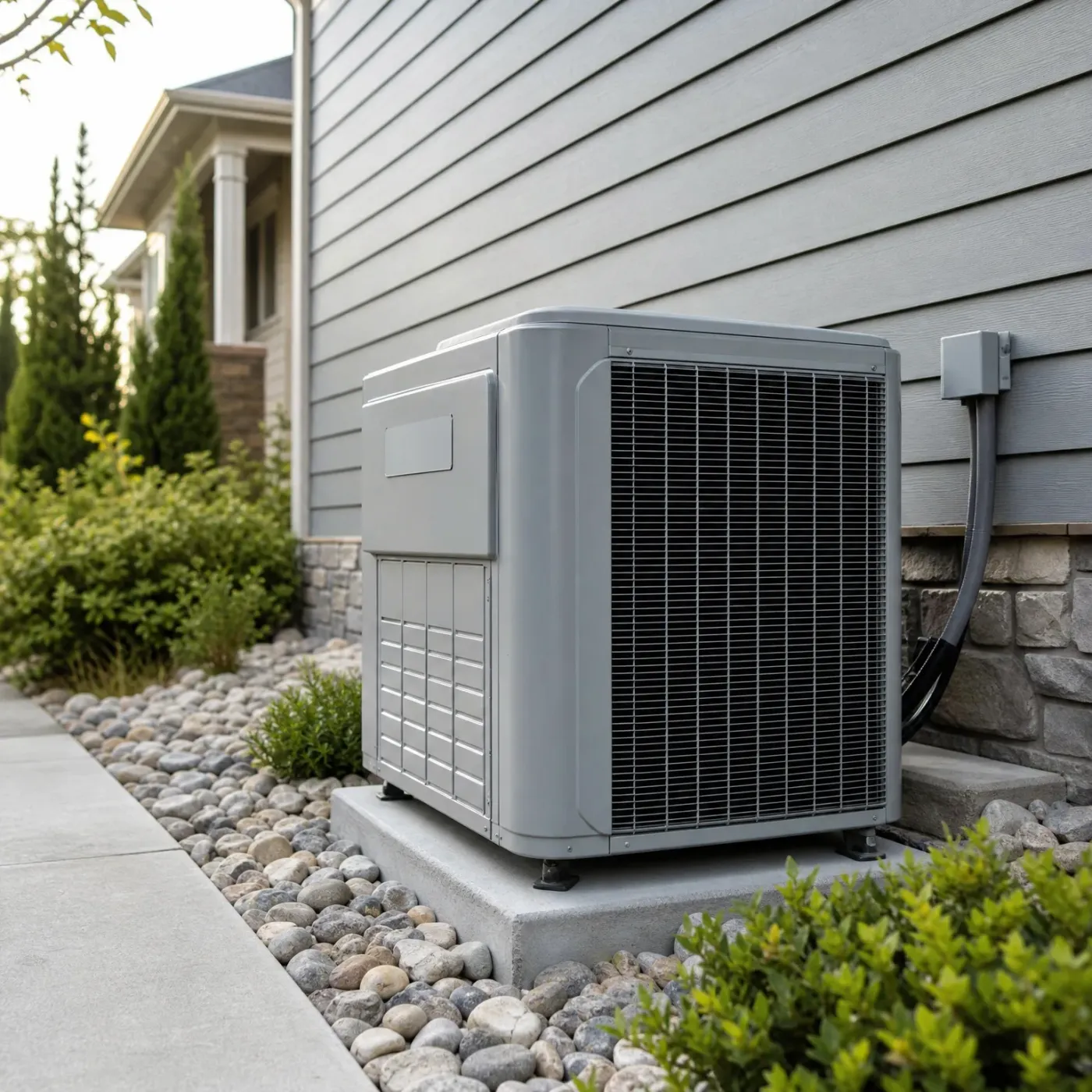
A gray outdoor heat pump unit on a concrete pad beside a house with light gray horizontal lap siding and a stone base, surrounded by river rock and shrubs next to a concrete walkway.

Send one request and you're done looking

Describe what your heat pump is doing once, in one form.

After this form, you can stop searching for a heat pump pro.

Send it today

Asking costs nothing, and the choice to hire stays yours.

Wait Out the Cold or Fix the Switch

Leave it on emergency heat

  • Strip heat will keep the house warm through the cold snap while you wait, since it doesn't depend on the outdoor unit at all.
  • Electric resistance heat costs more to run than a heat pump pulling heat from the air, so the bill for those days will run higher.
  • The outdoor unit sits idle this whole time, which means whatever tripped it into emergency heat doesn't get worse, but it also doesn't get fixed.
  • If the cause is a stuck reversing valve or a failed defrost sensor, nothing about running on emergency heat corrects that problem.
  • You get reliable heat tonight without anyone coming out, which matters if the forecast has single digits in it.

Get it looked at now

  • A contractor can check the reversing valve, the defrost sensor, and the thermostat wiring to find which one forced the switch.
  • Once the actual fault is fixed, the heat pump goes back to pulling heat from the outside air instead of running on strip heat around the clock.
  • Morton County winters run long, September through May, so a system stuck on backup heat for that stretch adds up on the electric bill.
  • If the fins on the outdoor unit are caked with dirt or blocked by snow, clearing that may be all it takes to let the system run normally again.
  • Catching it now means one visit instead of the unit sitting on emergency heat through the rest of the season.
A gray outdoor heat pump unit on a concrete pad beside a house with horizontal lap siding, connected by conduit and a flexible line to a wall-mounted disconnect box, with low shrubs and mulch nearby.

The heat pump working the way it should

The outdoor unit sits clear on its pad, fan grille open, lines running clean to the disconnect. Air moves through it without resistance. When it looks like this, the heat pump should be doing the work, not the strip heat.


An outdoor air conditioner condenser unit on a concrete pad beside a house with beige horizontal siding, with conduit running from an electrical box on the wall.

The heat pump that triggers emergency heat

Nothing looks wrong from a few feet back, but a frozen coil, a stuck valve, or a fan that won't turn can sit behind a unit that looks this ordinary. That's what sends a system to backup heat on its own.

A closed laptop and a ceramic mug of coffee on a wooden table, with a blurred kitchen counter, cutting board, utensil jar and plant in the background.

Emergency heat is telling you something

A heat pump stuck on emergency heat isn't a weather problem, even in a Morton County winter. Something in the system, a reversing valve, a defrost sensor, a thermostat wire, has told it to stop pulling heat from outside and run on strip heat instead. The thermostat switch doesn't move itself. Until a contractor finds which part failed, the house stays warm but the bill carries the cost of running it that way.

You don't have to spend the next hour searching contractor listings, calling around to see who answers, or explaining the same thing to three different people before you get a quote. Send the form once and that search is off your plate. Someone licensed to work on this system takes it from here.

A shallow dark wooden bowl and a stack of books rest on a wooden table in front of a beige sofa with linen and green cushions, with a tall ceramic vase of thin branches beside a window in the background.
A dark wood cabinet with a paneled door and a ceramic pot of green foliage on top stands in a beige-walled room with white baseboard, a window at left, hardwood floor, and a patterned area rug.
A dark wood glass-front cabinet holding folded towels, woven baskets and a ceramic vase stands in a bathroom corner beside a window, with a potted fern and stacked towels on top and a freestanding tub partly visible at left.
A woven basket holding a green cushion and a cream fringed knit throw sits on a wood floor in a room corner beside a window and a dark wooden cabinet.
Corner of a room with a dark wood cabinet topped by a round vase, a linen curtain at a window, white baseboard, oak plank flooring with sunlight patches, and a woven jute rug in the foreground.
A dark wood sideboard against a pale wall holds a shallow stone bowl and a round ceramic vase with leafy branches, with sunlight from a curtained window falling across the wall, wood floor and woven rug.

Finding a pro stops being your job

Skip calling shops to ask who repairs heat pumps in Morton County.

Hand it off

No fee to send it, and nothing to sign.





