






A dark-sided two-story house with white-trimmed windows and a gray shingled roof stands behind a wire fence in a green grass field, backed by a dense conifer forest.

Mini Split Installation in Beach, ND

Tell us about the job

Takes about a minute. No obligation.

New system or replacementMini-splitGolden Valley County, ND
Step 1 of 2

What ZIP code is the job in?

Gas heats 56.9 percent of homes in Golden Valley County, and another 23.5 percent run on bottled or LP gas. Electric heat covers 17.2 percent. That means most houses here already have a furnace doing the main work. A mini split installed in a home like that usually serves as backup, or as the fix for one room the furnace does not reach well, rather than replacing the whole system. If your home runs on LP gas, a mini split can also take the load off that tank in spring and fall, when the cold is not as serious.

9 months
September through May, your system heats
2 months
July through August, it cools
8°F
the average winter night it heats against
81°F
the average summer afternoon it cools against
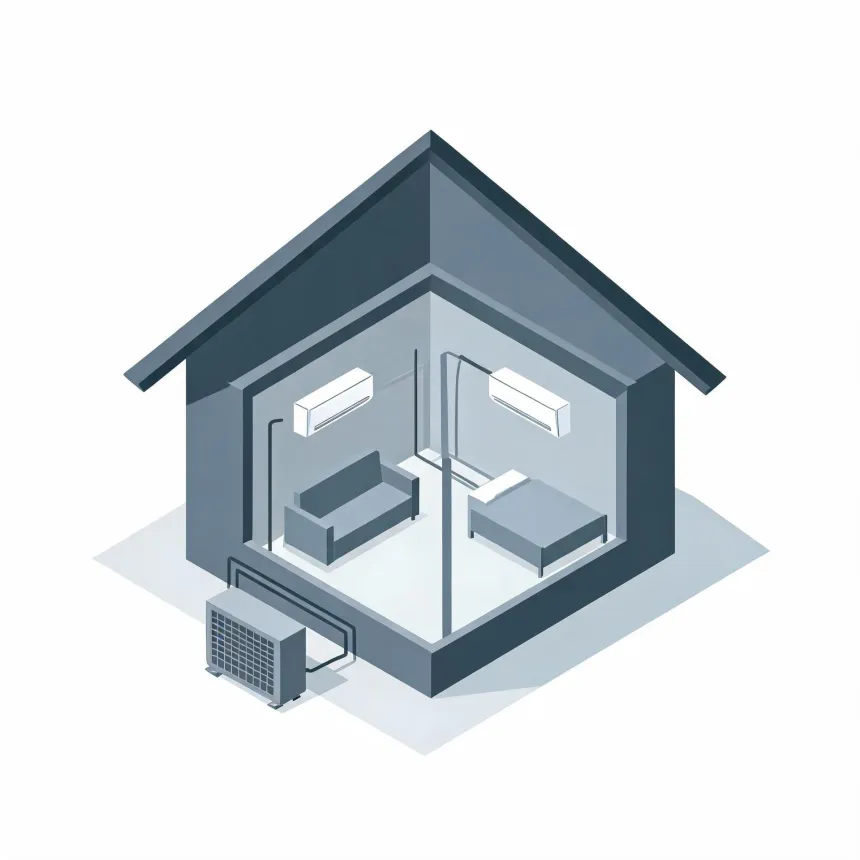
Isometric cutaway illustration of a small gray house showing two rooms, one with a sofa and one with a bed, each with a wall-mounted indoor air conditioning unit connected by line sets to an outdoor condenser unit on the ground outside.
Your system heats September through May and cools July through August.

NOAA nClimDiv, 1991–2020 normals

Cooling in Golden Valley County only runs July through August.

Get the mini split in by June and it's ready before that first warm stretch hits.

Half the homes here were built by 1957, and a mini split has to match the house it goes into

Half the homes here were built by 1957
Cooling runs July through August
Summer afternoons average 81°F
Low power rates here change the mathElectricity ran 11.51 cents per kilowatthour in North Dakota in 2024, so a mini split earns its keep on comfort, not on the power bill.

Cooling here only runs about two months, July and August, with afternoon highs averaging 81°F. That's not much work for a mini split to do. The rest of the year it's heating, and in a cold zone 6A climate with a furnace already carrying the main load, the mini split is only ever backup or a fix for one room. A unit working that light doesn't need to be the highest efficiency model on the shelf. What matters more is correct installation and the right size for the room it's covering. Spend there, not on a rating you'll barely use.

Any new mini split here has to hit 14.3 SEER2 and 7.5 HSPF2

Golden Valley County falls in zone 6A, and the federal standard treats a ductless mini split as a split-system heat pump, with no separate rule for being ductless. Units built from 2023 on have to meet 14.3 SEER2 for cooling and 7.5 HSPF2 for heating. That narrows what a contractor can install here, and a federal credit is available on qualifying equipment.

Find a contractor
A man seen from behind in a gray long-sleeve shirt and dark pants carries a canvas duffel bag up a porch step toward a red front door of a gray shingled house, with a potted shrub to the right.
A white mini-split air conditioner outdoor condenser unit mounted on metal brackets against a beige stucco exterior wall, with a blue sky and scattered clouds in the background.

The old system doesn't just vanish when the new one goes in

If the old system being replaced is a furnace, that furnace does not go away just because a mini split gets added. In most homes it stays as the main heat source, and the mini split takes over one room or picks up the shoulder months. If the old system is a window unit or an older ductless setup being pulled out, the outdoor unit and line set need to come out together. A line set left behind can hold refrigerant or trap moisture, and the next install should not reuse it without a tech checking it first. Any outdoor unit coming down should be handled by someone certified to recover the refrigerant in it rather than let it vent out, since that's the law regardless of how old or small the system is.

How many rooms it has to reach

A single room needs one indoor head and one outdoor unit. Cover more rooms and the job moves to a multi-zone system, with a bigger outdoor unit and a line set run to each head. Every extra zone adds material and labor before anyone talks about the equipment itself.
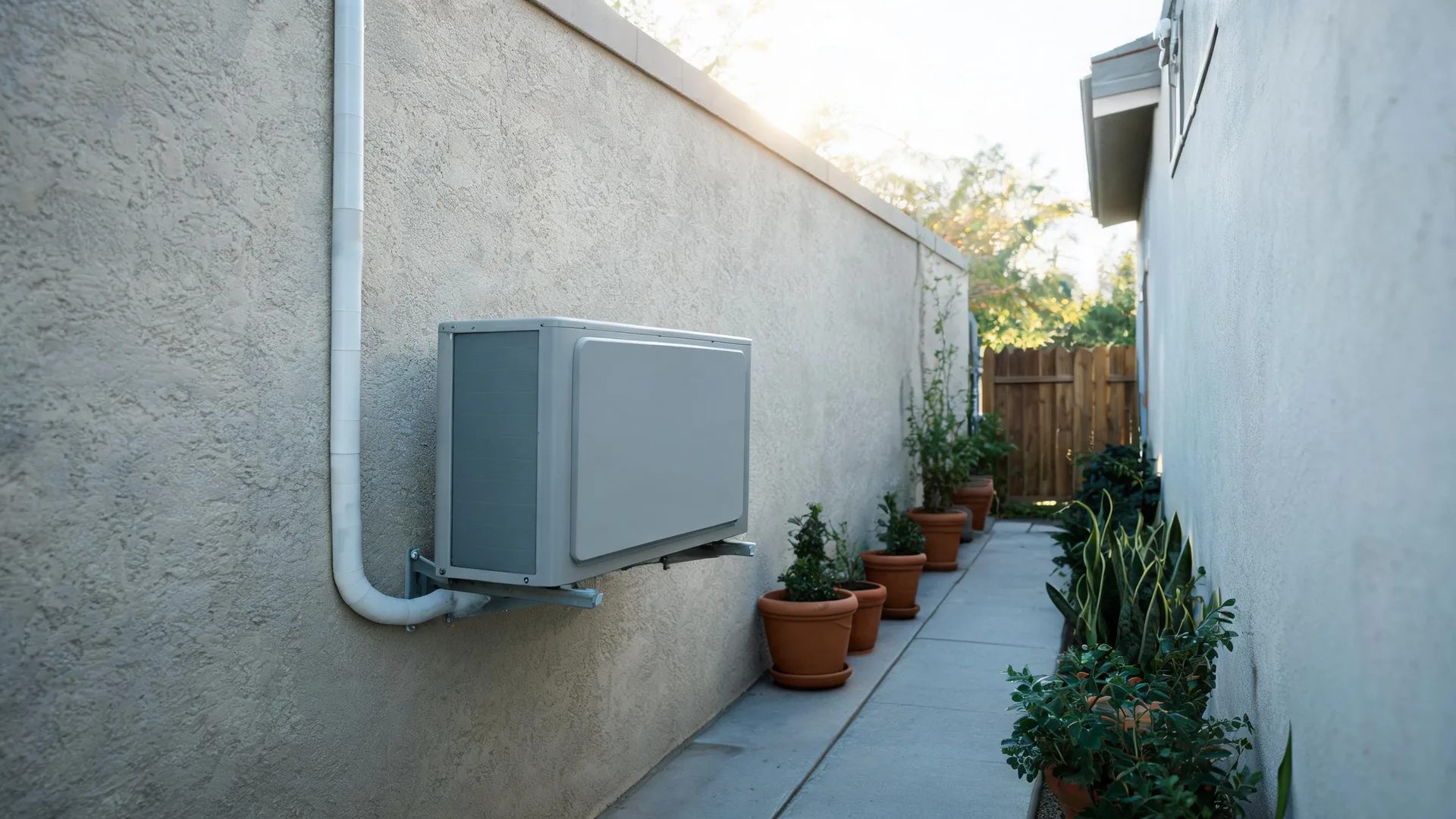
What's between the inside and outside unit

The line set has to run from the indoor head to the outdoor unit, through a wall and often along the siding or through framing. A straight run on an exterior wall is the easy case. A run that has to cross the attic, drop through a closet, or snake around framing takes longer and costs more, and the contractor can't know which one it is until they see the wall.

Sizing a mini split comes down to how much heat the room gains or loses, not how big the room looks. A contractor works that out with a room by room load calculation, checking wall and window area, insulation, ceiling height, and which way the room faces. Skip that step and guess from square footage alone, and the unit is wrong more often than it's right. Too big and it cools the room fast, shuts off, and leaves the air feeling damp because it never ran long enough to pull moisture out. Too small and it runs constantly through the hottest afternoons and still doesn't hold the temperature. The right size runs long steady cycles and holds the room steady without much cycling at all.

Install day starts outside, with the outdoor unit set on a pad or bracket and the line set routed in through the wall. That hole gets sealed properly, because any gap around it is a path for air and moisture to get into the wall. Inside, the indoor head mounts high on the wall, level, with enough clearance above and to the sides for air to pull through it. Once both ends are set, the line gets connected, and the whole system is pulled down to a vacuum before any refrigerant moves through it. That vacuum step pulls out moisture and air that don't belong in the line, and skipping it is how a system ends up with a slow leak or a frozen coil months later. Only after the vacuum holds does the tech open the line and charge the system, then run it and check that it's pulling the right temperature drop at the head before calling the job done.