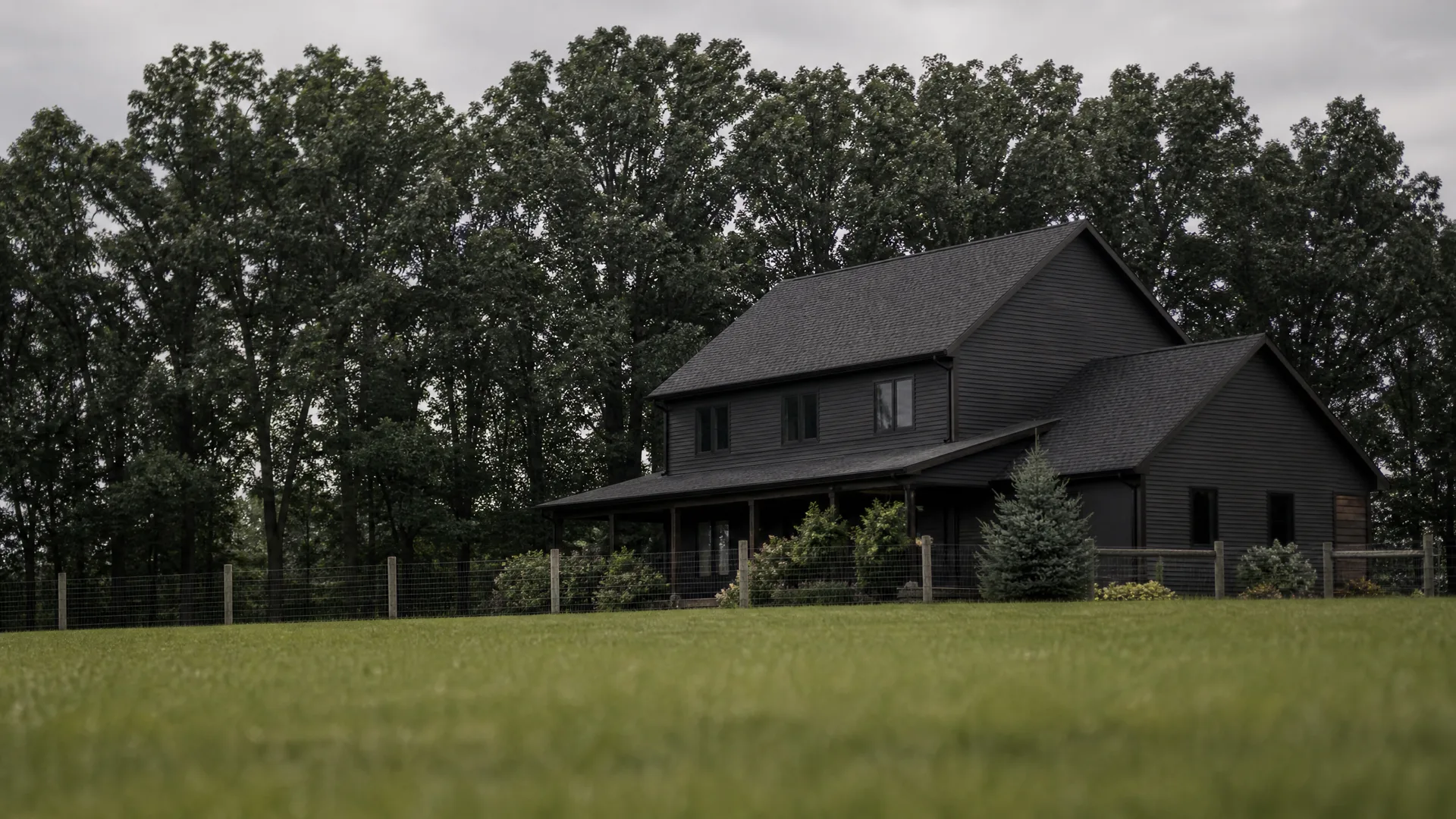




A dark-painted two-story house with a covered porch and gabled roof stands behind a wire fence, with a mown lawn in the foreground and a dense row of tall deciduous trees under an overcast sky behind it.

Mini Split Installation in Bismarck, ND

Tell us about the job

Takes about a minute. No obligation.

New system or replacementMini-splitBurleigh County, ND
Step 1 of 2

What ZIP code is the job in?

Utility gas heats 63.6% of homes in Burleigh County, more than any other fuel. Electricity comes in well behind that, at 26.3%, with propane making up most of the rest. A mini split doesn't replace that picture the way a new furnace does. It heats and cools one room or a few rooms without any ductwork, which is why they show up in additions, garages, and finished basements more often than as the only system in the house. Whether one makes sense alongside a gas furnace or on its own depends on what the space needs and what's already there to work with.

9 months
September through May, your system heats
2 months
July through August, it cools
5°F
the average winter night it heats against
80°F
the average summer afternoon it cools against
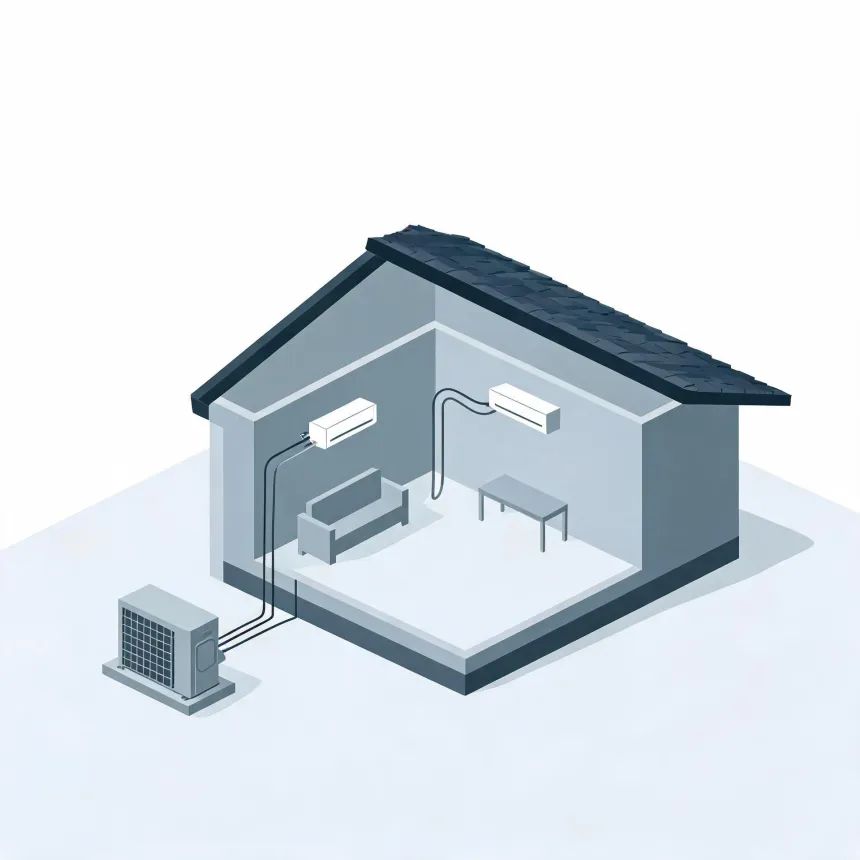
Isometric illustration of a cutaway house showing two wall-mounted indoor air conditioning units connected by line sets to an outdoor condenser unit, with a sofa and table inside the room.
Your system heats September through May and cools July through August.

NOAA nClimDiv, 1991–2020 normals

Cooling runs about two months a year here, July and August, with afternoon highs averaging 80°F.

A mini split in Bismarck isn't fighting the heat most of the year, so a well-built mid-range unit holds up fine.

Get it in before July, so cooling starts on a system already running

Cooling runs July through August
Summer afternoons average 80°F
96 damaging wind events from 2015 to 2024

Burleigh County is in climate zone 6A, a cold zone with winters that run long. Any mini split installed here still has to clear the federal minimum for a split-system heat pump, since the standard doesn't carve out a separate rule for ductless units. That means 14.3 SEER2 for cooling and 7.5 HSPF2 for heating, on anything manufactured from 2023 on. Those numbers are a floor, not a ceiling, so plenty of units on the market clear them by a wide margin. A system that meets these minimums also qualifies for the federal tax credit available on new heat pump equipment.

Pick it for fit, not for the power bill

Electricity in North Dakota ran 11.51 cents per kilowatthour in 2024, cheaper than most of the country. A high-efficiency mini split still costs more to buy, and with power this cheap it takes longer to earn that back. Put the money toward the right size and a unit built to hold up through a Bismarck winter instead.

Find a contractor
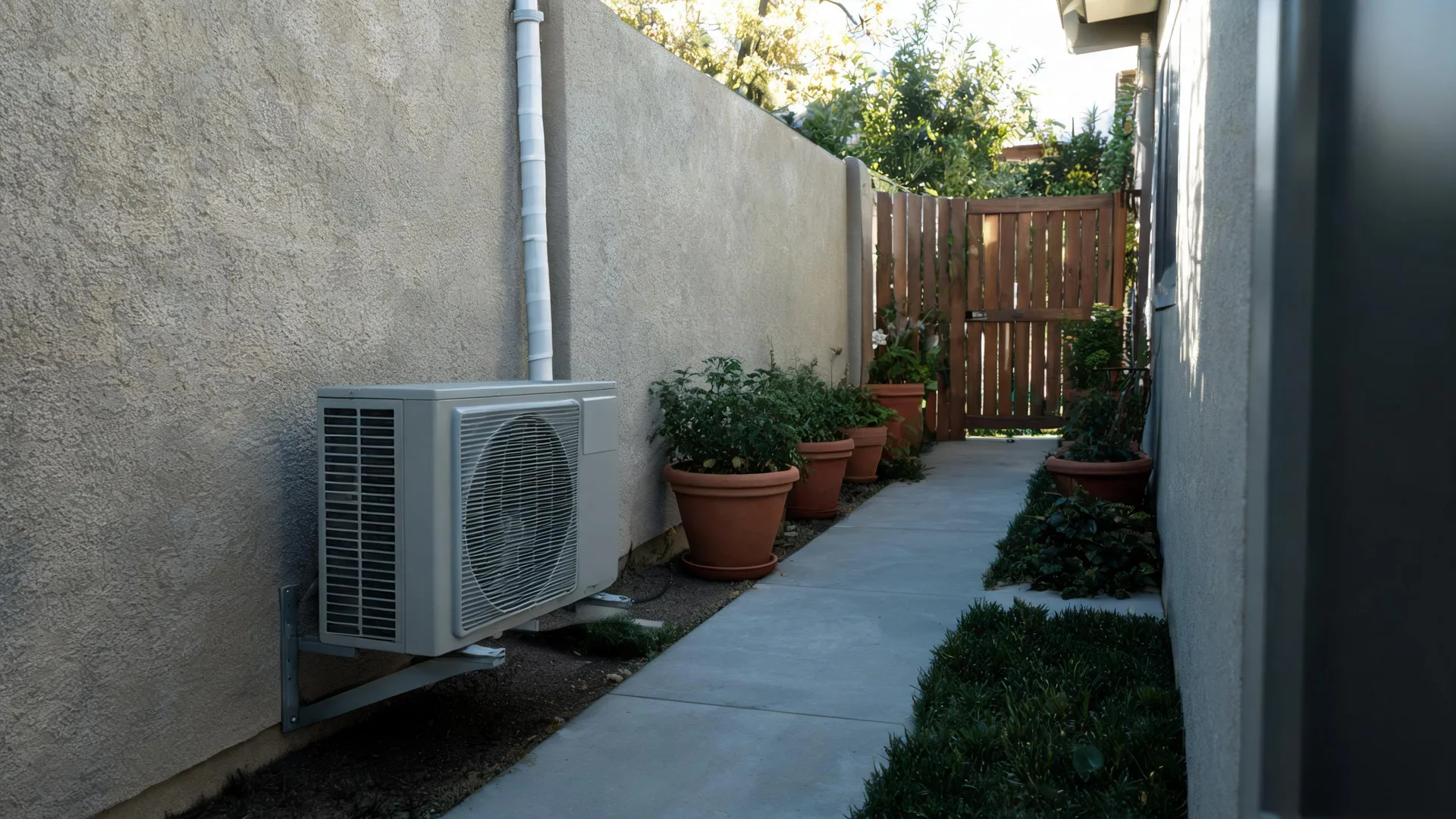
A beige split-system air conditioner outdoor condenser unit mounted on metal wall brackets atop a stucco wall.

Short summers mean the compressor coasts

Two months of real cooling load is not enough to wear equipment down. The rest of the year, a mini split here is either idle or running in heating mode, which is a different job entirely. Pick a unit built on fit and reliable parts, not the highest cooling efficiency number on the spec sheet. You're not paying it back on summer days that barely clear 80.

What comes out of the wall

Removing an old system usually means dealing with a line set and a wall sleeve, not a furnace sitting in a closet. If this is going in next to a system that already heats the house, there isn't an old mini split to pull. If it's replacing one, the indoor head, the outdoor unit, and the refrigerant in that line set all have to be handled by someone licensed to reclaim it. It can't just be cut loose.
The wall patch outlasts the install

Once the old unit and line set come out, there's a hole where the refrigerant lines passed through, and usually mounting marks from the old indoor head. Patching that wall and matching the old paint or siding often takes longer than pulling the equipment itself. Worth asking who handles that part before the old system comes down.

SEER2 and HSPF2 tell you how much heat a unit moves for the energy it uses, not how big a space it can handle. A higher number means lower operating cost for doing the same job, nothing more. That rating comes from a lab test run under set conditions, so a unit with a strong number still has to be sized right for the room to actually perform that way. Oversize it and it'll short cycle, switching on and off before it settles into steady operation, no matter what the label says. Installation and sizing affect what you pay to run it as much as the rating does. The label is one piece of the decision, not the whole of it.

Most of the work happens outside the walls. The crew mounts the indoor head on its bracket, drills a hole through to the outside, and runs the line set, a drain line, and electrical through that same opening. Outside, the compressor sits on a pad or wall bracket, close enough that the line set doesn't have to stretch further than it should. Once everything's connected, the line gets pulled down to a vacuum to clear out moisture and air, because either one left in the system will cause problems later. Only after it holds that vacuum does refrigerant get released into the lines. Then it's power on, a check of static pressure and temperature split at the head, and a look at how the unit cycles before anyone calls it done.