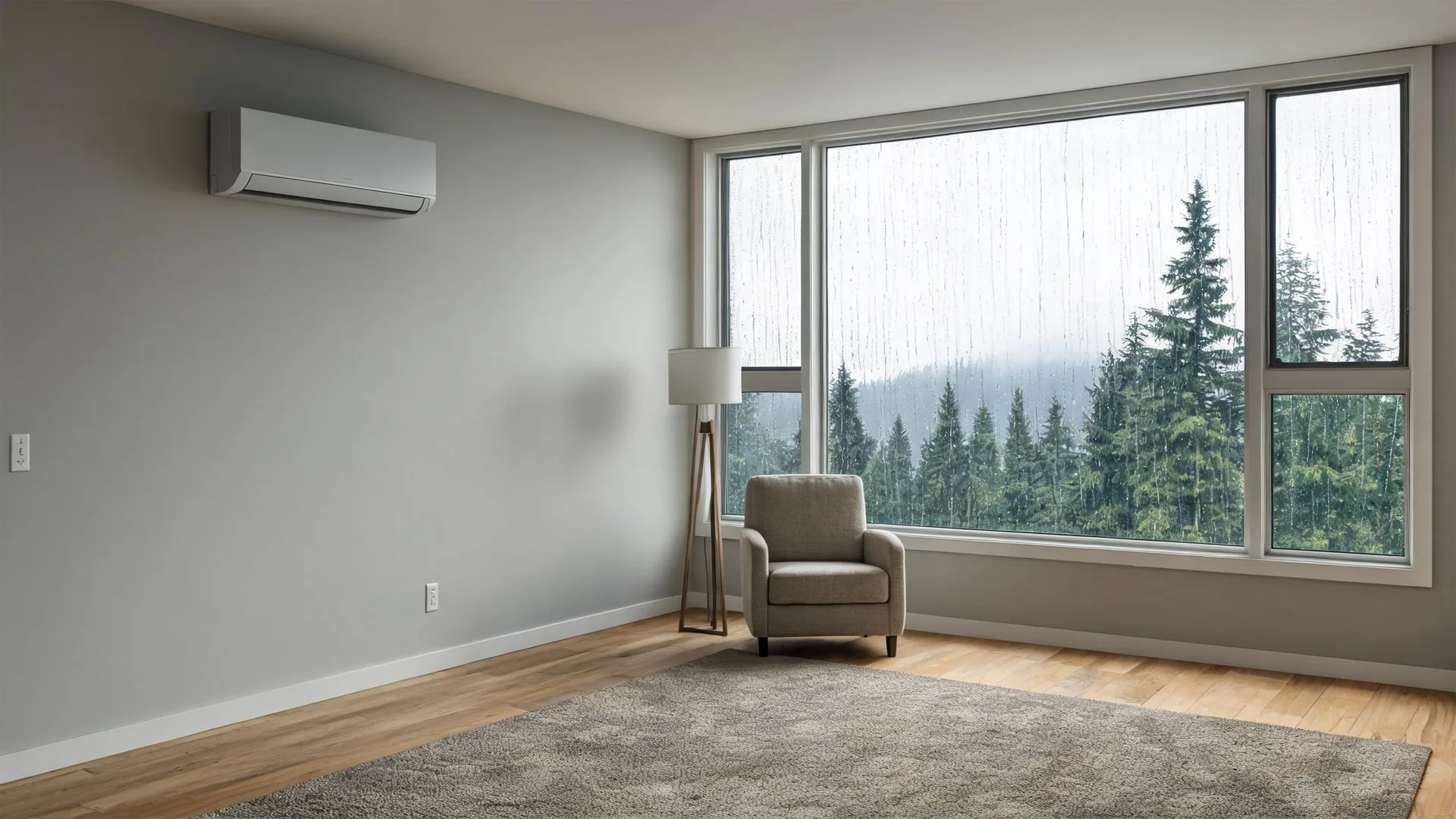
Most homes here run on LP gas
Bottled, tank or LP gas heats 62.6% of occupied homes in Oliver County. Electricity comes in second at 21.1%. A furnace or boiler fed by a tank is the normal setup here, not the exception.
Takes about a minute. No obligation.
Bottled, tank or LP gas heats 62.6% of occupied homes in Oliver County. Electricity comes in second at 21.1%. A furnace or boiler fed by a tank is the normal setup here, not the exception.
In a home built around LP gas heat, a mini split usually goes in for cooling, or to handle a room the main system struggles with. The gas furnace keeps doing the heavy heating through the cold months.
NOAA nClimDiv, 1991–2020 normals
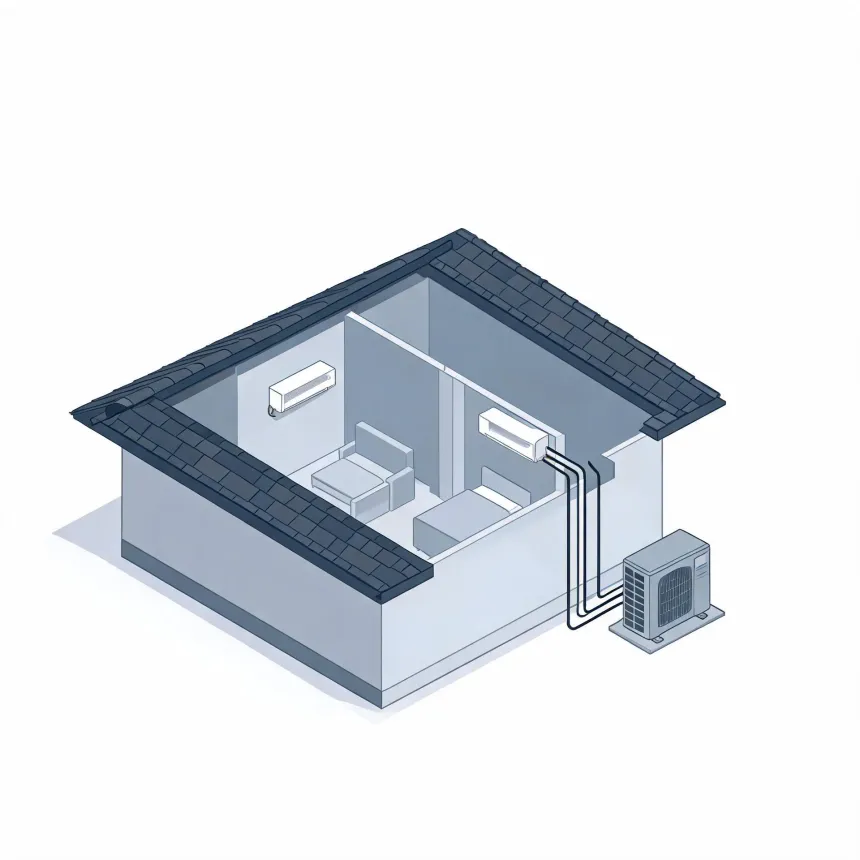
The price moves with how many rooms need their own head and how far the lines have to run to reach them.
A single zone in one room costs less to install than a multi-zone setup feeding several parts of the house.




Half the homes in Oliver County were built in 1976 or earlier, half in 1976 or later. That split doesn't call for anything special in a mini split. A standard single or multi-zone system sized to the room or rooms it's serving will do the job, whether the house is old or new. Mobile homes make up 13.5% of the housing here, and if your system came with the house, it's worth having the installer confirm the wall or unit can take the mounting and line set a mini split needs. Outside of that, there's no reason to size up or pay for a higher tier of equipment than the space calls for.
Zone 6A calls for a minimum of 14.3 SEER2 and 7.5 HSPF2 on any split-system heat pump, ductless units included. That floor narrows what can go in, but it also qualifies most of today's mini splits for the federal tax credit. Worth asking what each model offers before you settle on one.
Find a contractorTwo months of cooling a year is light duty for a compressor. It runs through July and August, then sits idle the rest of the year. A mini split built for that kind of schedule doesn't need to be the top tier of the lineup. A reliable mid-range unit will hold up fine, since the strain here comes from age or a bad install, not from the system working hard every summer.
SEER2 tells you how efficiently the system cools. HSPF2 tells you the same thing for heat. A head can be strong on one and average on the other, so check both numbers for the model you're actually buying, not just the lineup it comes from.
A mini split earns its rating under set test conditions. The number on the box assumes the equipment is sized right for the room and installed with a properly run, well-sealed line set. Skip either one and the system won't perform like its label says, no matter how high the rating is.
Comparing mini splits comes down to a handful of questions, not the brand on the unit. Ask what the SEER2 and HSPF2 numbers actually are for the specific model, not just the line it belongs to, since those ratings vary head by head. Ask how many heads the outdoor unit can run and whether it's being sized to add a few more later, because an outdoor unit maxed out now leaves no room to expand. Ask what the sound rating is for the indoor head, especially if it's going in a bedroom. And ask what the warranty covers on the compressor versus the parts, since those terms differ and the compressor is the expensive part to replace. A contractor who answers these without hesitating knows the equipment. One who just points at a price tag doesn't.
A mini split installation doesn't touch whatever is already heating the house. If there's a furnace or boiler running on LP gas, that system stays exactly where it is, doing exactly what it already does. The mini split is new equipment added alongside it, not a replacement for it. There's no old indoor unit or outdoor condenser coming out as part of this job, no refrigerant to recover from a prior system, none of the disposal questions that come with swapping out a furnace or a central air condenser. The work is mounting a new indoor head, setting a new outdoor unit, and running the line set and wiring between them. If a window unit or a space heater was doing the job before in that room, that's the only thing getting retired, and that's on the homeowner to deal with, not part of the installation itself.