




A minimalist bedroom with dark grey walls, a large bed with charcoal bedding, a sleeping cat, two warm-toned wall sconces, and a wall-mounted air conditioning unit.

Mini Split Installation in Cooperstown, ND

Tell us about the job

Takes about a minute. No obligation.

New system or replacementMini-splitGriggs County, ND
Step 1 of 2

What ZIP code is the job in?

Electricity heats 46.9% of homes in Griggs County, more than any other fuel, with bottled or tank gas second at 34.7%. A mini split runs on electricity, so it fits right into how most houses here are already set up. No propane tank to size, no fuel line to run. For a home that heats with electric baseboard now, a mini split handles the same job by moving heat instead of generating it directly. If your house falls into that 46.9%, swapping in a mini split means working with wiring that is likely already there, not adding a fuel source that was not.

9 months
September through May, your system heats
2 months
July through August, it cools
2°F
the average winter night it heats against
78°F
the average summer afternoon it cools against
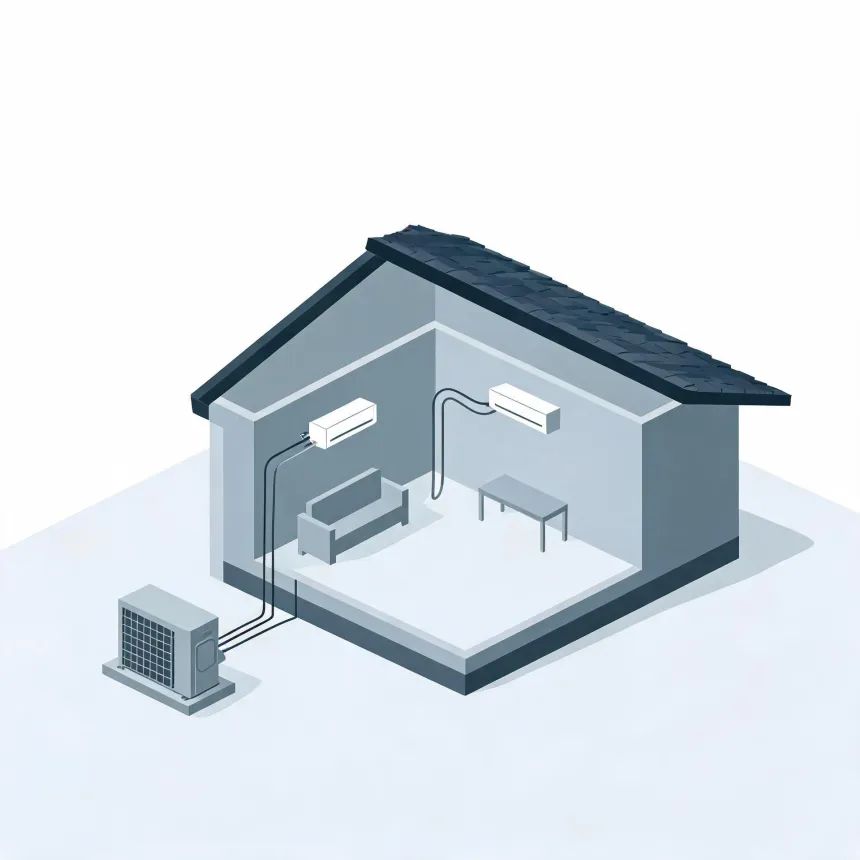
Isometric illustration of a cutaway house showing two wall-mounted indoor air conditioning units connected by line sets to an outdoor condenser unit, with a sofa and table inside the room.
Your system heats September through May and cools July through August.

NOAA nClimDiv, 1991–2020 normals

Cooling in Griggs County runs about two months, July and August, with afternoon highs averaging 78°F.

A mini split here isn't working against much heat, so a mid-range model handles Cooperstown summers fine.

Cooling starts in July, so June is when to get a mini split in place

Cooling runs July through August
Summer afternoons average 78°F
49 damaging wind events from 2015 to 2024
An older house needs a mini split sized for itHalf the homes in Griggs County were built in 1958 or earlier.

North Dakota homes paid 11.51 cents per kilowatt-hour for electricity in 2024, cheap compared to most of the country. That changes how to weigh a mini split here. The highest-efficiency model on the lot costs more up front, and with power already this cheap, it takes longer to earn that difference back. So the better question isn't which unit sips the least electricity. It's which one holds up through a Cooperstown winter and keeps the house comfortable without a service call every other year. Put the money into the right size and an install done correctly, not the efficiency rating.

Zone 6A sets the minimum efficiency a mini split here has to meet, and a federal credit helps cover one that does

Griggs County sits in climate zone 6A, so any mini split installed here has to clear 14.3 SEER2 for cooling and 7.5 HSPF2 for heating, the same floor the federal standard sets for every split-system heat pump built from 2023 on. That rules out units made for milder climates and keeps the lot narrowed to ones built to handle a Cooperstown winter. A federal tax credit is available toward a qualifying system, which helps offset one built to meet it.

Find a contractor
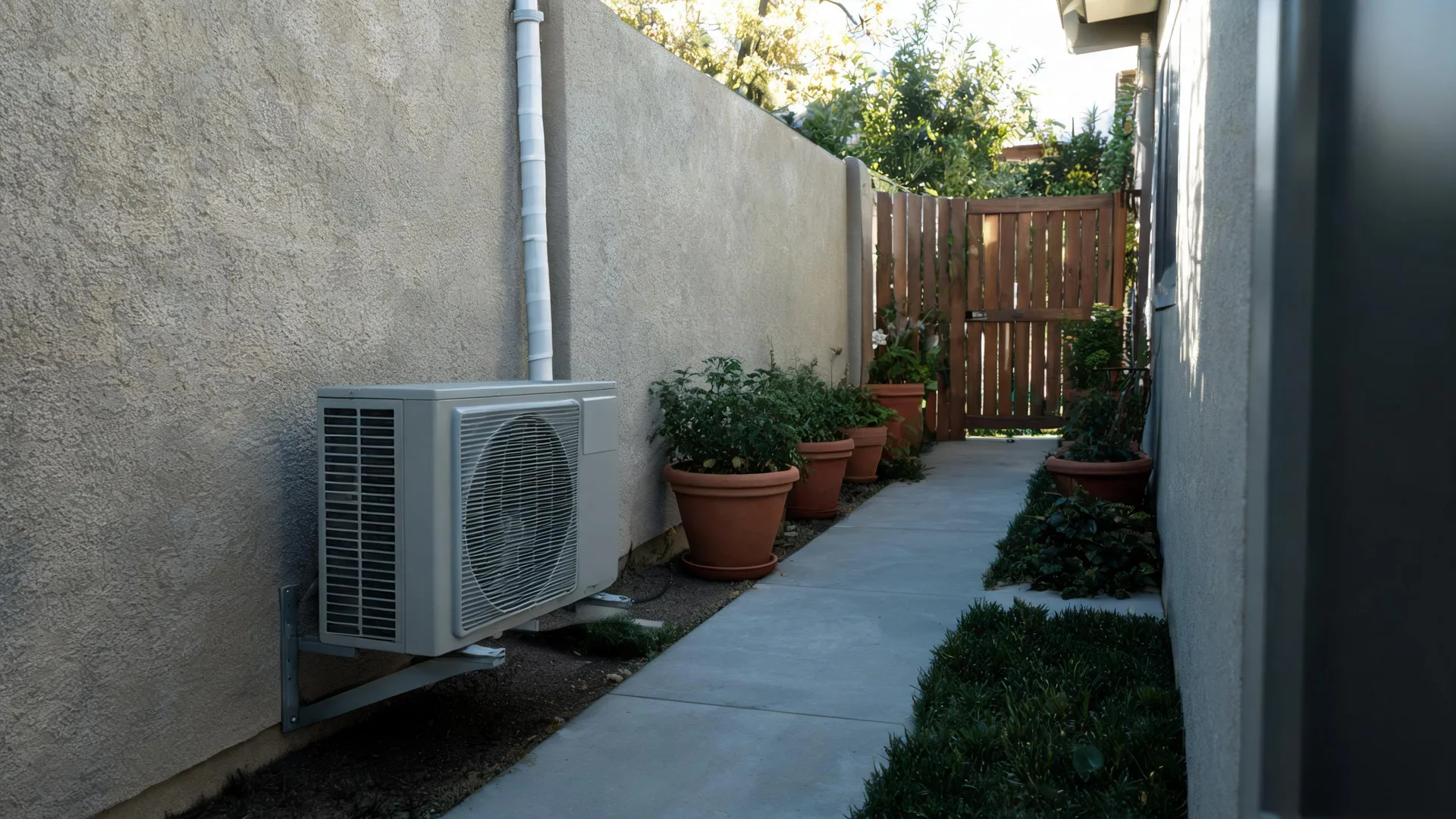
A beige split-system air conditioner outdoor condenser unit mounted on metal wall brackets atop a stucco wall.

Size it to the house, not the year it was built

A contractor doing the load calculation on a house built in 1958 or earlier should be measuring that house, not assuming it matches one built last year. Wall construction, window count and how much of the place has been updated all change how much heat it loses on a cold night. That number drives what size unit goes in. Go too big and the mini split short cycles instead of running steady. Go too small and it can't keep up when it's coldest out. Ask whoever quotes the job to walk through and size it to what's actually there.

Ask about the low-temperature rating, not just the SEER2 number

A mini split keeps a published heating capacity at low outdoor temperatures, and that output drops off as it gets colder. Units with the same efficiency rating can perform very differently on the coldest night. Ask what the unit still puts out when it is cold outside, not just what it does on a mild day.
Ask what happens to one zone if a line set or head ever fails

A multi-zone system runs several indoor heads off one outdoor unit, so a problem with one line set can affect more than just the room it serves. A single-zone setup tied to its own outdoor unit keeps a failure contained to that one room. Worth asking how the zones are wired together before deciding how many heads to install and where.

Installation cost mostly comes down to what it takes to get refrigerant line and electrical from the outdoor unit to each indoor head. A straight shot through one exterior wall costs less to run than a line hidden through finished ceilings or routed up multiple floors. Each indoor head needs its own line set, its own condensate drain, and its own wiring back to the outdoor unit, so a multi-zone system costs more to install than the equipment price alone suggests. Where the outdoor unit can sit matters too. If it needs a mounting pad built or has to go somewhere hard to reach, that adds labor the quote has to cover. A straightforward single-zone job with a short line run is a different project than a multi-zone system snaking through a finished house, even when the units themselves are priced close together.

A mini split install starts with the outdoor unit and where it bolts on, then the crew runs line set and wiring to each indoor head from there. A hole gets drilled through the wall for the refrigerant lines, the condensate drain and the electrical, usually no bigger around than a soda can. The indoor head mounts on a bracket, the outdoor unit gets set on its pad or bracket, and then the lines get connected on both ends. After that, the system gets evacuated to pull moisture and air out of the line set before refrigerant goes in. That step matters more than it sounds like it should. Any air or moisture left in the lines causes problems down the road, so a contractor doing it right spends real time on the vacuum before charging the system and testing it under load.