




A snow-covered suburban street at dusk with lit houses and bare trees under a twilight sky.

Mini Split Installation in Crosby, ND

Tell us about the job

Takes about a minute. No obligation.

New system or replacementMini-splitDivide County, ND
Step 1 of 2

What ZIP code is the job in?

Half the homes in Divide County were built in 1963 or earlier. A mini split going into a house that age has to work with whatever heating setup is already there, whether that's a furnace, baseboard units, or something else someone added over the years. Old wiring and old wall construction change where a line set can run and where the outdoor unit can sit. None of that rules out a mini split. It just means the install has to be sized and placed for the house you actually have, not a generic one.

10 months
September through June, your system heats
2 months
July through August, it cools
3°F
the average winter night it heats against
78°F
the average summer afternoon it cools against
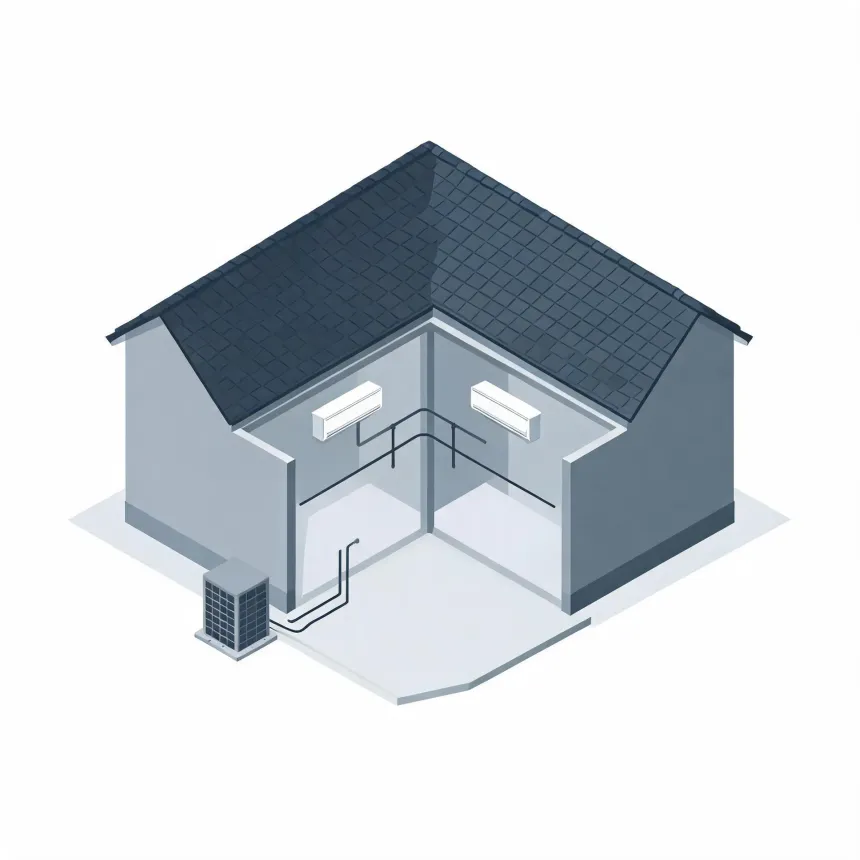
Isometric illustration of a cutaway gray house with a dark shingled roof, showing two wall-mounted indoor air conditioning units connected by piping to an outdoor condenser unit on the ground outside.
Your system heats September through June and cools July through August.

NOAA nClimDiv, 1991–2020 normals

Cooling in Divide County only runs two months, July through August.

June is the time to get a mini split installed, before the first hot week puts it to work.

Two months of real cooling load means the unit doesn't have to be oversized to earn its keep

Cooling runs July through August
Summer afternoons average 78°F
36 damaging wind events from 2015 to 2024

Electricity in North Dakota ran 11.51 cents per kilowatthour in 2024, cheaper than most of the country. That changes the math on which mini split to buy. A high-efficiency model costs more up front, and here it takes longer to earn that back in lower bills. Paying extra for the top efficiency tier isn't where the value is. What matters more is whether the unit is sized right for the room and installed well, since that affects comfort and how long it lasts more than a few points of efficiency rating ever will.

Any system going in here has to meet zone 7 minimums

Divide County is zone 7, the coldest tier in the energy code, where heating carries most of the year's load. A mini split installed here has to clear 14.3 SEER2 for cooling and 7.5 HSPF2 for heating, the same floor set for any split-system heat pump. That standard narrows the field before you start comparing units. A federal tax credit is available on top of that for systems that qualify, worth factoring in while you weigh models.

Find a contractor
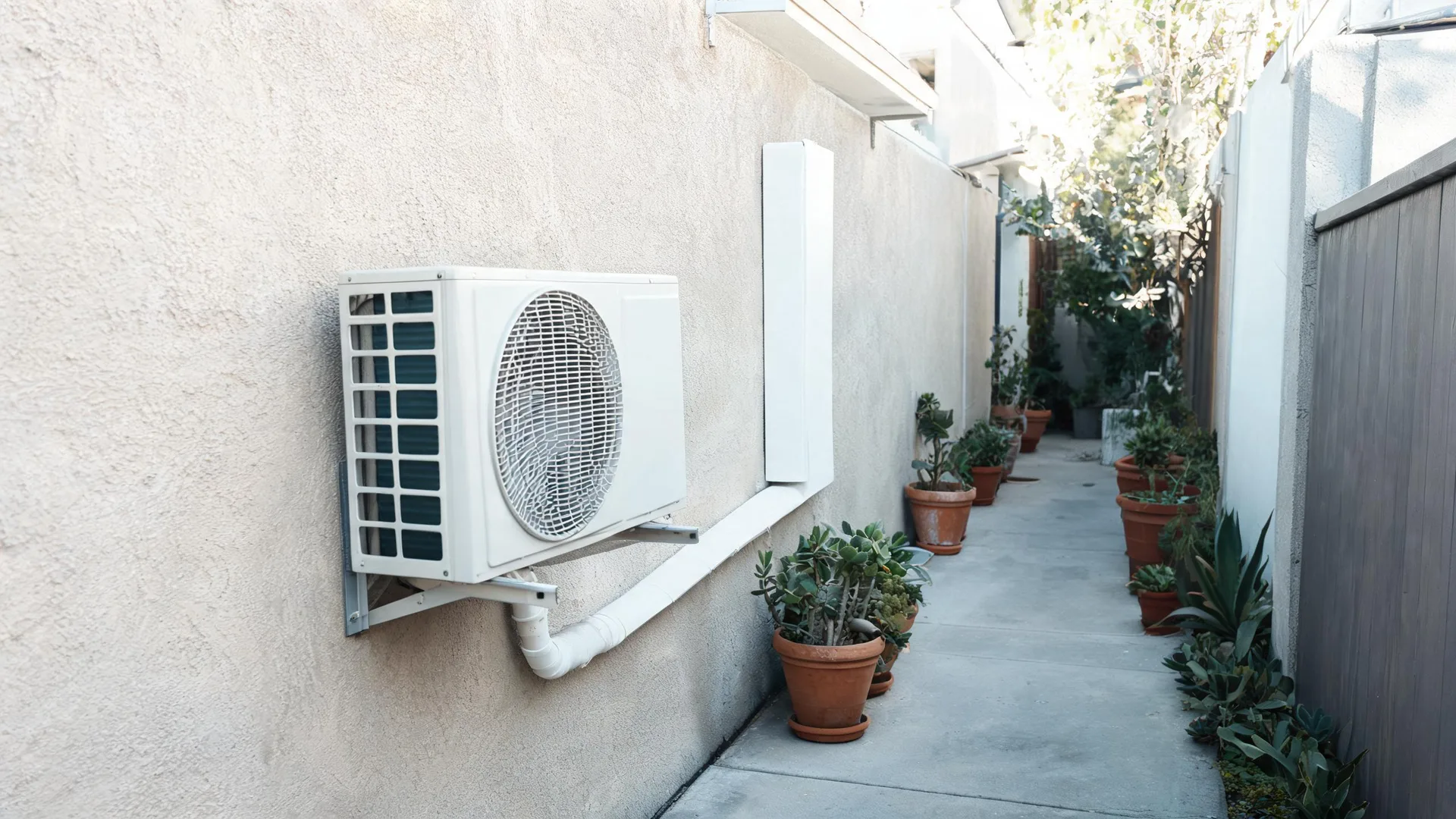
A beige split-system air conditioner outdoor condenser unit mounted on metal wall brackets atop a stucco wall.

The install starts with a look at what's already there

A walkthrough happens before the install gets scheduled, and in a house built in 1963 or earlier that takes longer than in a newer one. Someone has to find a wall that can carry the indoor head and a clear path for the line set, and that path isn't always a straight shot. The outdoor unit needs a spot with good clearance and drainage, which isn't always where it would go in a newer build. None of this changes what the mini split can do once it's in. It changes how long the walkthrough takes before anyone touches a wall.

The old system usually stays put

If the house has a furnace or baseboard heat already, a mini split goes in alongside it rather than replacing it outright. The furnace can stay as backup for the coldest stretches, or keep handling rooms the mini split doesn't reach. Nobody has to rip out ductwork or baseboard units just because a mini split is going in.
Removal only comes up with window units or old ductless heads

If what's being replaced is a window air conditioner or an older ductless system, that equipment comes out as part of the job. A window unit gets pulled and the opening gets sealed back up. An old outdoor condenser gets disconnected and hauled off, and the line set gets checked rather than reused, since old refrigerant lines don't always hold up to a new system.

Sizing a mini split comes down to matching the unit's output to the heat loss and heat gain of the room it's serving, not the square footage alone. A contractor works through the walls, the windows, the ceiling height, and how the room is used before landing on a number. Too big and the unit short cycles, reaching the set temperature fast, shutting off, then starting again before it's pulled the moisture out of the air. That leaves rooms feeling clammy even when the thermostat reads right. Too small and it runs flat out during the hottest and coldest stretches, never quite catching up, which wears on the compressor over time. The right size is the one that runs long steady cycles most of the time, which is also what keeps it quiet and keeps the indoor head from blowing cold air right at anyone sitting nearby.

Install day itself is mostly mounting and running line, not troubleshooting. The indoor head goes up on a bracket, level and away from direct sunlight or a doorway draft, since either one throws off the thermostat reading. A hole gets drilled through the wall for the line set, the refrigerant lines, power wire, and condensate drain bundled together and run out to the outdoor unit. Once the outdoor unit is set on its pad and leveled, the lines get connected and the whole system is pressure tested before any refrigerant moves, since a joint that leaks slowly is worse than one that fails right away. Then the system gets vacuumed down to pull out moisture and air, because either one left in the lines will show up later as poor cooling or a frozen coil. Only after that does the refrigerant get released and the unit get run through its paces, checking the temperature split at the head and making sure the condensate actually drains instead of backing up behind the wall.