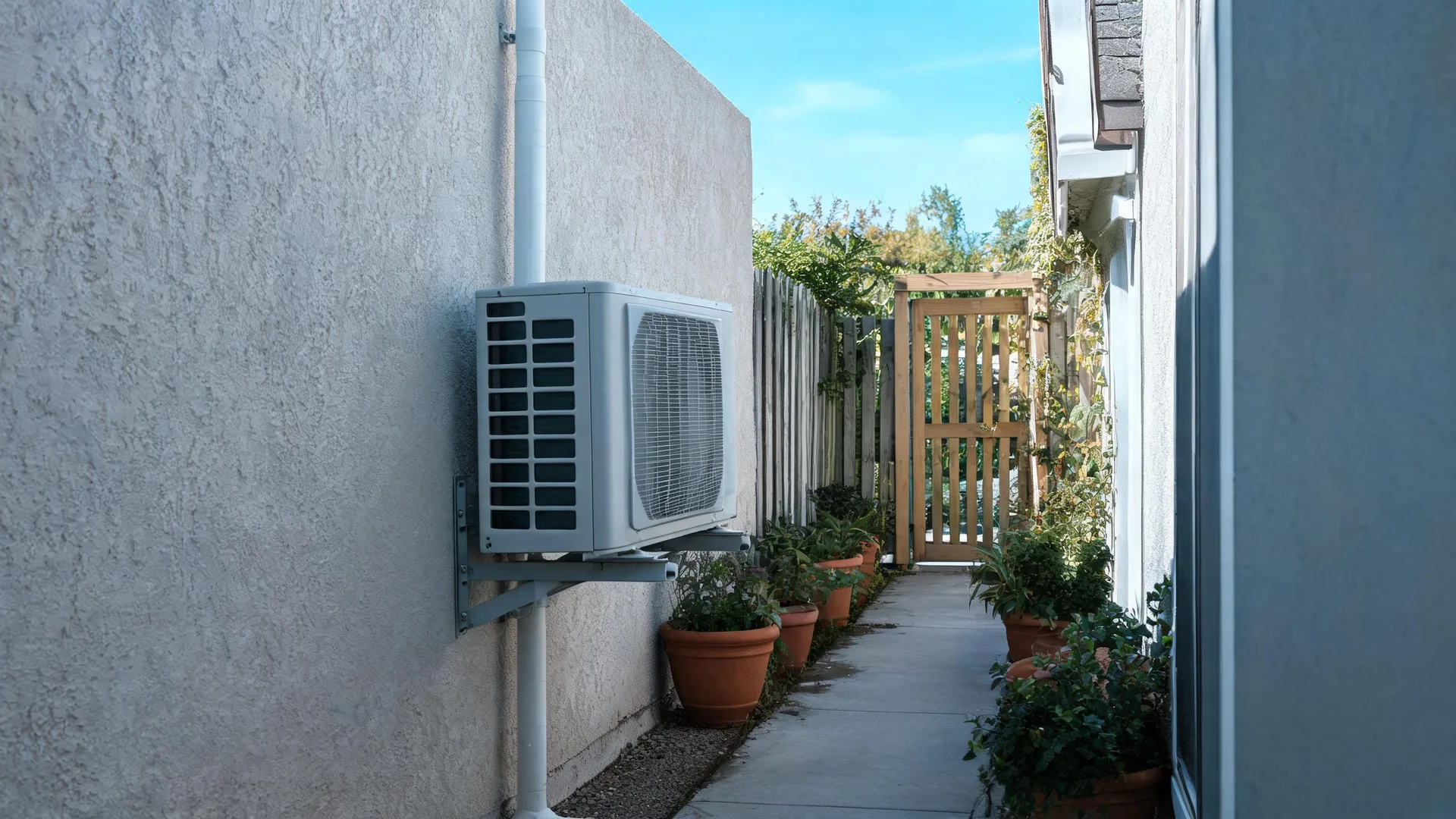
Gas heats most homes here
Utility gas heats 51.4% of homes in Stark County, with electricity at 37.9% and LP gas at 5.2%. A furnace or boiler is already doing the heavy lifting in most houses here.

Takes about a minute. No obligation.
Utility gas heats 51.4% of homes in Stark County, with electricity at 37.9% and LP gas at 5.2%. A furnace or boiler is already doing the heavy lifting in most houses here.
Where gas heat is already in place, a mini split usually goes in for a room or addition the furnace doesn't reach well, or to add cooling and shoulder season heat without touching the gas system.
NOAA nClimDiv, 1991–2020 normals
Cooling runs about two months a year here, July and August, with afternoon highs averaging 81°F.
A mini split in Dickinson spends most of its life idle, so a dependable mid-range unit does the job a high-end one would.



Cooling here runs July and August, so June is the month to get a mini split installed. Book it before the heat shows up and the crew has room to work on a normal schedule, not a backlog of same-week calls. Wait for a hot stretch in July and you're waiting in line behind everyone else who put it off too. Getting it done in June also means it's tested and running before you actually need it, so any adjustment gets made ahead of the first real hot afternoon, not during one.
Stark County falls in climate zone 6A, with winters long enough that the federal minimum for a new split-system heat pump is 14.3 SEER2 for cooling and 7.5 HSPF2 for heating. That rule applies to ductless units the same as any other split system. A federal tax credit is available for qualifying equipment, worth asking about when you compare units.
Find a contractorPick a unit on duty cycle, not the spec sheet. Two months of real cooling a year is not much wear on a compressor. Put the money toward the install done right instead, a correct charge, a good line set, the indoor head placed where it actually covers the room, rather than the top tier of the lineup. A mid-range unit installed well will outlast a high-end one installed in a hurry.
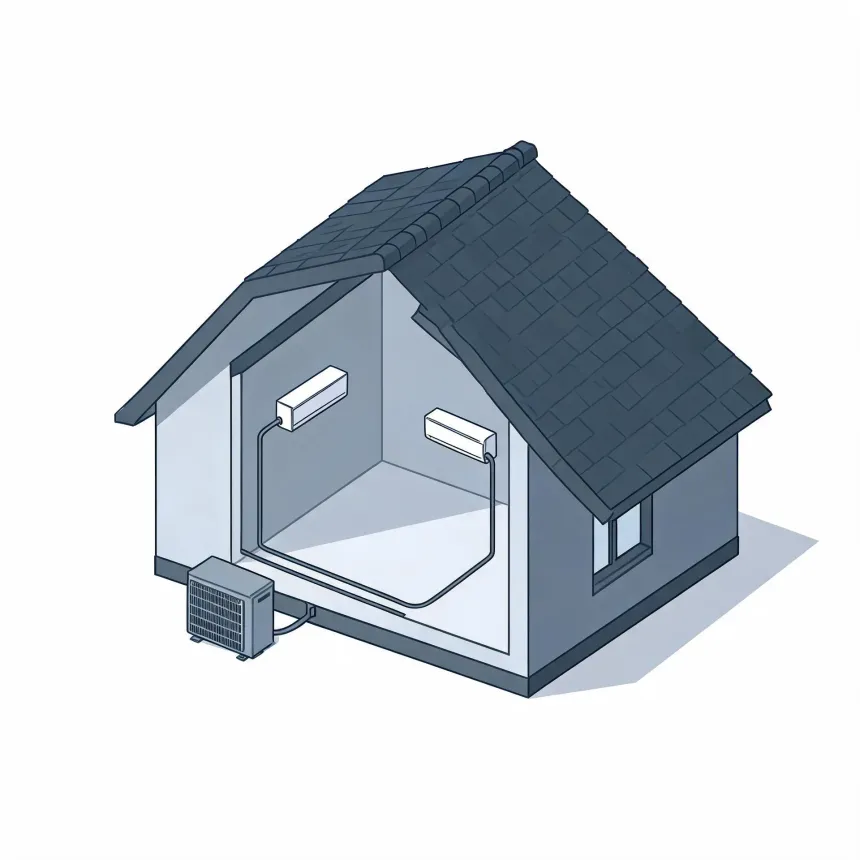
A mini split doesn't ask the existing furnace or boiler to leave. The indoor head and outdoor condenser go in alongside what's already heating the house, on their own line set and their own circuit. Nothing about the install requires touching the gas line or the ductwork that's already there.
Since the mini split is added equipment, not a swap, there's no old unit to disconnect, drain or haul out. The job is running a line set through the wall, mounting the indoor head, setting the outdoor unit on a pad or bracket, and wiring it in. That's a shorter job than any install that starts with ripping something out.
What a mini split costs to install comes down to how far the indoor head sits from the outdoor condenser and how hard that path is to run. A short, straight line set through an exterior wall is the easy case. Add distance, a run up through an attic, or a trip around framing, and the labor goes up along with the material. The size of the unit matters too, a bigger room or an open layout needs more capacity, and capacity is priced in steps, not a straight line. Electrical matters as much as the line set. If the panel has room for another circuit, that's a simple add. If it doesn't, the job now includes upgrading the panel before the mini split can even go in. Where the outdoor unit lands plays a part as well, a pad on the ground is a quick setup, a bracket mounted high on a wall takes more time and more hardware.
Install day starts with the line set, not the equipment. The crew runs refrigerant lines and wiring from where the indoor head hangs to where the outdoor unit will sit, through a small hole drilled in the wall. That hole gets sealed around the lines before anything else happens, since it's the one new penetration in the house. The indoor head mounts to a bracket on the wall, level and clear of anything that would block airflow across the room. Outside, the condenser gets set on its pad or bracket and connected to the line set, then the whole system gets evacuated to pull out air and moisture before refrigerant ever goes in. Once it's charged, the tech runs it in both heating and cooling, checks the temperature split at the head, and confirms the line set connections hold pressure. None of that work touches the furnace or the ductwork already in the house.