Gas is the main fuel here
Utility gas heats 42.5% of homes in McLean County, more than any other fuel. Electricity and propane split most of the rest, each around 27%.
Takes about a minute. No obligation.
Utility gas heats 42.5% of homes in McLean County, more than any other fuel. Electricity and propane split most of the rest, each around 27%.
Most homes here keep their furnace for the coldest months and use a mini split for cooling and shoulder-season heat. It works alongside a gas or propane furnace instead of replacing it.
NOAA nClimDiv, 1991–2020 normals
Cooling in McLean County starts in July.
A mini split put in before June gives the install time to settle before it has to work.



Electricity in North Dakota runs 11.51 cents per kilowatthour, well below what most of the country pays. A high-efficiency mini split will still cost less to run than one with a lower rating, but the gap in your bill will take longer to add up. Pick the system that fits your space and holds up through a Garrison winter and summer. That matters more here than squeezing out another point of efficiency.
Find a contractor
Two months of cooling, July and August, with afternoon highs averaging 79. That is a light summer for a mini split to work through. Most of its year here goes to the shoulder months, helping out before the furnace takes over in the cold. A unit that isn't pushed hard all season has less reason to break down early. Put the money into a system that holds up to a North Dakota winter, not the one with the highest efficiency number.
A mini split is sized by working out how much heat a space gains in summer and loses in winter, counting windows, wall area, insulation and ceiling height. Square footage alone does not answer it. A contractor measures the rooms a head will serve and sizes that head to match, not the house as a whole.
A mini split that is too big cools the air fast and shuts off, so it never runs long enough to pull moisture out of the room. That leaves the space feeling cool but damp. One sized correctly runs longer at a lower output and holds the room steadier than a bigger unit cycling on and off.
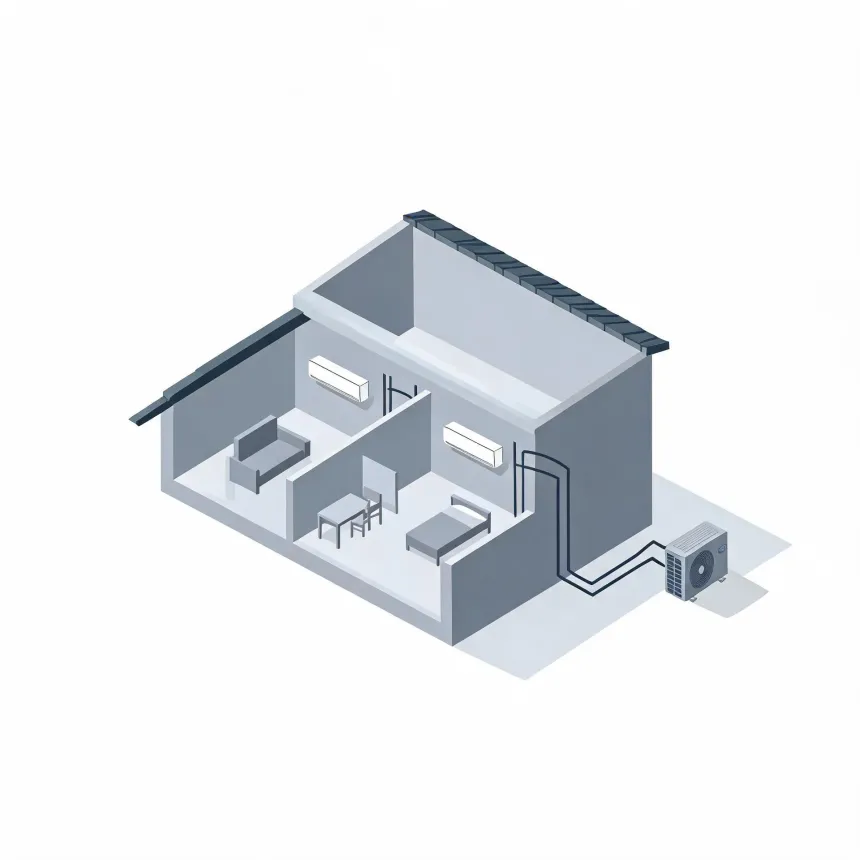
Ask how many zones the system is rated for and whether that matches how many heads you want running at once. Every indoor head ties back to one outdoor condenser, and that condenser has a fixed capacity to split among them. Ask what happens if you add a head later, since some condensers have a spare port and some don't. Ask about the line set length too. Refrigerant lines have a maximum run, and a longer distance between the outdoor unit and an indoor head can call for a bigger condenser than the room itself would need. Ask what the warranty covers if the installer didn't do the vacuum test on the line set, since a poor vacuum is one of the more common reasons a system loses charge within the first year.
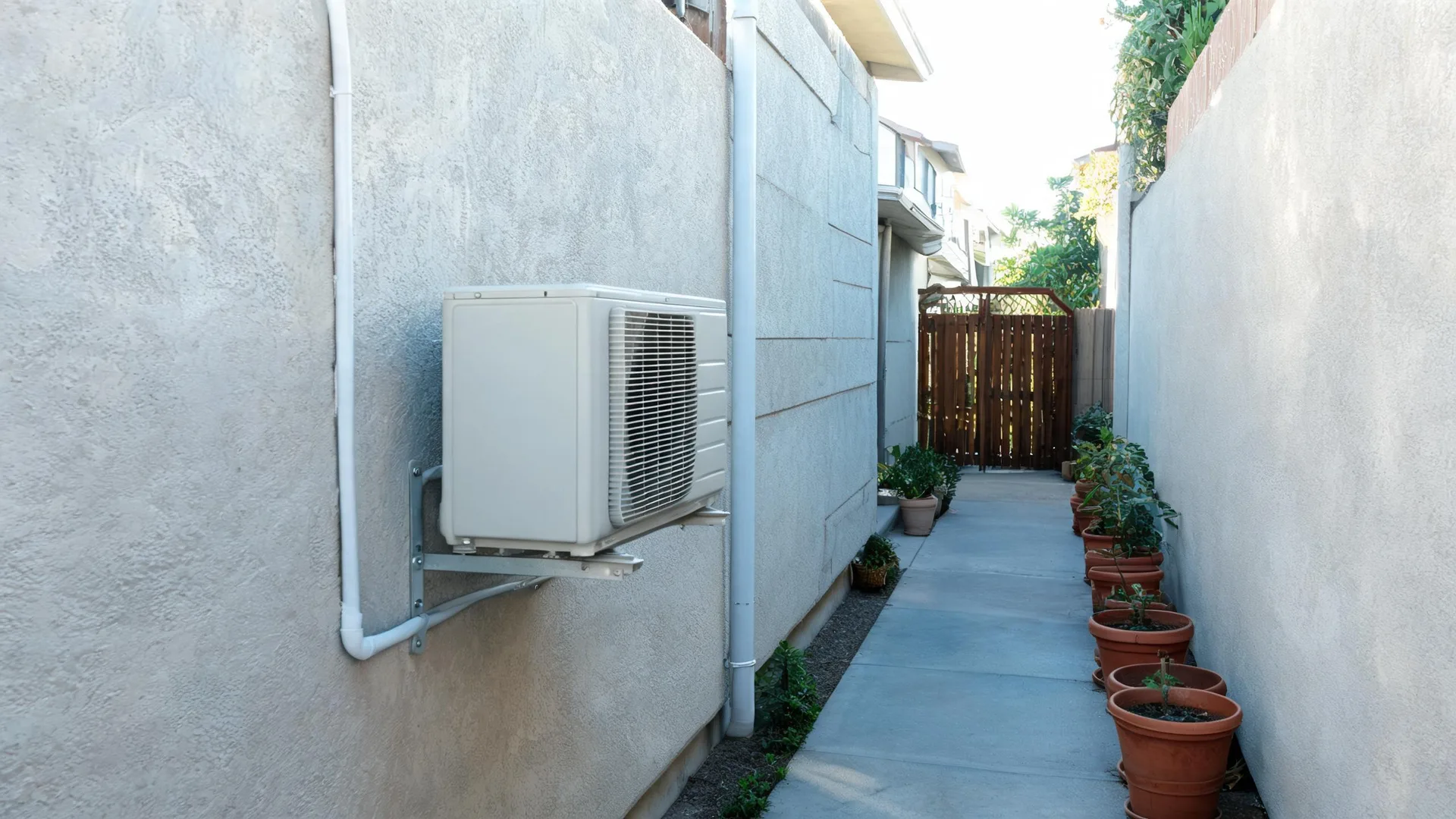
The price of a mini split install comes down to how much copper and labor the job takes, not just the equipment sitting in the box. A single zone with a short line set run through one exterior wall is a straightforward day's work. Add zones and the cost climbs with each one, since every indoor head needs its own line set, its own condensate drain, and its own spot on the condenser. Where the outdoor unit sits matters too. A long or awkward run between it and the indoor heads means more refrigerant line, more mounting, and more time on the ladder. The condenser's capacity plays into it as well, since a larger one built to serve several rooms costs more than one sized for a single space. None of this shows up until a contractor has actually walked the rooms and worked out what each head needs to do.