Gas heats most homes here
Utility gas heats 40.4% of occupied homes in Walsh County, more than any other fuel. Electricity comes next at 31.3%, with propane and fuel oil making up the rest.
Takes about a minute. No obligation.
Utility gas heats 40.4% of occupied homes in Walsh County, more than any other fuel. Electricity comes next at 31.3%, with propane and fuel oil making up the rest.
If your home heats with gas, a mini split usually goes in as added cooling or as heat for a room the furnace and ducts don't reach well. It doesn't have to replace the gas furnace to do its job.
NOAA nClimDiv, 1991–2020 normals
Walsh County sees its share of hail, wind and winter storms, but none of that changes what a mini split needs to be.
A standard size and efficiency rating handles Grafton homes fine, with no local reason to size up or spend more.




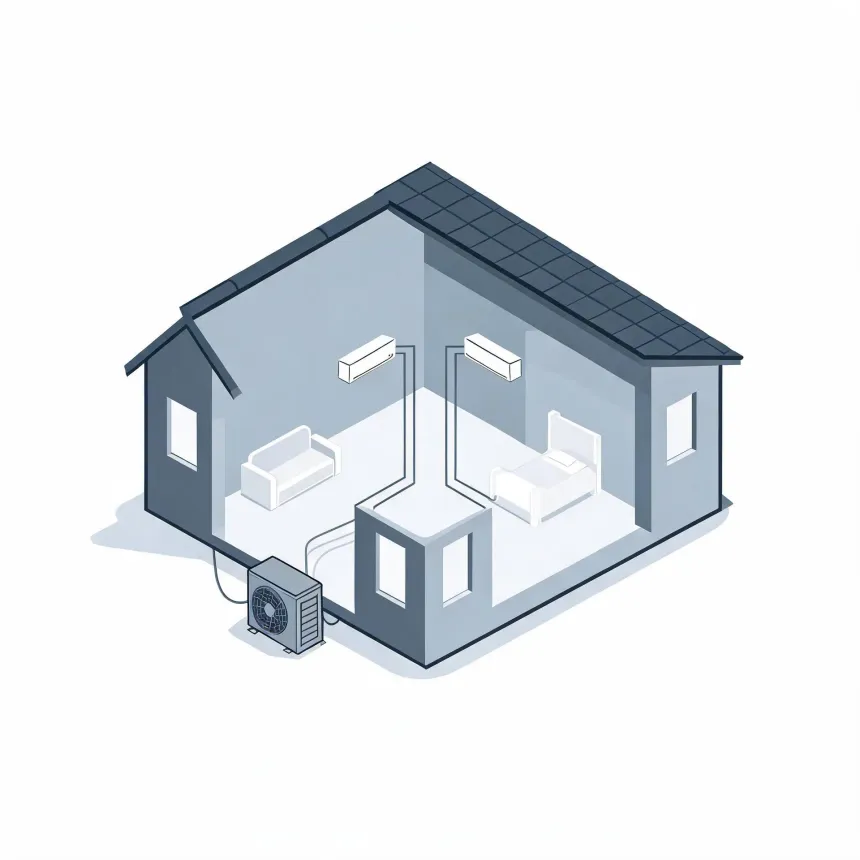
Half the homes in Walsh County were built in 1971 or earlier. That matters less for the unit itself than for the path between its two halves. Sizing the indoor and outdoor units still comes down to the room and the load, same as in a newer house. What changes is how the contractor gets the line set and wiring from one to the other, since an older wall or window setup isn't something to guess at from the outside. Ask how that routing will work before the job starts, so you know where it runs and what it takes to hide it.
Cooling in Walsh County runs July through August. June is the month to get a mini split installed, so the unit is in place and tested before the first hot week instead of mid-repair during it.
Find a contractor
Cooling runs about two months here, July and August, with afternoon highs averaging 78°F across the summer. That's a short season for a mini split to earn its keep, and it won't run under the kind of strain it would in a place with a longer or hotter summer. A standard unit, sized right for the room, holds up fine under that load. Wind and hail show up in the county's weather history, but that's a concern for the outdoor unit's placement and mounting, not for which model to buy.
A mini split with one indoor head costs less than one built to cover several rooms off a single outdoor unit. Each extra zone means another indoor head, another line set run, and another spot for the contractor to mount and wire. Pricing follows the number of rooms you want covered, not just the size of the home.
The outdoor and indoor units are a known cost. What varies is the path between them. Running the line set through a wall takes less time than routing it through framing, around obstacles, or up to a higher floor. That labor comes from the layout of the house, not from anything the system has to stand up to once it's running.
Sizing a mini split starts with the room, not the brand. A contractor works out the heat gain for that specific space. How big it is, how many windows face the sun, how well it holds heat, what else in there gives off warmth. That gets weighed against the unit's output rating to find a match. Go too small and the unit runs flat out all the time and still can't keep up on the hottest afternoons. Go too big and it cools the room fast, shuts off, then starts again a few minutes later, never running long enough to pull the humidity out of the air. A room that feels cold and clammy usually means the unit is oversized, not broken. The right size is the one that runs long steady stretches, not the one with the biggest number on the box.
Installation day starts with the indoor and outdoor units already sized and the line set path already decided, so the work itself moves fast. The contractor mounts the indoor head on the wall bracket first, then drills through to the outside for the line set, the wiring and the drain line. Outside, the condenser goes on a pad or wall bracket, leveled so the compressor inside it wears evenly. Once both halves are connected, the lines get pressure tested, then pulled down to a vacuum to clear out air and moisture before the refrigerant is released into the system. Skipping that vacuum step is one of the most common reasons a new system runs poorly from the start. The last part is running it through both modes and checking that the indoor head reads temperature correctly and responds to the thermostat or remote.