A snow-covered small-town street at dusk, lined with illuminated two-story houses and a grain elevator on the horizon.

Mini Split Installation in LaMoure, ND

Tell us about the job

Takes about a minute. No obligation.

New system or replacementMini-splitLaMoure County, ND
Step 1 of 2

What ZIP code is the job in?

Electricity already runs half the homes here

Electricity heats 50.9% of occupied homes in LaMoure County, more than any other fuel. A mini split runs on electricity too, so it fits into a home already wired for electric heat without adding a second fuel to the house.

LP gas and fuel oil are still common

Bottled, tank or LP gas heats 33.2% of homes here, and fuel oil or kerosene heats another 13.6%. In those homes a mini split works as a second system, handling the mild months or specific rooms while the existing furnace covers the coldest stretch.

9 months
September through May, your system heats
2 months
July through August, it cools
5°F
the average winter night it heats against
79°F
the average summer afternoon it cools against
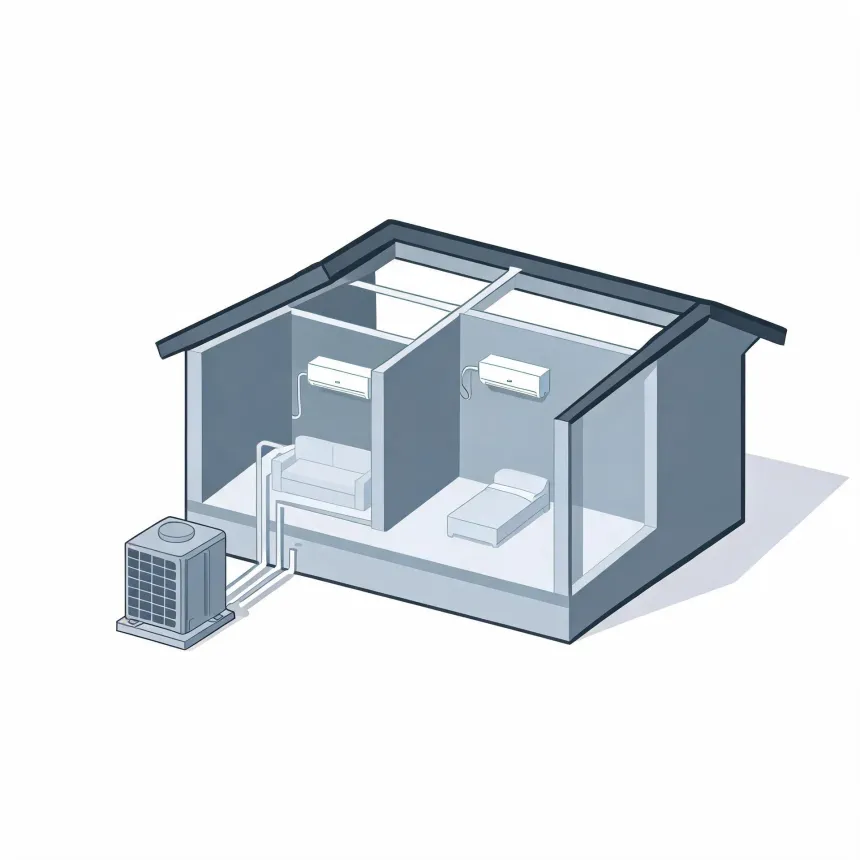
Illustrated cutaway of a two-room house showing two wall-mounted indoor air conditioning units connected by pipes to an outdoor condenser unit on the ground outside.
Your system heats September through May and cools July through August.

NOAA nClimDiv, 1991–2020 normals

Cooling runs about two months here, July and August, with afternoon highs around 79°F.

A mini split sized for that short, mild stretch will handle it without needing the top efficiency tier.

At 11.51 cents a kilowatt-hour, the top efficiency tier isn't what pays for itself here

Power costs 11.51 cents a kWh statewide
Cooling runs July through August
Summer afternoons average 79°F

Half the homes in LaMoure County were built in 1965 or earlier. A house that age usually wasn't set up for a mini split, and a contractor sizing one has to work with what's actually there rather than what a newer build would offer. Wall construction affects where the line set can run and where the indoor unit can be mounted. None of that rules out a mini split. It just means the install has to be planned around the house instead of dropped into it.

Any system installed here has to meet zone 6A minimums

LaMoure County falls under zone 6A, and a ductless mini-split counts as a split-system heat pump under the federal standard. New units have to meet 14.3 SEER2 for cooling and 7.5 HSPF2 for heating. A federal tax credit is available toward the cost of a qualifying system. Meeting these specifics while planning around the house is work for a licensed contractor.

Find a contractor
A man in a brown jacket, cap, dark pants and work boots walks up concrete steps toward a red front door, carrying a waxed canvas tool tote with a hammer inside.
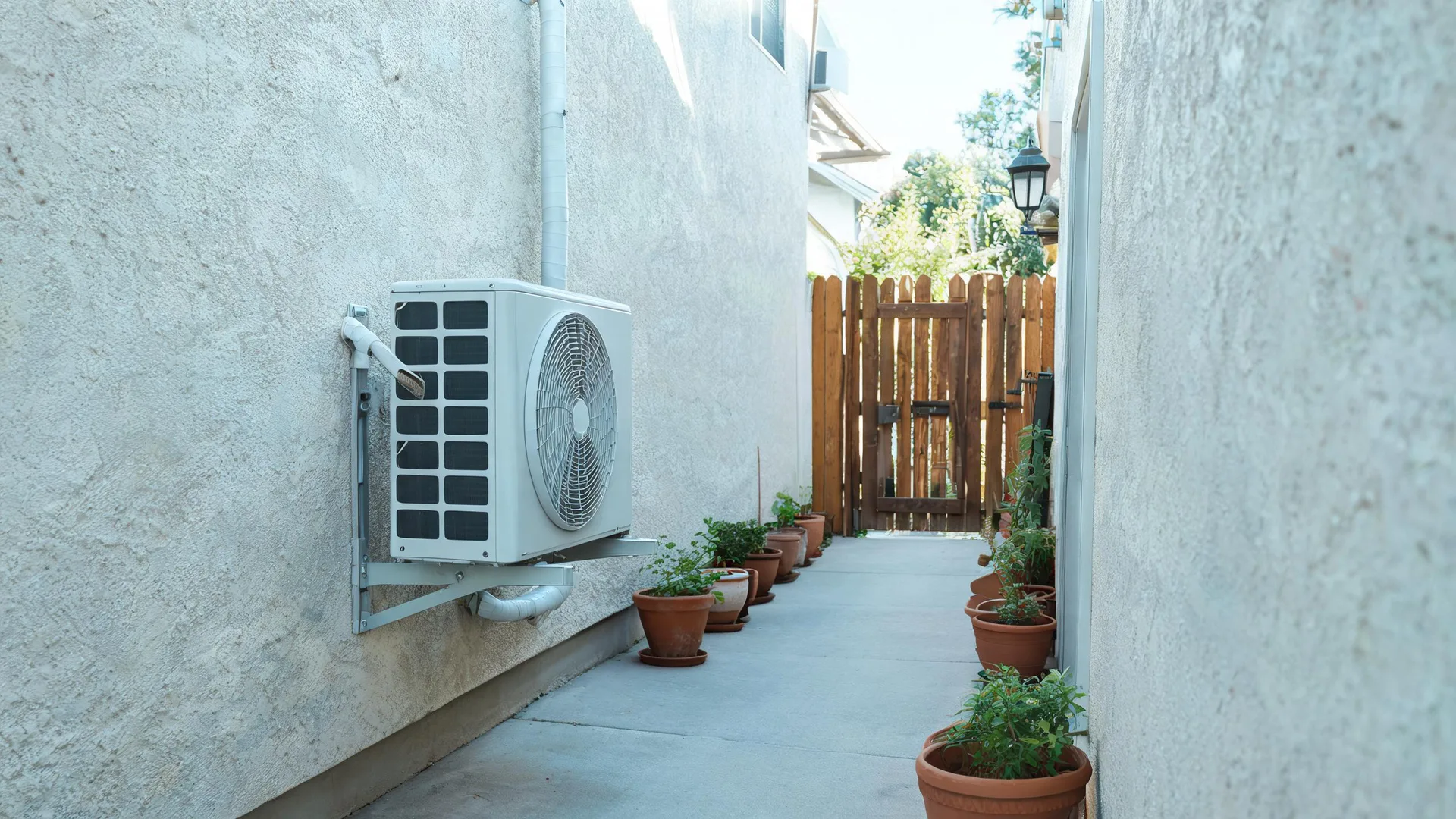
A white mini-split air conditioner outdoor condenser unit mounted on metal brackets against a beige stucco exterior wall, with a blue sky and scattered clouds in the background.

Put it in before July, not after

Cooling runs two months here, July and August. Get the mini split in before July and it's running before the first hot day asks anything of it. Wait until the heat is already on and you're waiting on whatever slot a contractor has open, with a houseful of other homeowners making the same call at once.

Sizing comes from a load calculation, not a chart

A contractor works out the right size by looking at square footage, ceiling height, window placement, insulation and how many walls face outside. This room-by-room math is called a manual load calculation. Guessing based on a similar-looking house down the street leaves out everything that makes this one different.

Oversized cools the air without drying it out

A unit too big for the space shuts off before it finishes pulling moisture out of the air, so the room feels cool but clammy. It also cycles on and off more, which wears on the compressor faster than running steady. A unit sized right runs longer, steadier cycles and leaves the air feeling right, not just cold.

The number on a mini split's label, the SEER2 and HSPF2 rating, tells you how much heat it moves per unit of electricity it uses, not how powerful it is. A higher rated unit pulls more cooling or heating out of the same amount of power than a lower rated one. That matters most in a system that runs long hours day after day. One that only carries a couple of mild months doesn't log enough runtime for the difference between tiers to add up to much, since the meter only turns while the unit is actually working. The rating also assumes the unit is sized and installed correctly. A mini split that's oversized or poorly matched to the room won't hit its rated efficiency no matter what the label says.

Replacing a furnace or central AC usually means a trip to the scrapyard once the refrigerant is recovered. Adding a mini split is different, since in most homes nothing old has to come out. The existing furnace or boiler stays in place and keeps covering the coldest stretch, with the mini split handling the rest. If a window AC unit is what's being replaced, that one does get retired, since the mini split's indoor head takes over its job without blocking the window. A contractor can walk through what, if anything, needs to be disconnected or removed before the new line set and wiring go in.