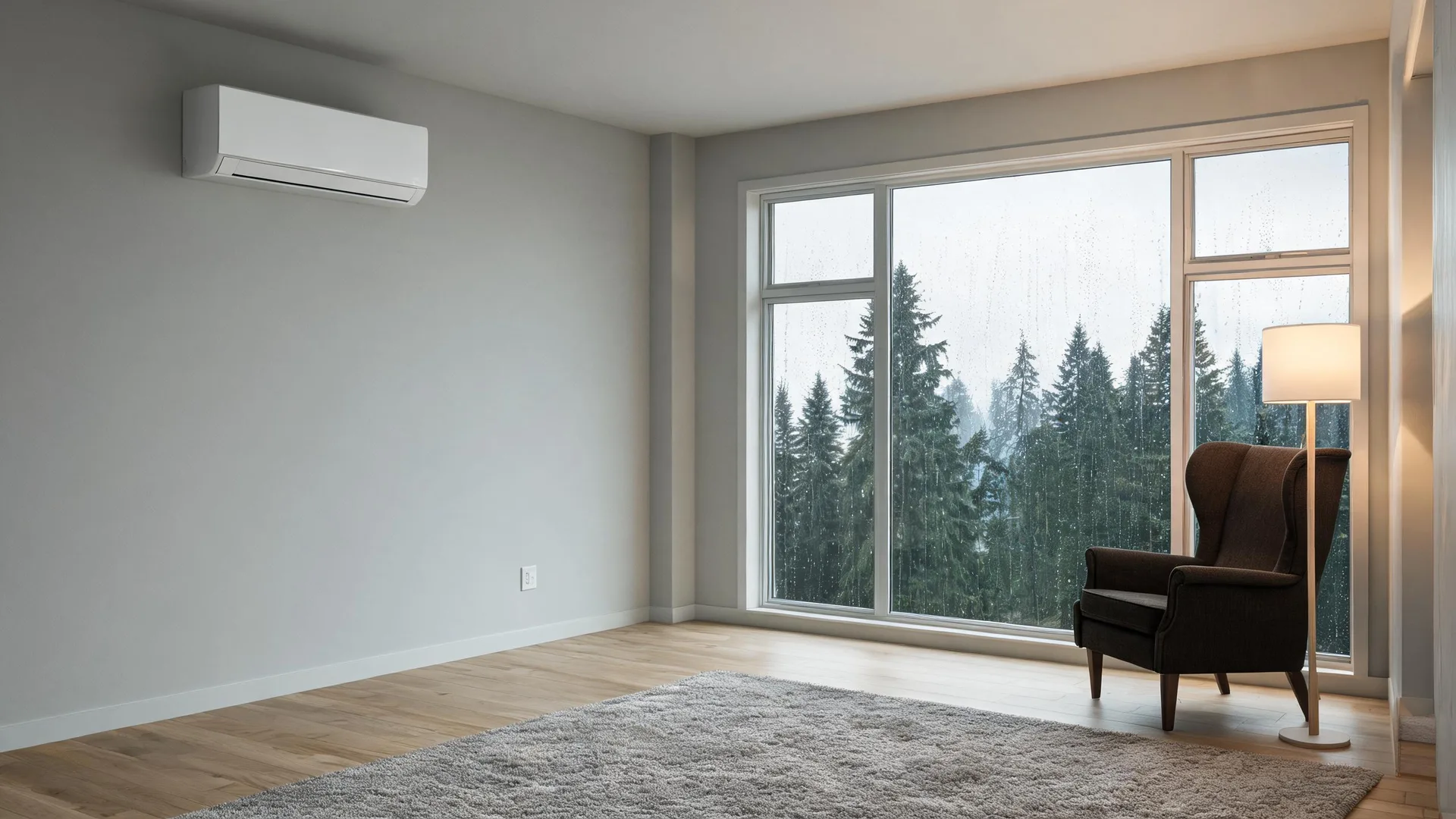
Most homes here run on propane
Close to six in ten occupied homes in Benson County heat with bottled, tank or LP gas. Electricity is a distant second, and utility gas barely reaches homes here at all.
Takes about a minute. No obligation.
Close to six in ten occupied homes in Benson County heat with bottled, tank or LP gas. Electricity is a distant second, and utility gas barely reaches homes here at all.
A mini split does not need to replace your furnace to be worth installing. It handles cooling and takes the load off a propane or electric furnace during the months it would otherwise run hardest.
NOAA nClimDiv, 1991–2020 normals
Electricity in North Dakota ran 11.51 cents per kilowatthour in 2024, well below the national average.
A mini split with a lower efficiency rating still costs little to run here, so pick the one that fits your rooms and holds up through a Leeds winter.




Cooling only runs about two months here, July and August, with afternoon highs averaging 78°F. That's a short, mild stretch for an outdoor unit to work through, nothing like the load a system carries in hotter parts of the country. What wears on equipment in Benson County is more likely the weather itself. Damaging wind and hail both show up here regularly. A mini split doesn't need the highest efficiency rating to do well in a place like this. It needs to be put together well enough to sit outside through a storm and keep working after.
A new system here has to meet this region's minimum efficiency, which limits what can go in.
Find a contractor
Whatever is heating and cooling the place now doesn't get pulled out the day the new system goes in. A furnace or an existing unit usually keeps running alongside a mini split, at least for a while, since the mini split is doing the cooling and taking the hardest months off the furnace rather than replacing it outright. If a system is on its way out anyway, the signs show up as they always do. Cycles get shorter. The furnace runs longer to hold the same temperature. An outdoor condenser starts making noise it didn't used to make. None of that means it has to come out right away. It means it's worth watching once the mini split is carrying part of the load, because the old equipment may end up running less than it used to, and less strain can buy it more time.
A mini split is sized by working out how much heat a room gains in summer and loses in winter, looking at wall area, window size and direction, and ceiling height. A contractor measures the room and runs that calculation rather than matching the old system's size or going off square footage alone.
A unit that's too big drops the temperature fast and shuts off before it's pulled the moisture out of the air, so the room feels cool and damp rather than comfortable. It also cycles on and off more, which wears the compressor harder than a unit sized to run longer, steadier stretches.
Ask how many zones the system is quoted for and what each indoor head is rated to cover, not just the total output. Rooms with the same floor space can need different sized heads depending on window area and how many outside walls they have. Ask what happens if one indoor unit fails. On a multi-zone system, some models shut the whole system down while others let the remaining heads keep running. Ask about the line set too, how far it runs and how many bends it takes to reach the outdoor unit, since a longer run or extra elbows can change how the system performs even when the rated capacity looks the same on paper. And ask what the warranty actually covers. Parts and labor are often separate, and a compressor warranty means little if the labor to replace it isn't included.
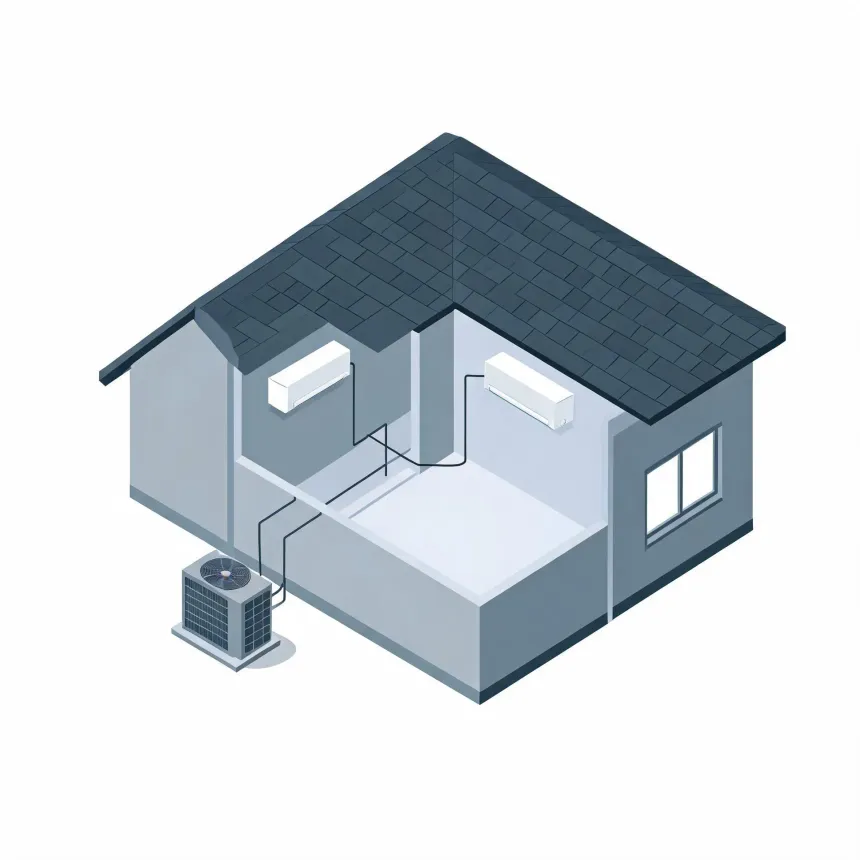
Installation day starts with the lineset, not the indoor head. The spot picked for the outdoor unit decides how the refrigerant lines run, how many walls get penetrated, and how far the condensate has to drain. Inside, the mounting plate goes up first, then the wall sleeve gets drilled through, and that hole is sealed both inside and out so no air or water finds its way in later. The lines get connected, then pulled down to a vacuum before any refrigerant moves, which clears out moisture and air that would otherwise sit in the system and cause problems down the road. Once it's charged and powered on, a tech checks the temperature split between the air going in and the air coming out, and listens to how the compressor sounds at startup. A clean install looks almost nothing happened. No loose line covers, no gaps around the wall sleeve, no sag in the condensate line.